Chicken
$1.25per plate
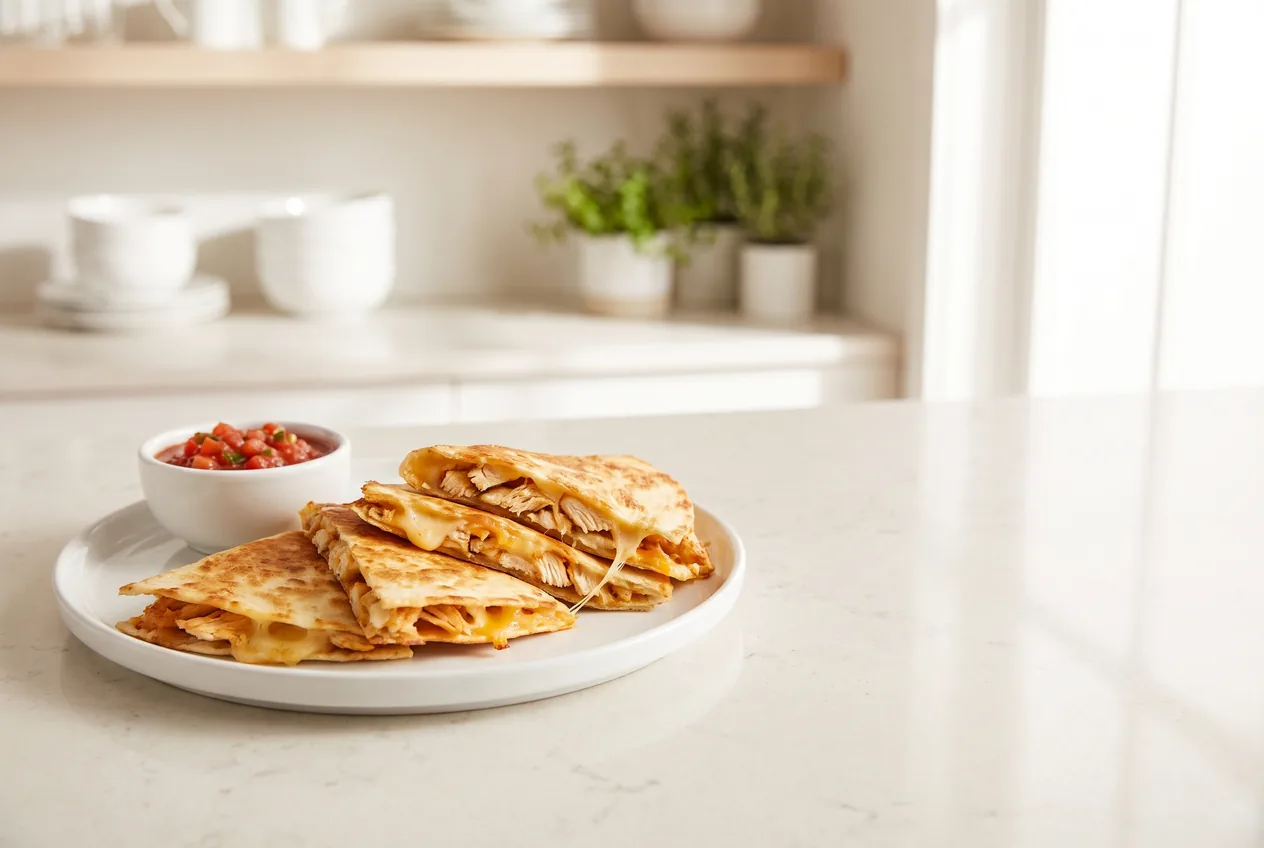
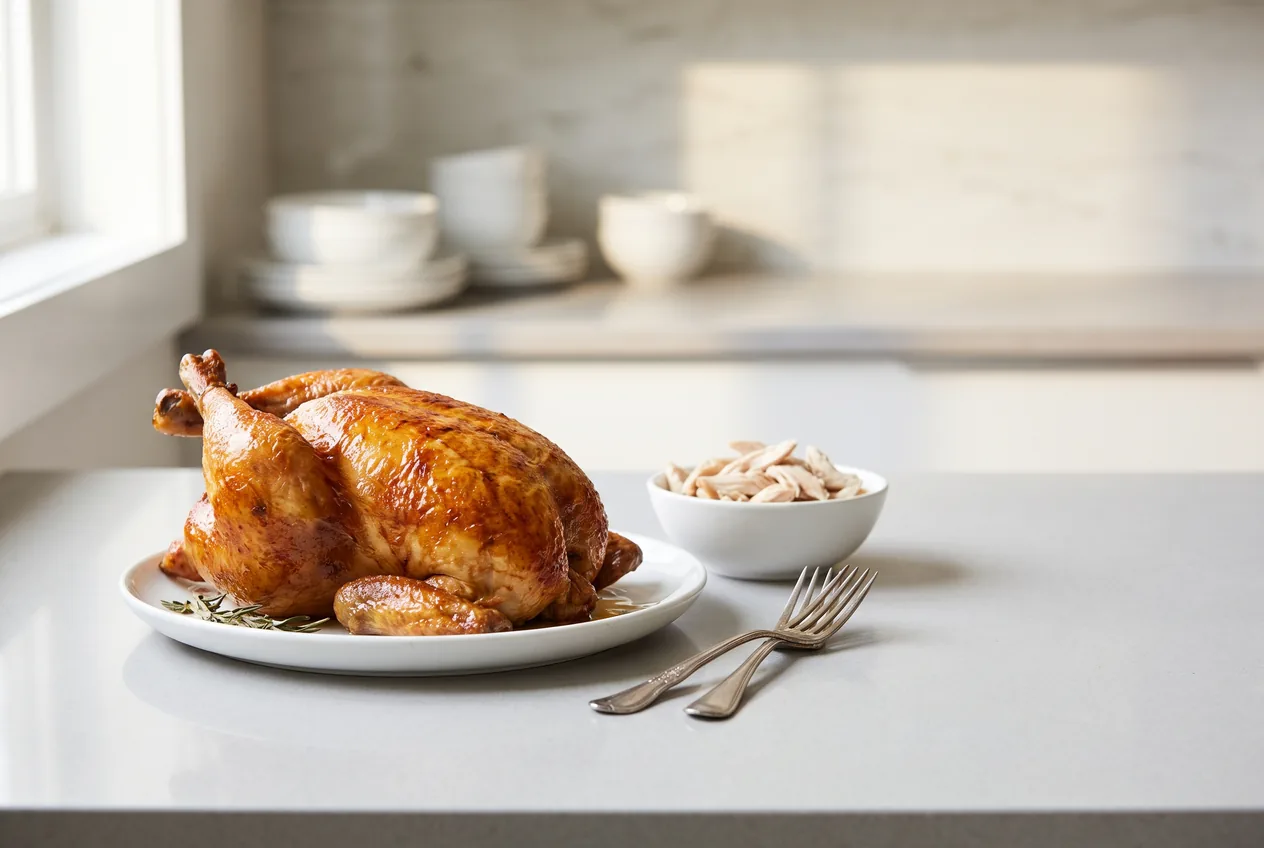
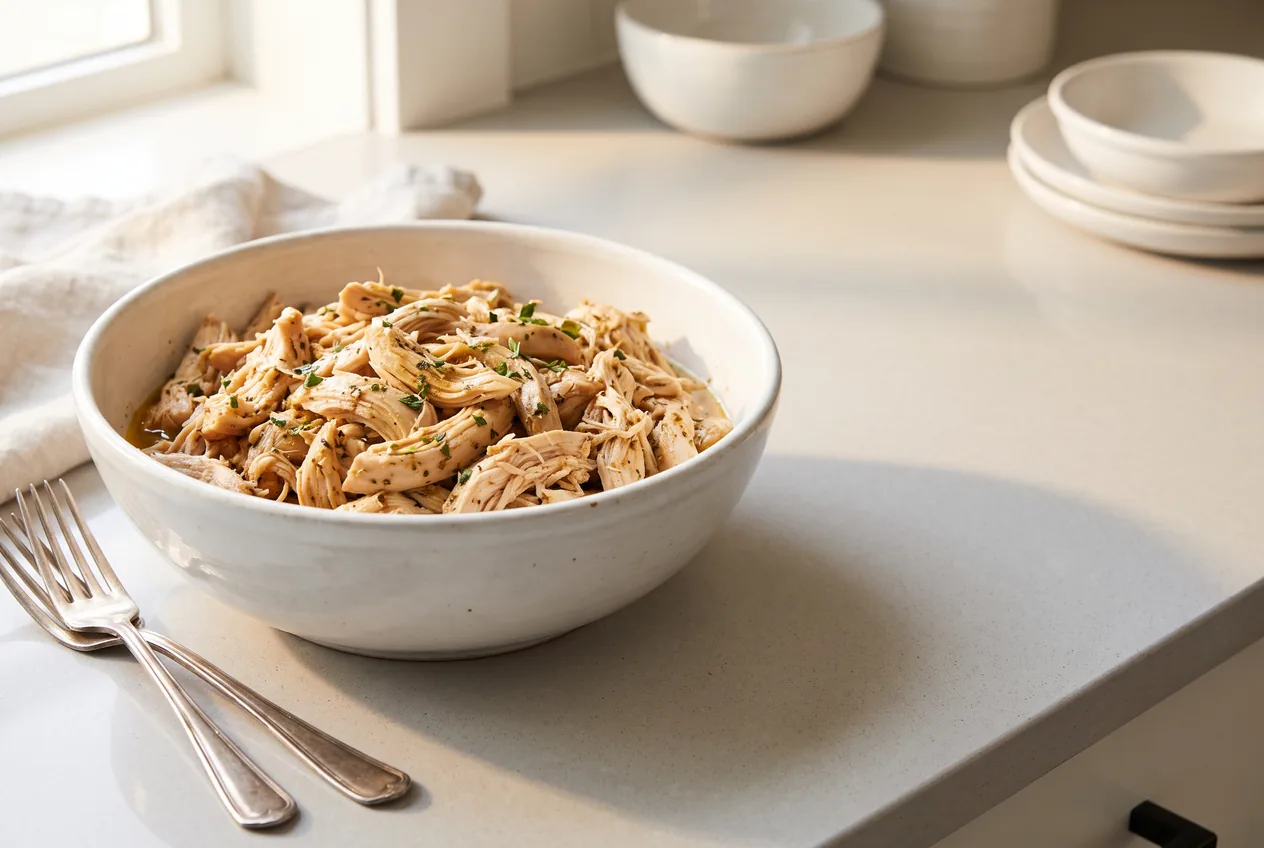
A quesadilla is what leftovers become when you want them to feel like a night out. A little cooked chicken and a handful of cheese, folded into a tortilla and toasted until the outside is crisp and the inside is molten, is one of the fastest and most satisfying cheap dinners there is. It is the perfect home for a batch of shredded chicken or the last of a rotisserie bird. Cut into wedges with salsa on the side, four servings run about a dollar sixty-five a plate and take twenty minutes. It joins the rest of our cheap chicken recipes, price up front.
Recipe from Budget Plates · https://www.budgetplates.com/chicken-quesadilla-recipes
Saute the onion and pepper until soft, then toss with the shredded chicken and spices to warm it and coat it in flavor. Seasoning the filling, not just the cheese, is what keeps a quesadilla from tasting flat.
Lay a tortilla in a lightly oiled pan over medium, scatter cheese over half, add the chicken mixture and a little more cheese, and fold it over. The cheese on both sides acts as glue that holds it shut.
Cook 2 to 3 minutes a side, pressing gently, until the tortilla is golden and crisp and the cheese has melted. Medium heat is key; too hot and it browns before the cheese melts.
Let each quesadilla sit a minute so the cheese sets slightly, then cut into wedges. Serve with salsa or sour cream.
Cooked quesadillas keep, wrapped, in the fridge for 3 days; store the filling and tortillas separately if you are prepping ahead so nothing gets soggy.
Assembled, uncooked quesadillas freeze well for 2 months; cook them straight from frozen over medium heat until crisp and hot through.
Re-crisp leftovers in a dry pan or the oven rather than the microwave, which turns the tortilla limp. A few minutes over medium brings back the crunch.
Per-serving figures are estimated from standard ingredient data and are not medical or dietary advice.
Put cheese against both tortilla surfaces so it melts and glues the filling in place, and do not overfill. Let the quesadilla rest a minute after cooking so the cheese sets before you cut it.
Cheddar, Monterey Jack, mozzarella, or a Mexican blend all melt smoothly. Grate it from a block rather than using pre-shredded, which is coated to resist clumping and melts less evenly.
Yes. Instead of cooking one at a time, lay several flat on a sheet pan, bake at 425 F until crisp, flip once, then fold and cut. It is far faster for feeding a group.
The estimated $6.65 total spread over 4 servings comes to about $1.66 each. Using leftover chicken you have already paid for makes the real cost even lower.
As an Amazon Associate, Budget Plates may earn from qualifying purchases.