Chicken
$1.49per plate
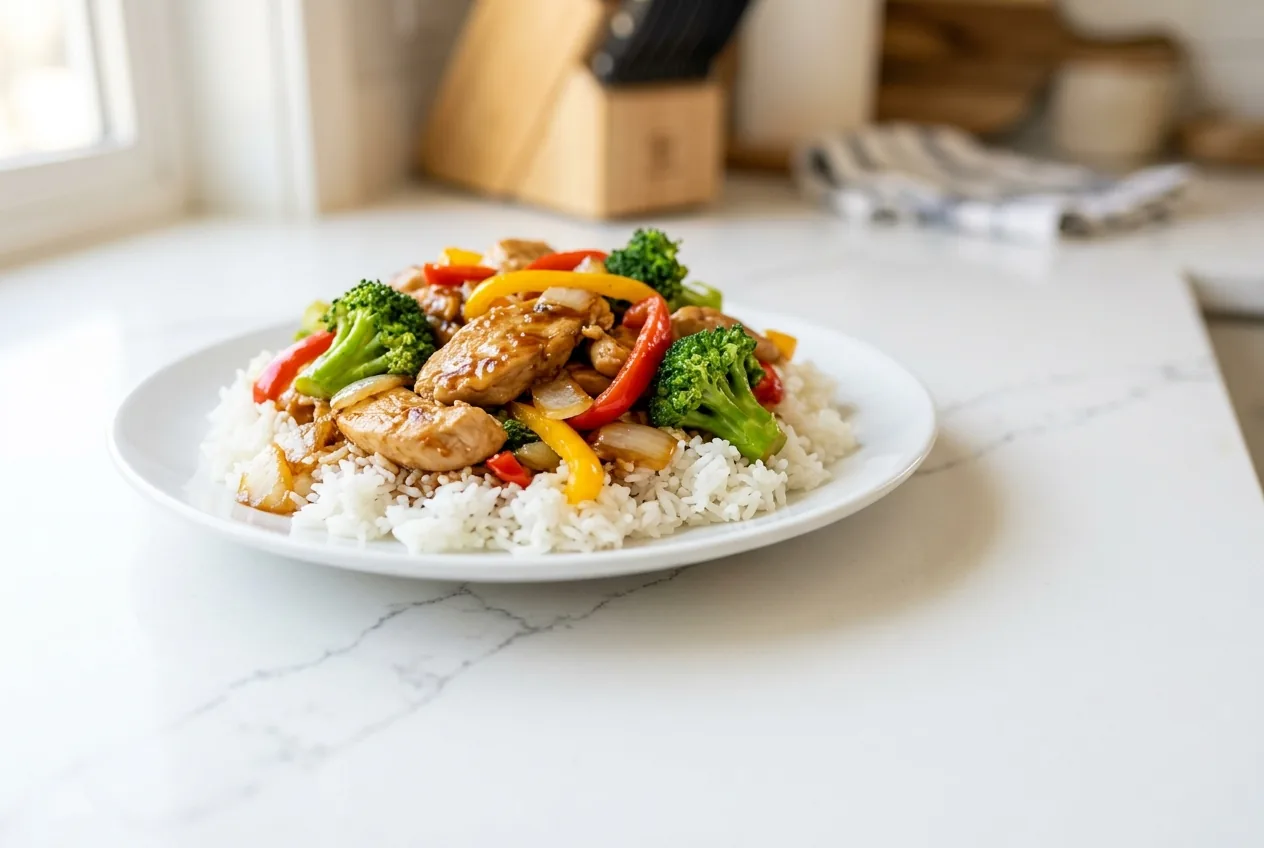
Chicken stir fry is the one weeknight dinner that bends to whatever is in the fridge, and this version feeds four for about $1.79 a plate. Diced chicken gets seared, then tossed with broccoli, bell pepper, and onion in a glossy garlic-ginger-soy sauce that thickens in the pan, all spooned over rice. It is faster than takeout, lighter than takeout, and cheaper than takeout, which is the whole reason to keep a bag of frozen broccoli and a bottle of soy sauce on hand. Swap in any vegetables you have and the method never changes. It's one of dozens of easy dinners in our chicken recipe collection.
Recipe from Budget Plates · https://www.budgetplates.com/chicken-stir-fry-recipe
Get the rice cooking first so it is ready when the stir-fry is. In a small bowl, whisk the soy sauce, cornstarch, brown sugar, and 1/4 cup water until the cornstarch dissolves. That is the sauce that turns glossy and coats everything at the end.
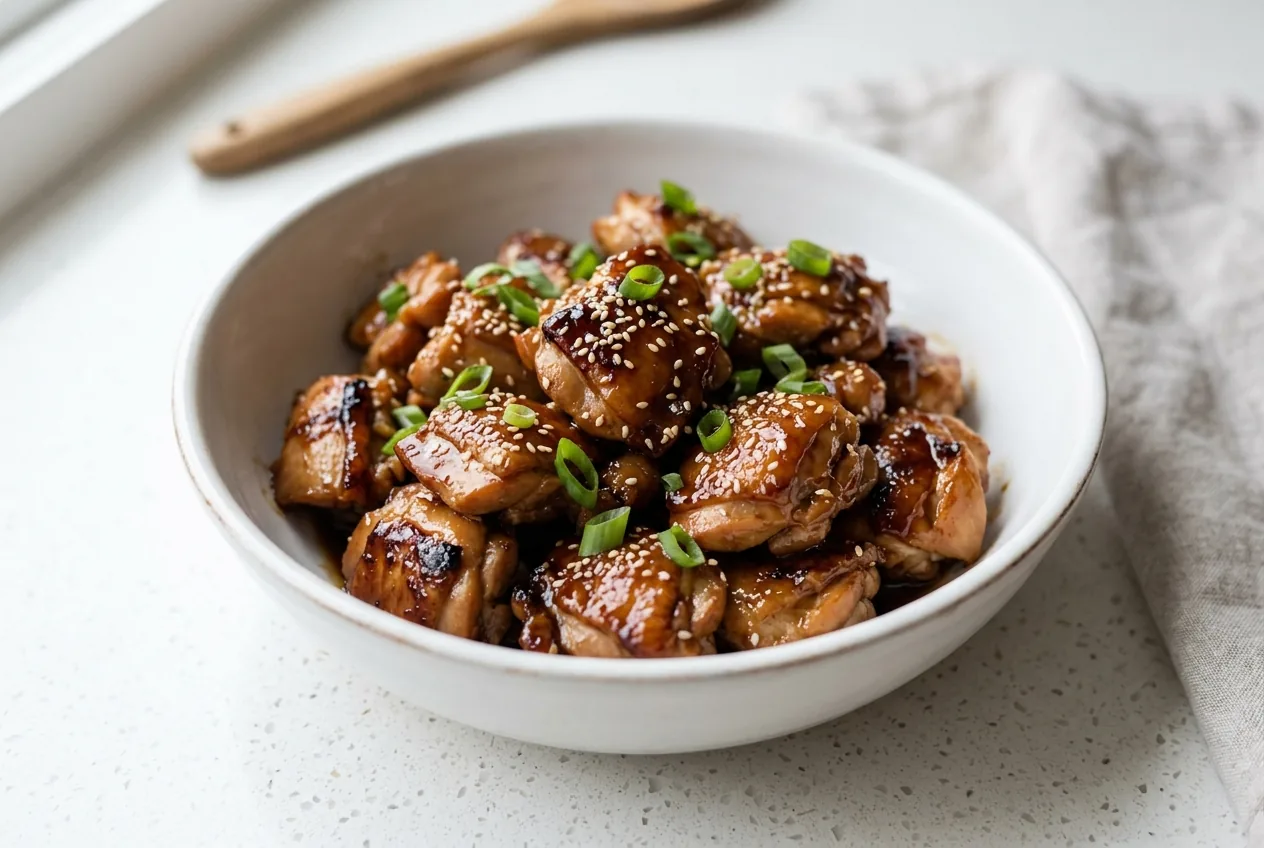
Heat the oil and sesame oil in a large skillet or wok over medium-high. Add the diced chicken in a single layer and cook 4 to 5 minutes, stirring now and then, until golden and cooked through to 165 F on an instant-read thermometer. Scrape it out onto a plate and set aside.
Add the onion and bell pepper to the hot pan and stir-fry 2 minutes, then add the frozen broccoli straight from the bag along with the garlic and ginger. Keep everything moving another 3 to 4 minutes, until the vegetables are bright and crisp-tender.
Return the chicken to the pan, give the sauce a quick whisk, and pour it in. Toss for about a minute, until the sauce bubbles, thickens, and turns glossy and coats the chicken and vegetables. Spoon it over the rice and serve right away.
Refrigerate leftovers in an airtight container for up to 4 days. The sauce keeps the chicken moist as it reheats, which makes this a reliable meal-prep lunch over rice.
Freeze the cooked stir-fry (without the rice) for up to 2 months. The vegetables soften a little on thawing but hold up fine in the sauce. Reheat from frozen in a covered skillet.
Reheat in a skillet over medium with a splash of water to loosen the sauce, or microwave in short bursts. Warm the rice alongside so both are hot at once.
Estimates per serving with rice, calculated from standard ingredient data. Not a substitute for medical advice.
Almost anything. Broccoli, bell pepper, and onion are the classic trio here, but snap peas, carrots, mushrooms, zucchini, and cabbage all work. Add the firmer vegetables first and the quick-cooking ones last so everything finishes crisp-tender together.
The cornstarch does it. Whisk it into the cold soy sauce and water before it hits the pan so it dissolves smoothly, then let the sauce come to a bubble. It thickens and turns glossy in about a minute as it coats the chicken and vegetables.
Searing the chicken first, then removing it, keeps the pan hot enough to stir-fry the vegetables fast so they stay crisp instead of steaming. Everything comes back together with the sauce at the end.
About $7.17 for the chicken, broccoli, bell pepper, onion, rice, and the pantry sauce, split across four servings, which comes to roughly $1.79 each. Buying chicken on sale and leaning on frozen and in-season vegetables keeps it there.
As an Amazon Associate, Budget Plates may earn from qualifying purchases.