Slow Cooker
$1.60per plate
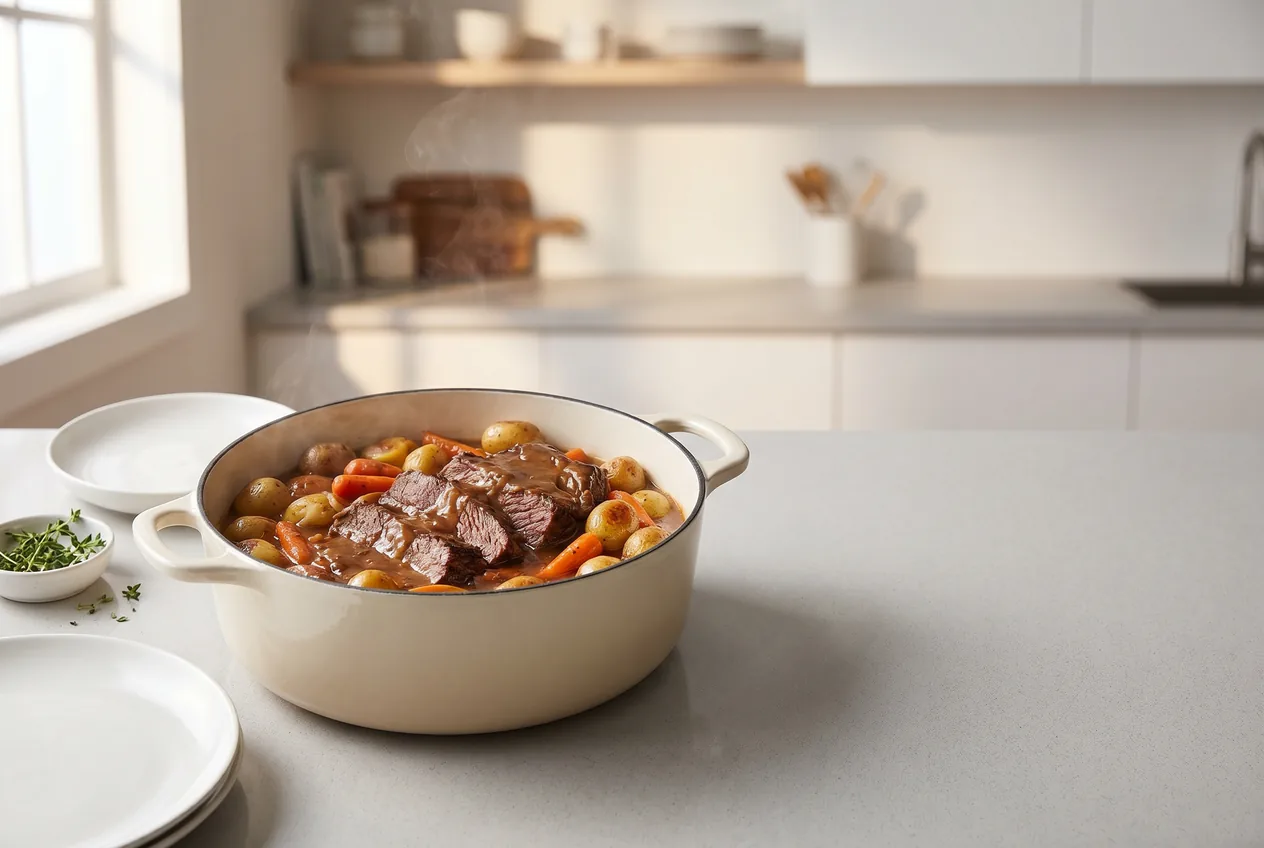
A Dutch oven turns an inexpensive chuck roast into a Sunday-dinner centerpiece with almost nothing but time. Low, slow, covered heat melts the tough connective tissue into rich gravy and leaves the meat falling apart at the touch of a fork. Potatoes and carrots cook right alongside it, so one pot feeds six for under two dollars a plate. The oven does nearly all the work while you do something else.
Recipe from Budget Plates · https://www.budgetplates.com/dutch-oven-recipes
Pat the chuck roast dry, season it well with salt and pepper, and brown it hard on all sides in a little oil in the Dutch oven. This crust is where a lot of the flavor comes from, so do not rush it.
Set the roast aside, soften the onion and garlic in the pot, then stir in the tomato paste for a minute. Pour in the broth and scrape up the browned bits from the bottom, which season the gravy.
Return the roast, cover, and braise in a 300 F oven for about 3 hours, until a fork slides in easily. Add the potatoes and carrots for the last hour so they cook through without falling apart.
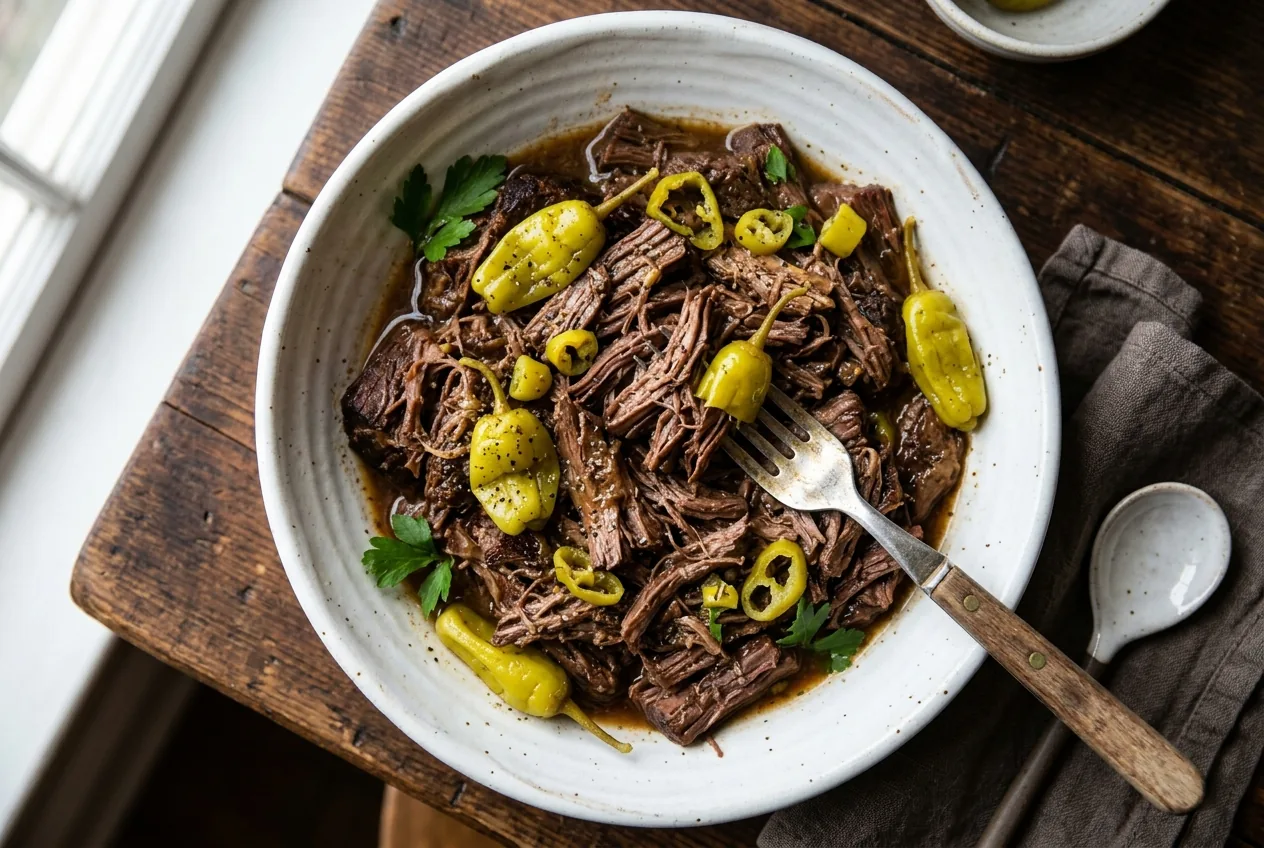
Let the roast rest a few minutes, then pull it into chunks and serve with the vegetables and the gravy from the pot spooned over the top.
Refrigerate the meat and vegetables in the gravy in an airtight container for up to 4 days. The flavor deepens overnight.
Freeze pot roast in its gravy for up to 3 months. The gravy keeps the meat moist through freezing and reheating.
Reheat gently, covered, on the stove or in the microwave with a little extra broth so the meat stays moist. Low and slow reheating keeps it tender.
Estimates per serving, calculated from standard ingredient data. Not a substitute for medical advice.
Chuck roast. It has enough fat and connective tissue that long, slow cooking turns it meltingly tender, and it is one of the cheapest beef cuts you can buy. Leaner cuts dry out.
Browning builds a deep, savory crust and leaves flavorful bits in the pot that season the gravy. It takes a few extra minutes but makes a noticeable difference.
Yes. Sear the meat and soften the aromatics first, then move everything to the crock pot and cook on low about 8 hours. The oven and the slow cooker give the same tender result.
The chuck roast alone is about $9 of the $11.64 total, spread over six servings. It is still under $2 a plate, and a roast on sale brings it down fast.
As an Amazon Associate, Budget Plates may earn from qualifying purchases.
This recipe also belongs to our Easy Family Dinner Recipes collection and our American Comfort Classics collection.