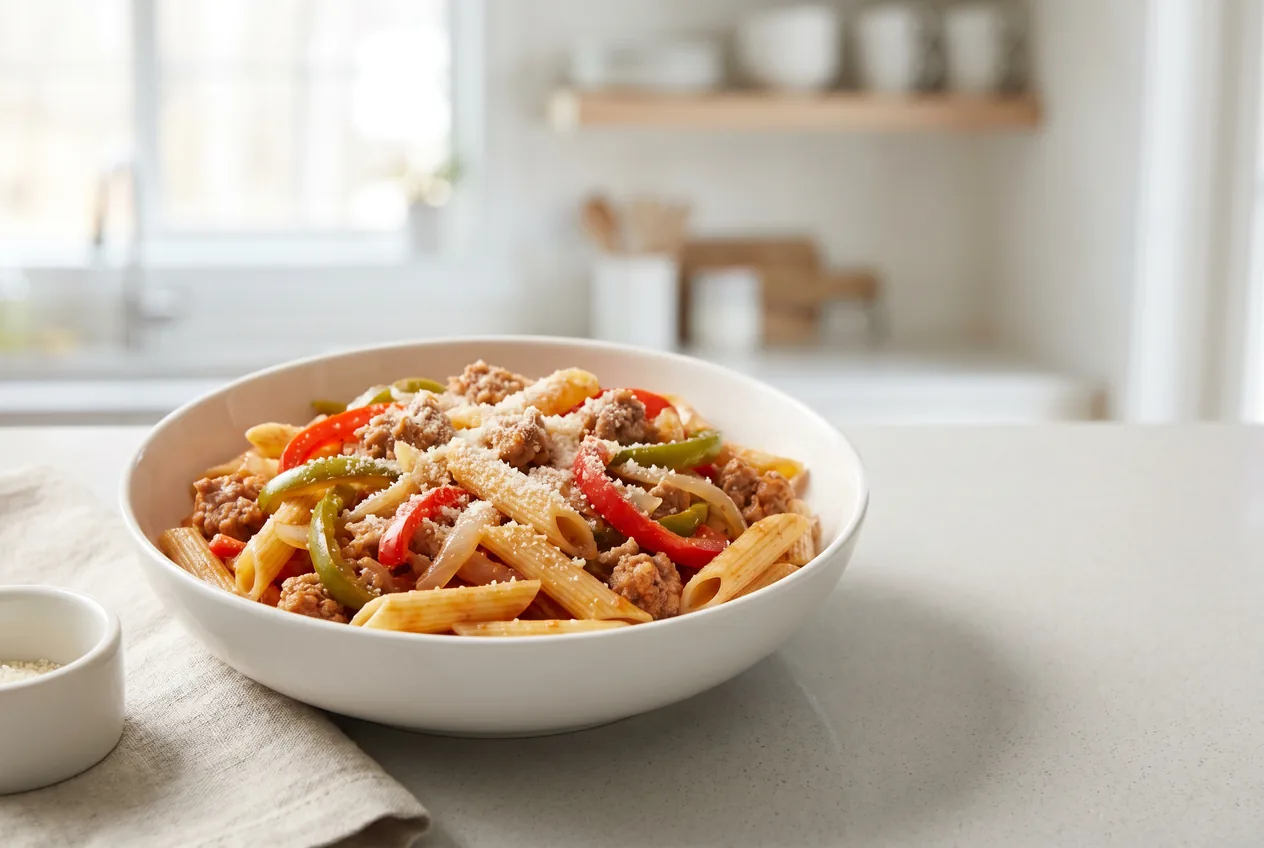
Pasta
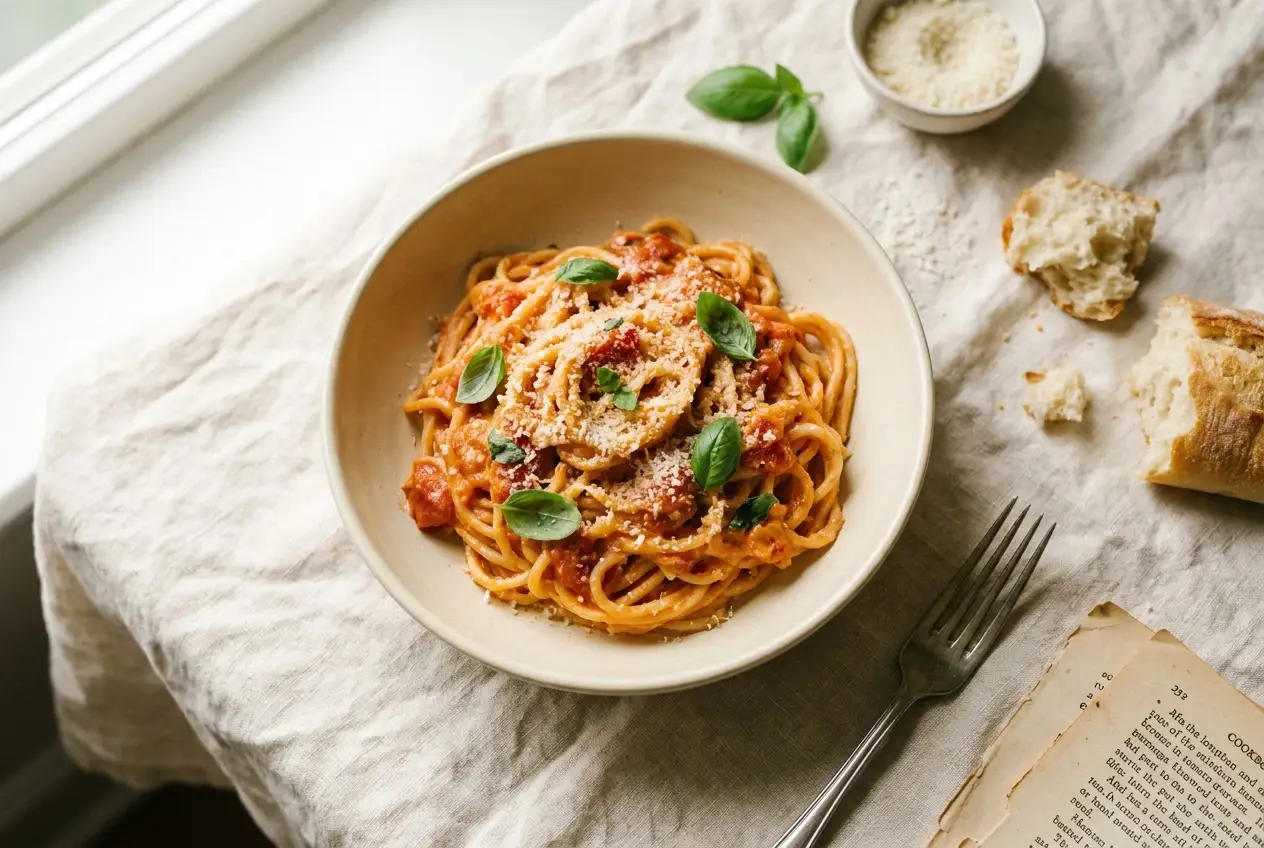
$0.71per plate
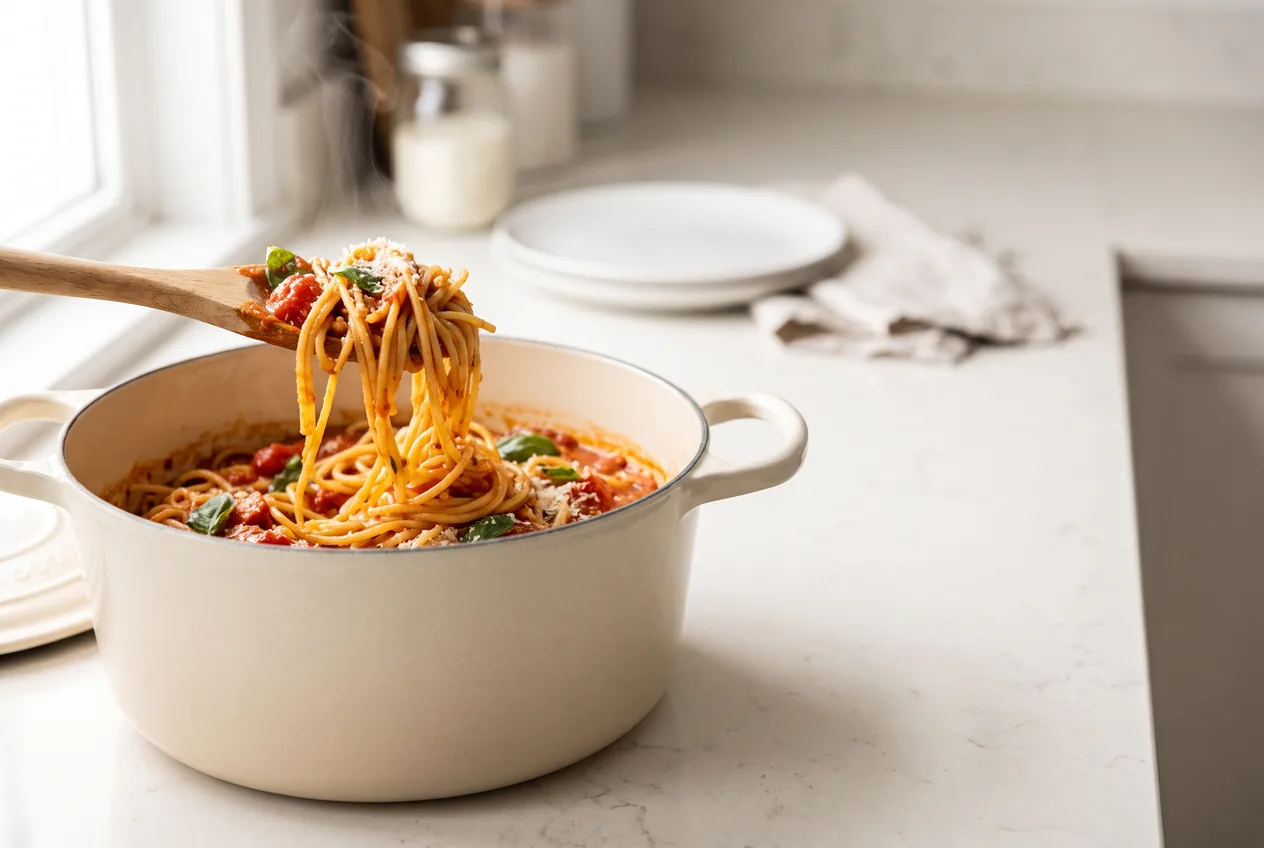
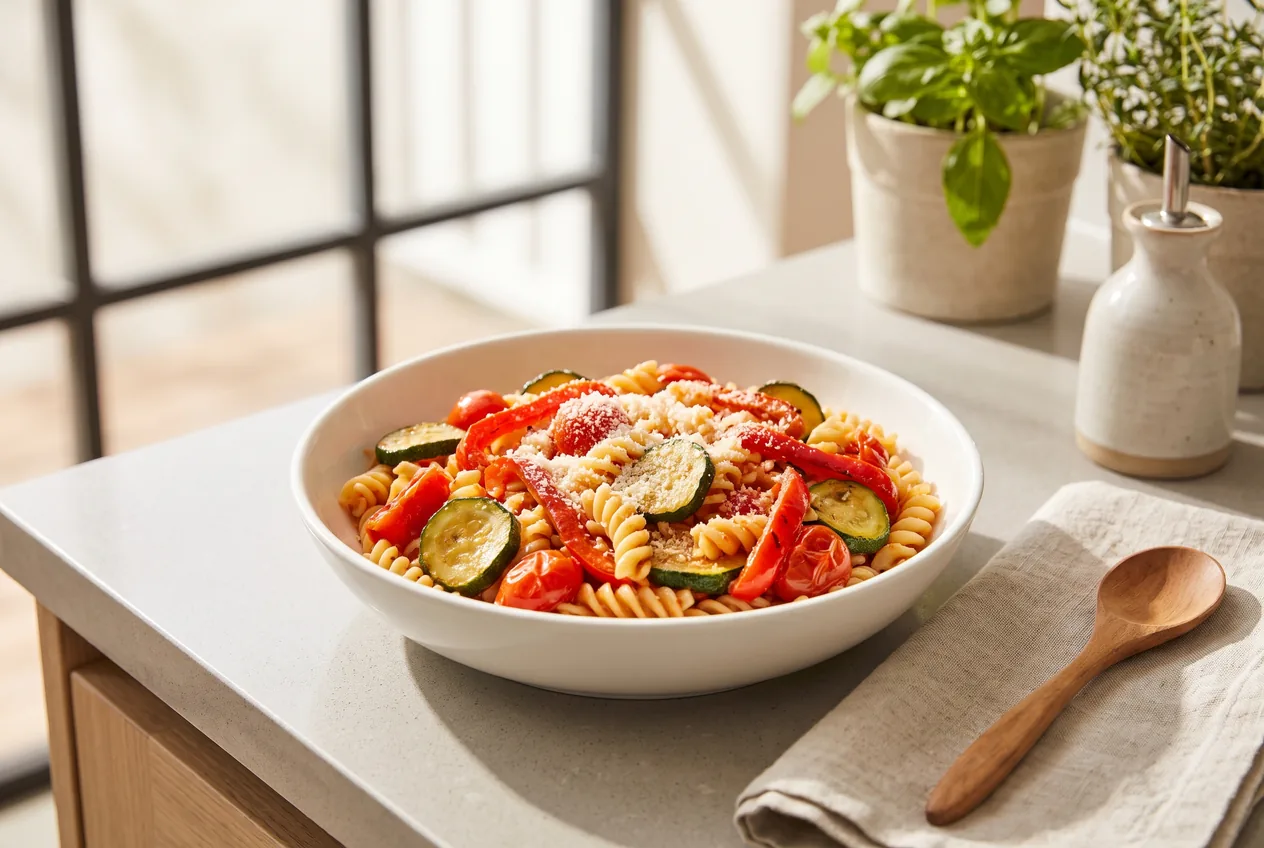
The clever part of one-pot pasta is that the water you would normally tip down the drain becomes the sauce instead. Everything, the noodles, the tomatoes, the garlic, the liquid, goes into a single pot, and as the pasta cooks it releases starch that thickens everything into a glossy sauce that clings. There is no colander to wash and no flavor poured away. Four servings cost about seventy-six cents a plate, and start to finish it is one pot and about twenty-five minutes. For more one-pot and other cheap noodle dinners, browse our pasta recipes collection.
Recipe from Budget Plates · https://www.budgetplates.com/easy-pasta-recipes
Put the pasta, tomatoes, onion, garlic, broth, oil, and herbs in a wide pot. Spreading the pasta out and adding just enough liquid to cover it is what lets it cook evenly without a separate boil.
Bring everything to a boil, then keep it at a lively simmer, tossing often with tongs so the pasta cooks evenly and does not clump. Frequent tossing is the key to one-pot pasta.
In about 10 to 12 minutes the pasta turns tender and the liquid reduces to a clingy sauce. If it dries out before the pasta is done, add a splash more broth.
Off the heat, stir in the parmesan and a drizzle of olive oil so the sauce turns silky. Taste for salt and serve straight from the pot.
Leftovers keep in a covered container for up to 4 days; one-pot pasta soaks up sauce as it sits, so it stays flavorful.
It freezes for a couple of months, though the noodles soften; it is really best within a few days of cooking.
Loosen it with a splash of water or broth and warm it in a pan or the microwave; the sauce tightens in the fridge and comes right back with a little liquid.
Per-serving figures are estimated from standard ingredient data and are not medical or dietary advice.
You add just enough liquid to cook the pasta, and as it simmers the noodles release starch that thickens the remaining liquid into a sauce. By the time the pasta is tender, the sauce has come together and nothing needs draining.
Usually too little liquid or not enough tossing. Keep the pasta moving with tongs as it cooks so it does not clump, and add a splash more broth if the pot dries out before the noodles are done.
Yes. Stir quick vegetables like spinach in at the end, or add a can of tuna or beans. For raw meat, brown it first, then build the pot around it so everything finishes together.
It is the estimated $3.04 total shared across 4 servings, about $0.76 a plate. Pantry staples like pasta and canned tomatoes keep it low, and your store's prices set the exact number.
As an Amazon Associate, Budget Plates may earn from qualifying purchases.