Pork
$1.27per plate
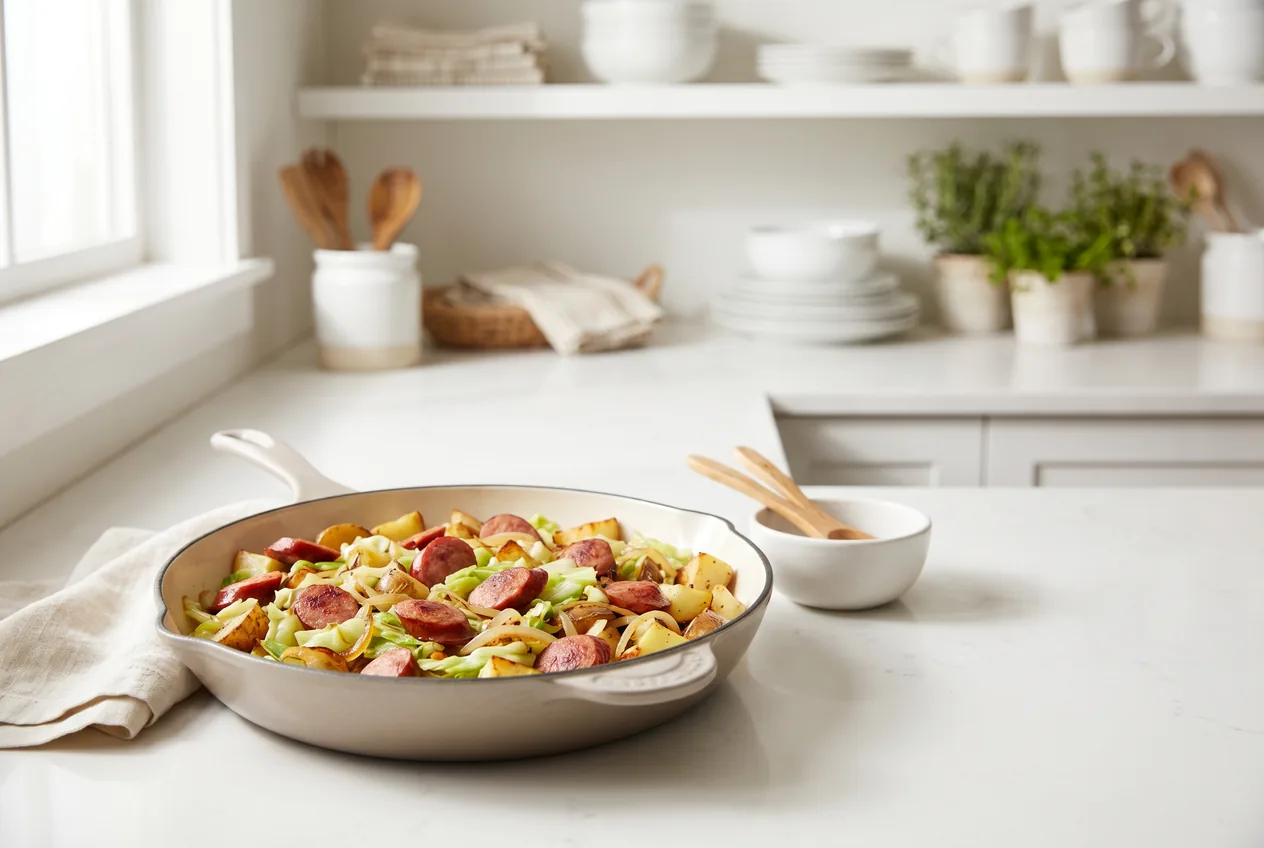
This is budget cooking at its most honest: a ring of smoked kielbasa, half a head of cabbage, and a couple of potatoes, all browned in one skillet. The sausage renders enough fat to cook everything else, so it flavors the whole pan for free. Cabbage is one of the cheapest vegetables in the store and it cooks down sweet and tender. Fifteen minutes of prep, one pan, and dinner for four lands right around a dollar fifty a plate.
Recipe from Budget Plates · https://www.budgetplates.com/kielbasa-and-cabbage-skillet
Heat a large skillet over medium-high with a small drizzle of oil. Add the sliced kielbasa in a single layer and let it brown on both sides, about 4 minutes. Those browned edges are where the flavor is, so do not rush them. Scoop the sausage out and set it aside. Leave the rendered fat in the pan to cook the vegetables; if the sausage was especially fatty and there is more than a thin coating, pour off the excess so the skillet does not turn greasy.
Add the diced potatoes to the same skillet with the sausage fat. Cook, stirring now and then, for about 4 minutes to start the browning, then add a splash of water, cover, and steam 3 to 4 minutes until a piece pierces easily with a fork. Uncover for the last minute so the water cooks off and the edges crisp back up. The brief covered steam cooks the potatoes through to the center without frying them so long they fall apart, so keep the dice small and even.
Stir in the onion and cabbage with the garlic, paprika, salt, and pepper. Cook until the cabbage wilts down and the edges caramelize, about 6 to 8 minutes. It will look like a lot of cabbage at first, then shrink by half.
Return the kielbasa to the skillet and toss everything for a minute or two to heat through. Finish with a splash of vinegar or a spoonful of mustard: it cuts the richness of the sausage and brightens the whole pan, so do not skip it. Taste, add salt if it needs it, and serve straight from the pan.
Refrigerate leftovers in an airtight container for up to 4 days. It reheats well and makes a quick lunch.
This one is best fresh; cabbage softens further after freezing. If you must freeze it, use within a month and expect a softer texture.
Reheat in a skillet over medium heat to crisp the edges again, or microwave until hot. A skillet keeps the potatoes and sausage from going soft.
Estimates per serving, calculated from standard ingredient data. Not a substitute for medical advice.
Kielbasa is a Polish smoked sausage, but for this skillet any fully cooked smoked sausage works the same way. Buy whatever is cheapest; they all brown and flavor the pan alike.
No. A good scrub is enough, and leaving the skin on saves time and adds a little texture. Dice them small so they cook through in the pan.
Cook it over medium-high and do not crowd the pan or add water. You want it to wilt and caramelize, not steam, so give it room and let it sit long enough to brown.
Around $6.04 for the skillet, four servings. The kielbasa is most of it, and cabbage is about the cheapest vegetable you can pad it out with.
As an Amazon Associate, Budget Plates may earn from qualifying purchases.