Air Fryer
$0.46per plate
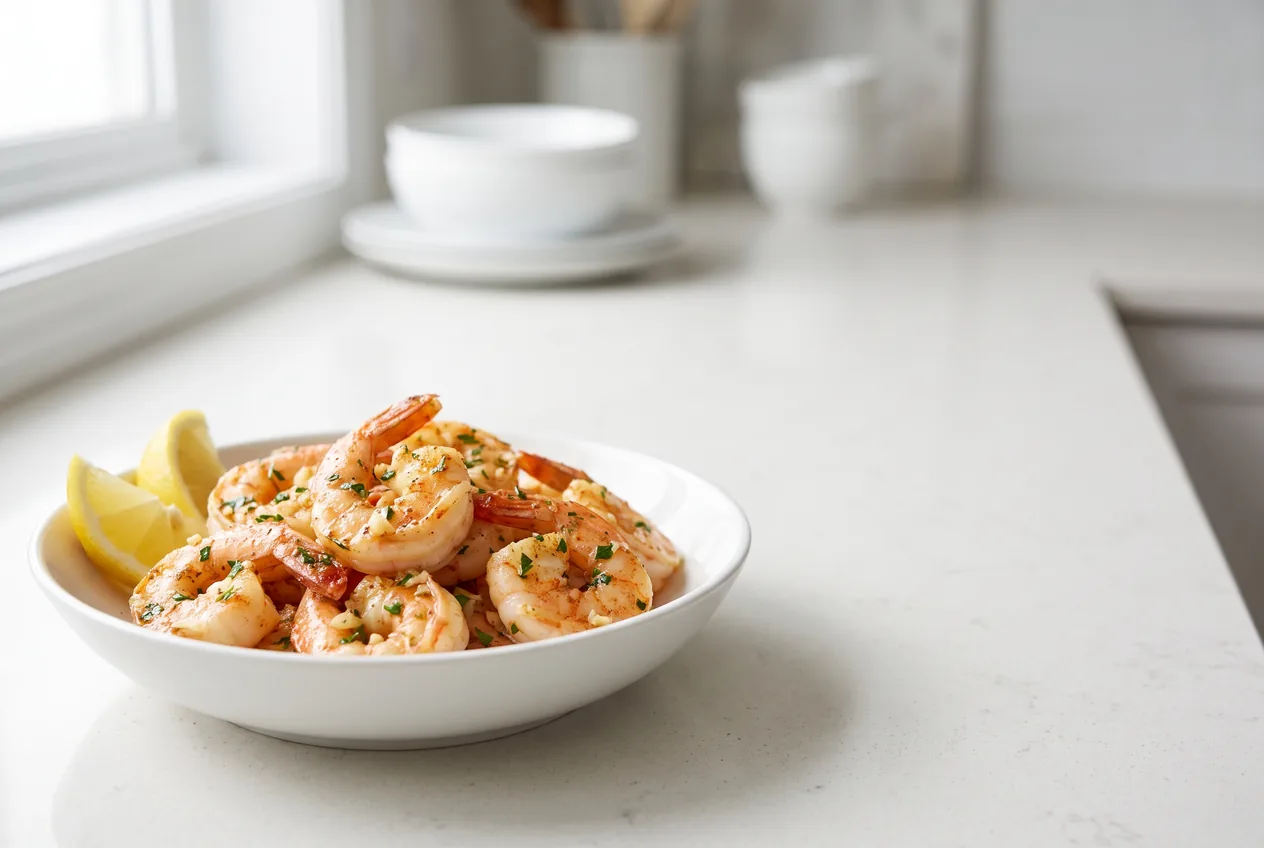
Shrimp feels like a splurge, and the air fryer is how you make it a weeknight one. A bag of frozen shrimp keeps for months, thaws in minutes under cool water, and cooks in the air fryer in well under ten, turning plump, juicy, and just kissed with char. Tossed with garlic, butter, and paprika, four servings come to about a dollar seventy a plate, less than most takeout appetizers. The only rule with shrimp is to pull it the moment it turns pink and curls, because a minute too long makes it rubbery. Shrimp is 2g of carbs a serving before anything touches it, which makes this one of the fastest of our low-carb recipes.
Recipe from Budget Plates · https://www.budgetplates.com/air-fryer-shrimp-recipes
Thaw the shrimp under cool running water for a few minutes, then pat them very dry. Dry shrimp brown and char instead of steaming in their own water.
Toss the shrimp with the oil, garlic powder, paprika, salt, and pepper until evenly coated. Use garlic powder here, not fresh garlic: raw minced garlic scorches and turns bitter in the air fryer's dry heat, while garlic powder seasons without burning. A light coat is all it takes; shrimp cooks fast and does not need much.
Air fry at 400 F for 6 to 8 minutes, shaking the basket once, until the shrimp are pink and curled. Do not crowd the basket, and watch closely; shrimp goes from perfect to rubbery in a minute.
While the shrimp cooks, melt the butter in a small pan or the microwave and stir in the minced garlic, letting it sizzle about 30 seconds until fragrant. Toss the hot shrimp in the garlic butter, then finish with a squeeze of lemon and a pinch of parsley. Blooming the garlic in butter, off the air fryer's fierce heat, is what keeps it sweet and fragrant instead of scorched.
Cooked shrimp is best eaten fresh, but it keeps, sealed, in the fridge for up to 2 days; it is lovely cold in a salad or roll.
Already-cooked shrimp can be refrozen for a month if it was thawed in the fridge, though the texture softens; fresh off the air fryer is best.
Go gentle: a quick warm in a pan or a few seconds in the microwave is plenty. Overheating cooked shrimp is what turns it rubbery, so stop while it is just warm.
Per-serving figures are estimated from standard ingredient data and are not medical or dietary advice.
Yes, thaw and pat it dry first. Cooking from frozen makes it release water and steam rather than char, and the timing gets unreliable. A few minutes under cool running water thaws it quickly.
Cook it hot and fast and pull it the instant it turns pink and curls into a loose C shape. Shrimp overcooks in seconds, so watch the basket and err on the side of underdone; residual heat finishes it.
Absolutely. Roast it at 425 F for about 8 minutes, or sear it in a hot skillet for two to three minutes a side. The same rule applies: stop as soon as it turns pink.
The estimated $6.80 total divided by 4 servings is about $1.70 each. Shrimp is the main cost, so a sale on the bag moves that number the most.
As an Amazon Associate, Budget Plates may earn from qualifying purchases.