Breakfast
$0.60per plate
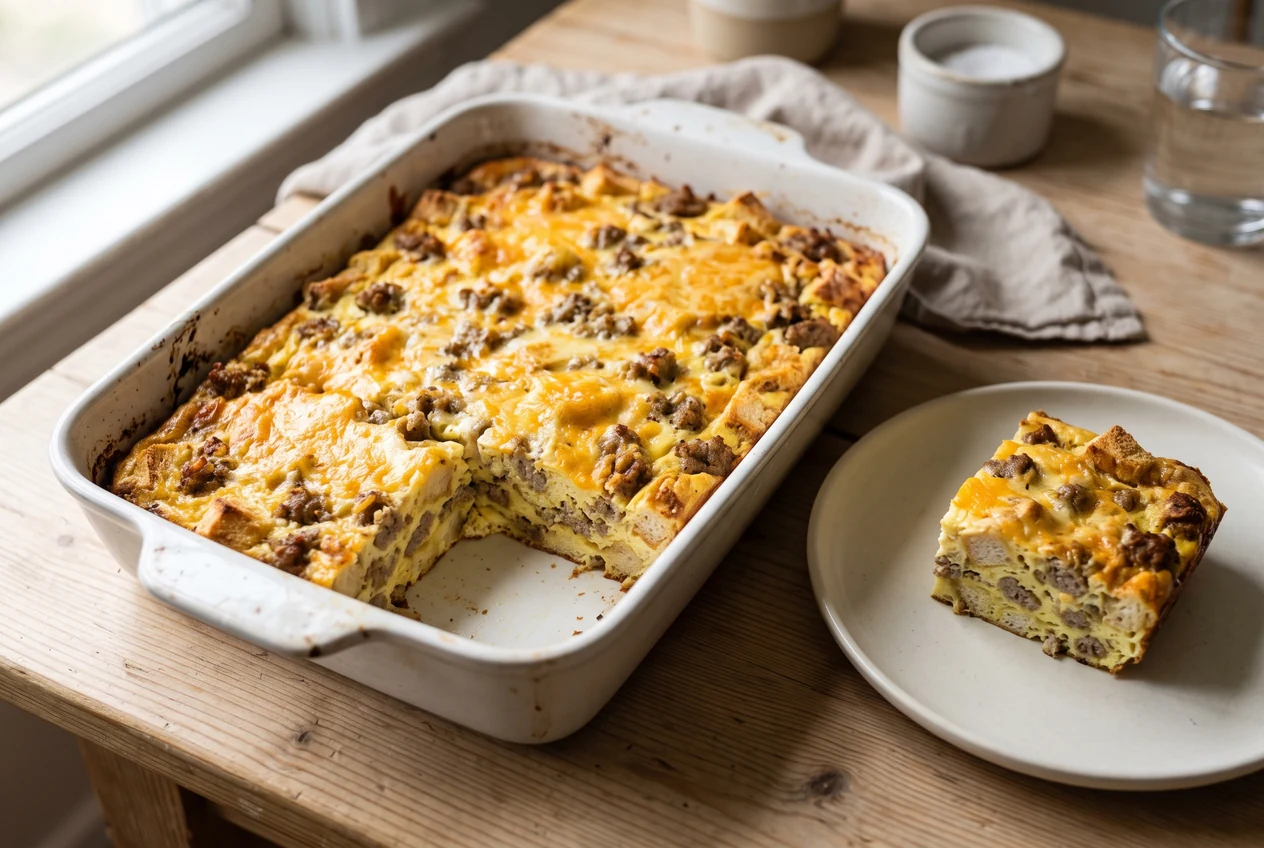
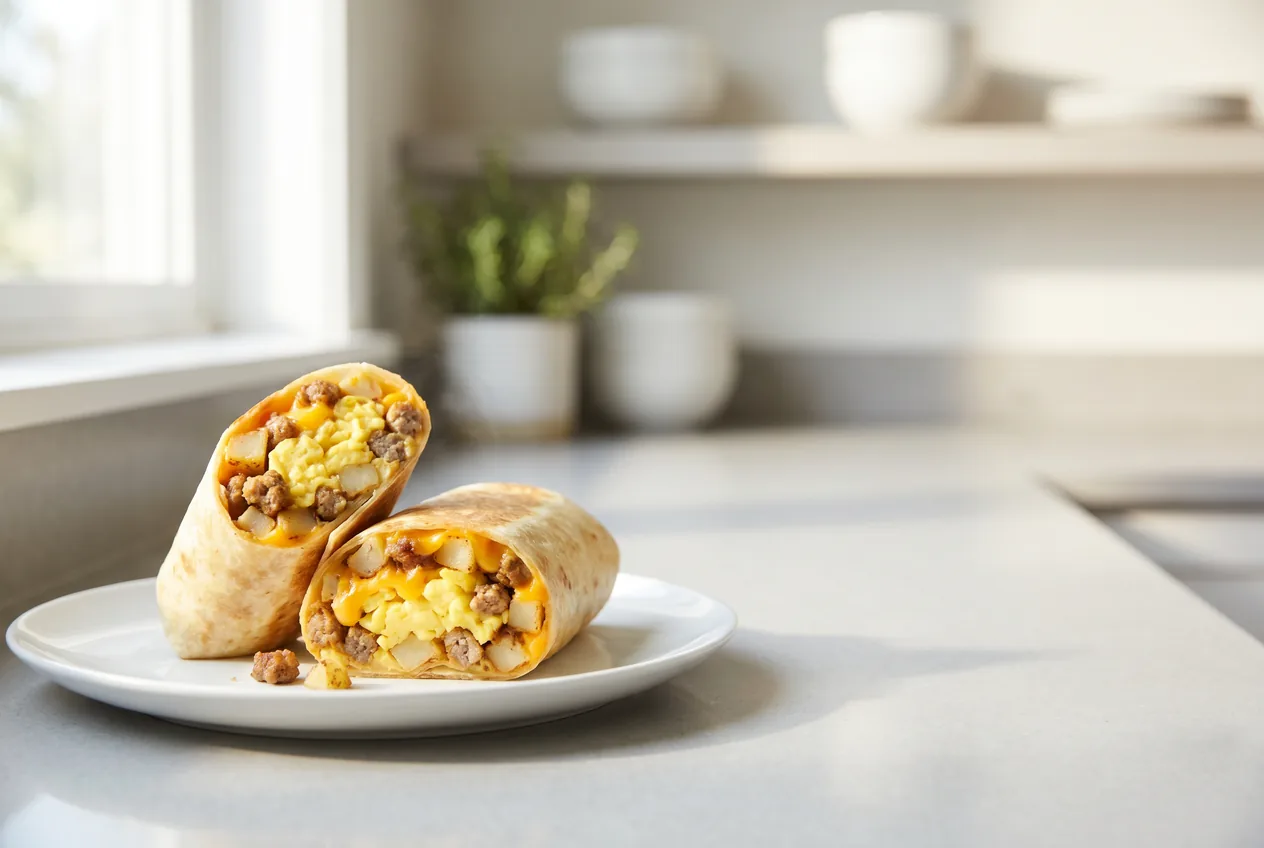
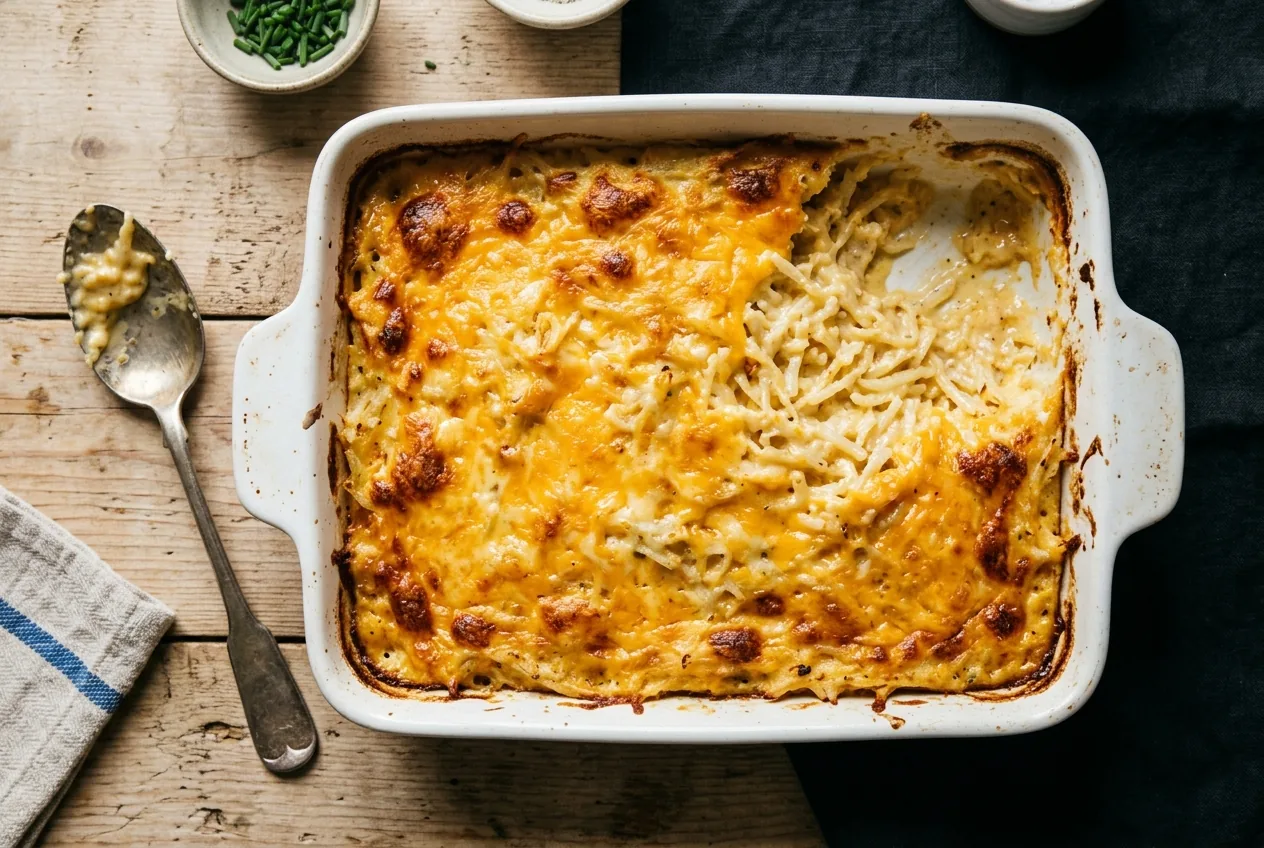
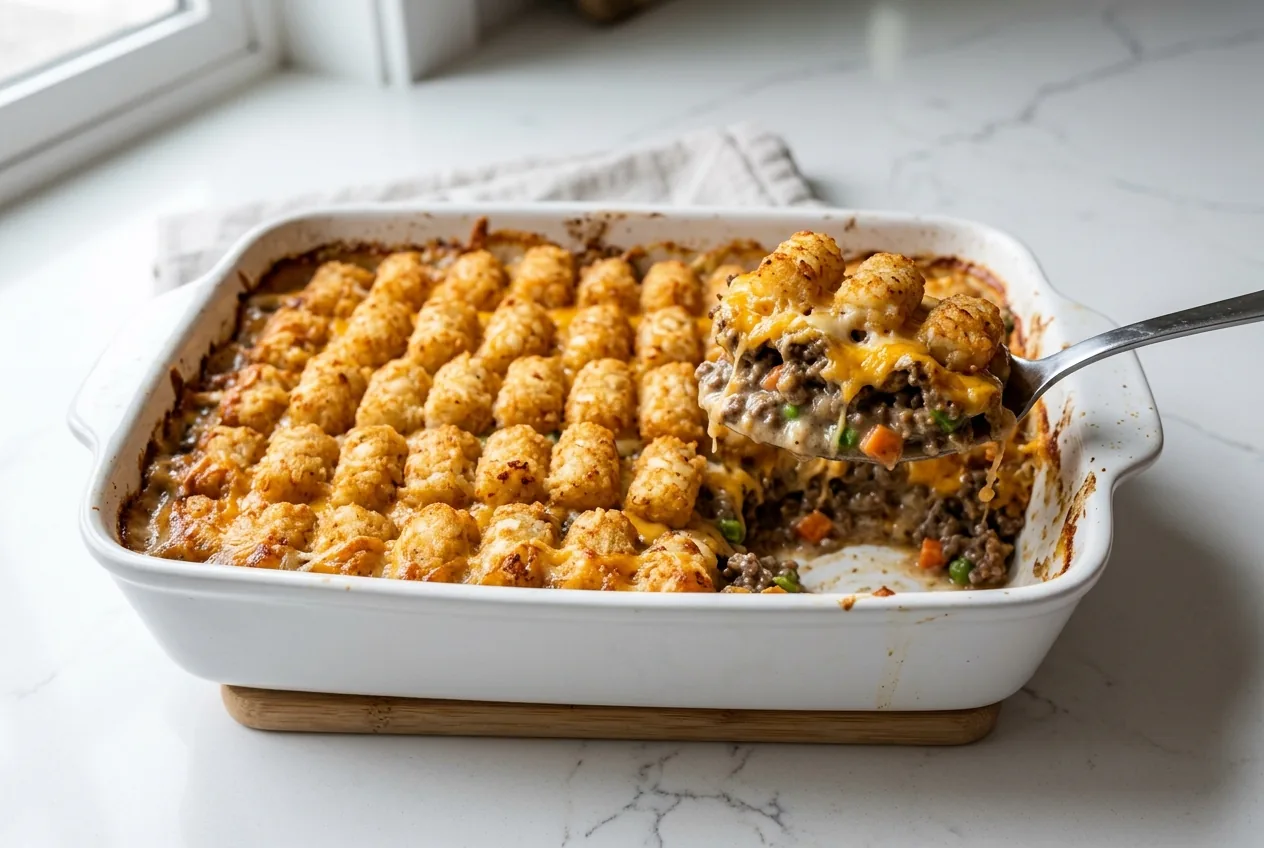
This sausage, egg, and cheese breakfast casserole feeds ten for about $0.92 a plate, and you can build it the night before and bake it in the morning. Day-old bread soaks up a simple egg-and-milk custard, browned breakfast sausage and cheddar run through every layer, and it bakes into a sliceable, savory casserole that holds a crowd through a slow weekend morning or a busy holiday. It is a different dish from our cheesy hashbrown casserole side: this one is egg-based and hearty enough to be the whole breakfast. For a hand-held version of the same flavors, see the freezer breakfast burritos.
Recipe from Budget Plates · https://www.budgetplates.com/breakfast-casserole
Heat the oven to 350 F if you plan to bake right away. In a large skillet over medium heat, cook the sausage with the diced onion, breaking it into small crumbles, for 7 to 9 minutes until no pink remains and the onion is soft. Drain off the fat so the finished casserole is savory, not greasy.
Grease a 9x13 inch baking dish. Scatter the cubed bread evenly across the bottom, then top with the drained sausage and half of the cheddar. Day-old or lightly dried bread holds its shape and soaks up the custard without turning to mush.
In a large bowl, whisk the eggs, milk, salt, pepper, and mustard powder until fully combined with no streaks of white left. Pour it evenly over the bread so every piece gets wet, then press the bread down gently with the back of a spoon to help it soak.
For the best texture, cover and refrigerate at least 1 hour or overnight so the bread fully absorbs the custard. Short on time, let the dish sit on the counter for 15 minutes while the oven heats.
Scatter the remaining cheddar over the top. Bake uncovered at 350 F for 45 to 55 minutes, until the center is set, no longer jiggles, and reads 160 F on an instant-read thermometer. If the dish goes in straight from the fridge, add about 10 minutes.
Let the casserole rest 10 minutes before serving. Egg casseroles firm up as they cool, so a short rest is what lets you cut clean squares instead of a loose scoop.
Refrigerate leftovers, covered, for up to 4 days. The casserole slices cleanest once fully chilled, which makes it easy to portion for grab-and-go breakfasts.
Freeze cooled portions, wrapped well, for up to 2 months. Thaw overnight in the fridge before reheating.
Reheat single portions in the microwave for 60 to 90 seconds, or warm the whole dish, covered, in a 325 F oven for 15 to 20 minutes until heated through.
Estimates per serving, calculated from standard ingredient data. Not a substitute for medical advice.
Yes. Assemble it through pouring the custard over the bread, cover, and refrigerate overnight. The bread soaks up the eggs while it rests, which gives a better texture than baking right away. Add the top cheese and bake in the morning, adding about 10 minutes since it starts cold.
Sturdy day-old sandwich bread, French bread, or Italian bread all work. Slightly stale bread holds its shape and soaks the custard without turning to mush. If your bread is fresh, cube it and leave it out for an hour or toast it lightly first.
The center should be set and no longer jiggle, and an instant-read thermometer should read 160 F in the middle. Egg casseroles firm up as they rest, so pull it once it reaches temperature and let it sit 10 minutes before slicing.
About $9.20 for the sausage, bread, eggs, milk, and cheese, divided across ten servings, which comes to roughly $0.92 each. Sausage and cheese are the biggest lines, so a sale on either moves the total the most.
As an Amazon Associate, Budget Plates may earn from qualifying purchases.