Pantry

$1.67per plate
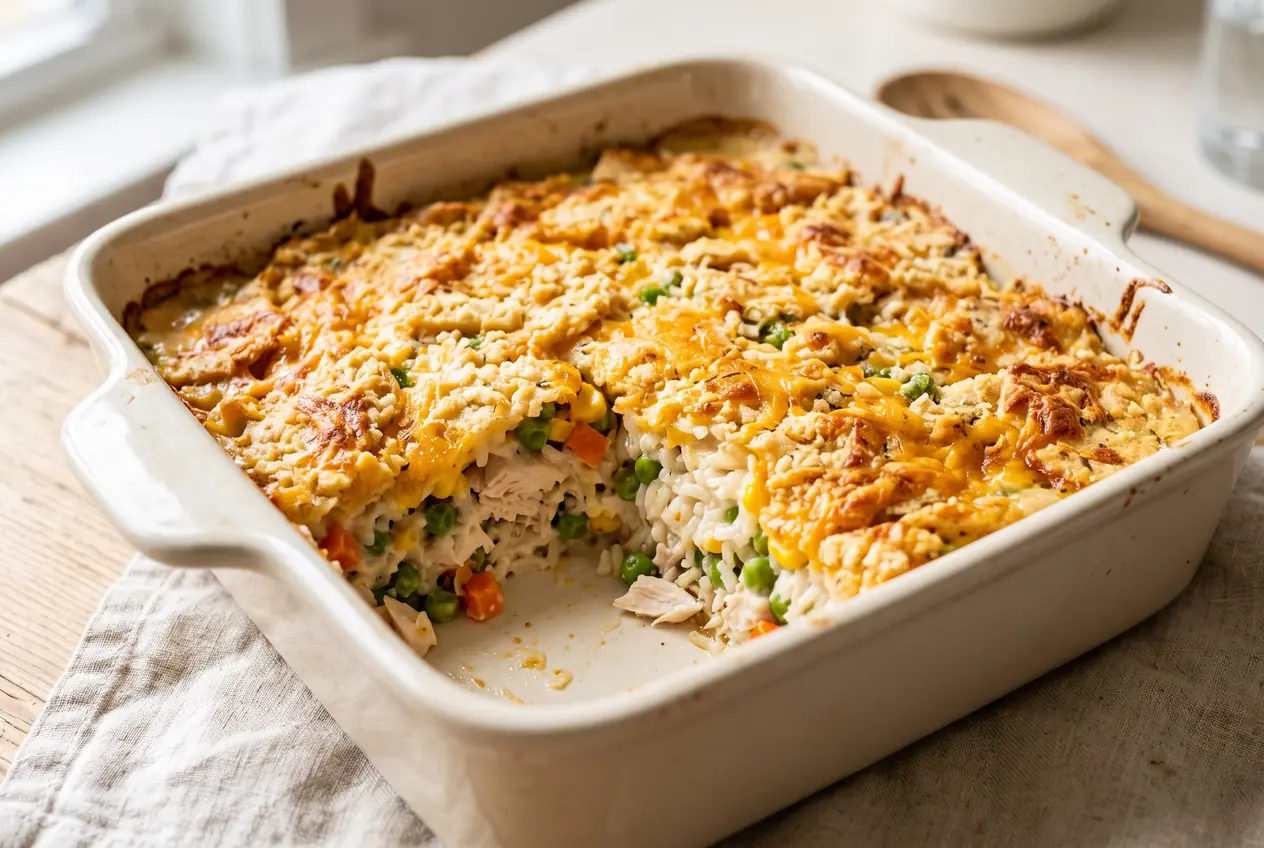
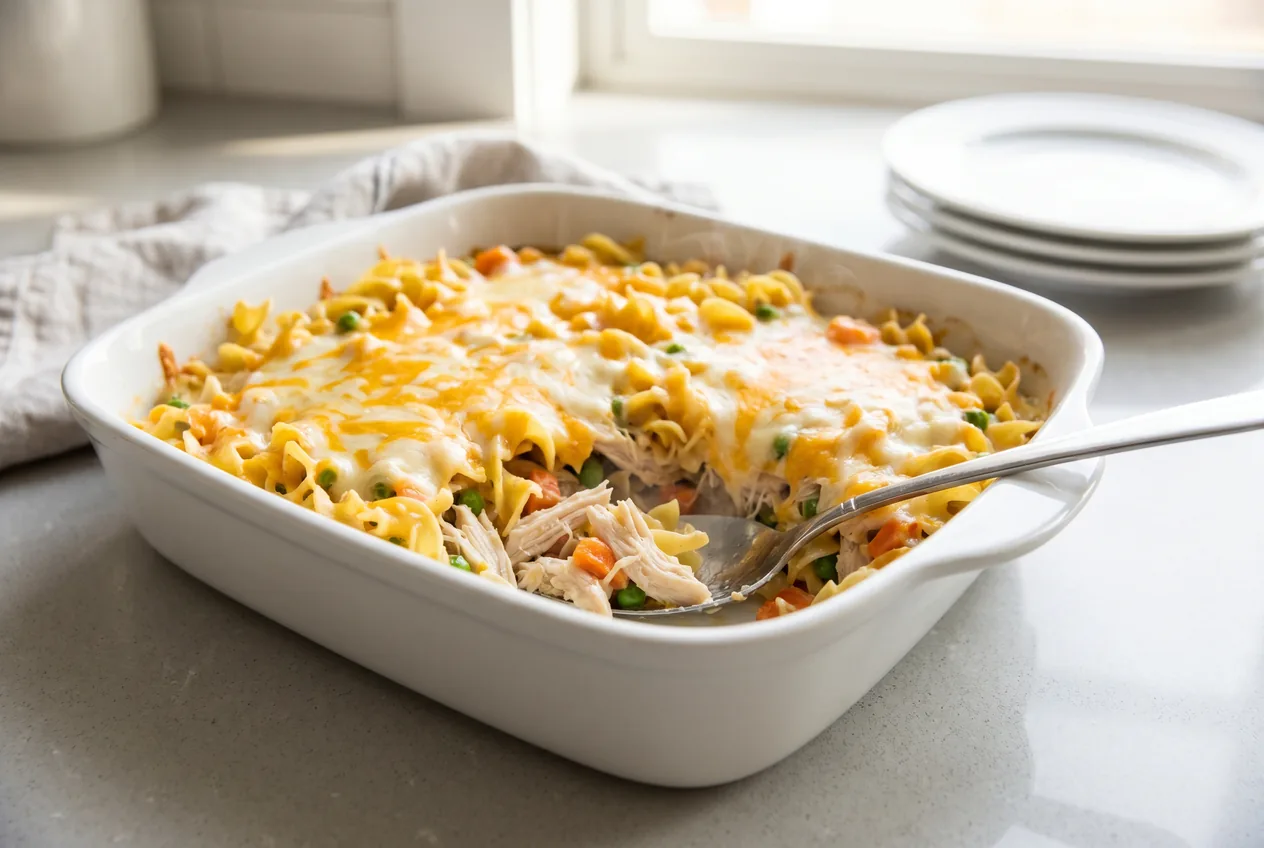
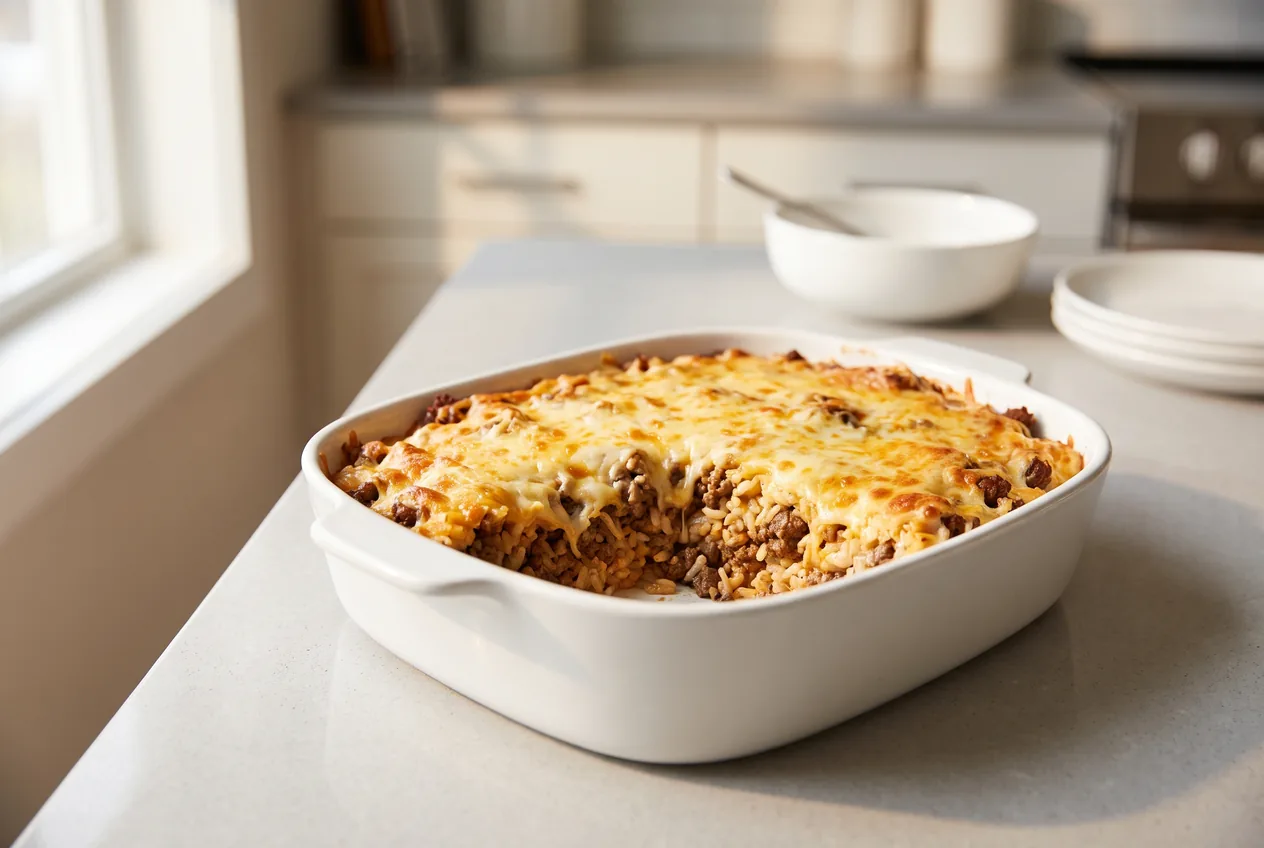
This is the casserole to make on a night you have nothing thawed. Two cans of chicken come straight off the shelf, already cooked, and go into a creamy rice bake with a from-scratch milk sauce and a handful of cheese. There is no chicken to poach, no meat to brown, and nothing to thaw. You drain the cans, stir everything together, and let the oven do the work. One eight-inch dish feeds four for a little under two dollars a plate, and it leans entirely on things that keep for months in the cupboard and freezer. It is the first hot, baked dish among our canned chicken recipes, one of the cheapest casseroles on the site, and every plate lands under $2.
Recipe from Budget Plates · https://www.budgetplates.com/canned-chicken-casserole
Heat the oven to 375 F and butter an 8-inch square baking dish. If you do not have cooked rice ready, start about 2/3 cup of dry white rice now, or use 2 cups of leftover rice straight from the fridge.
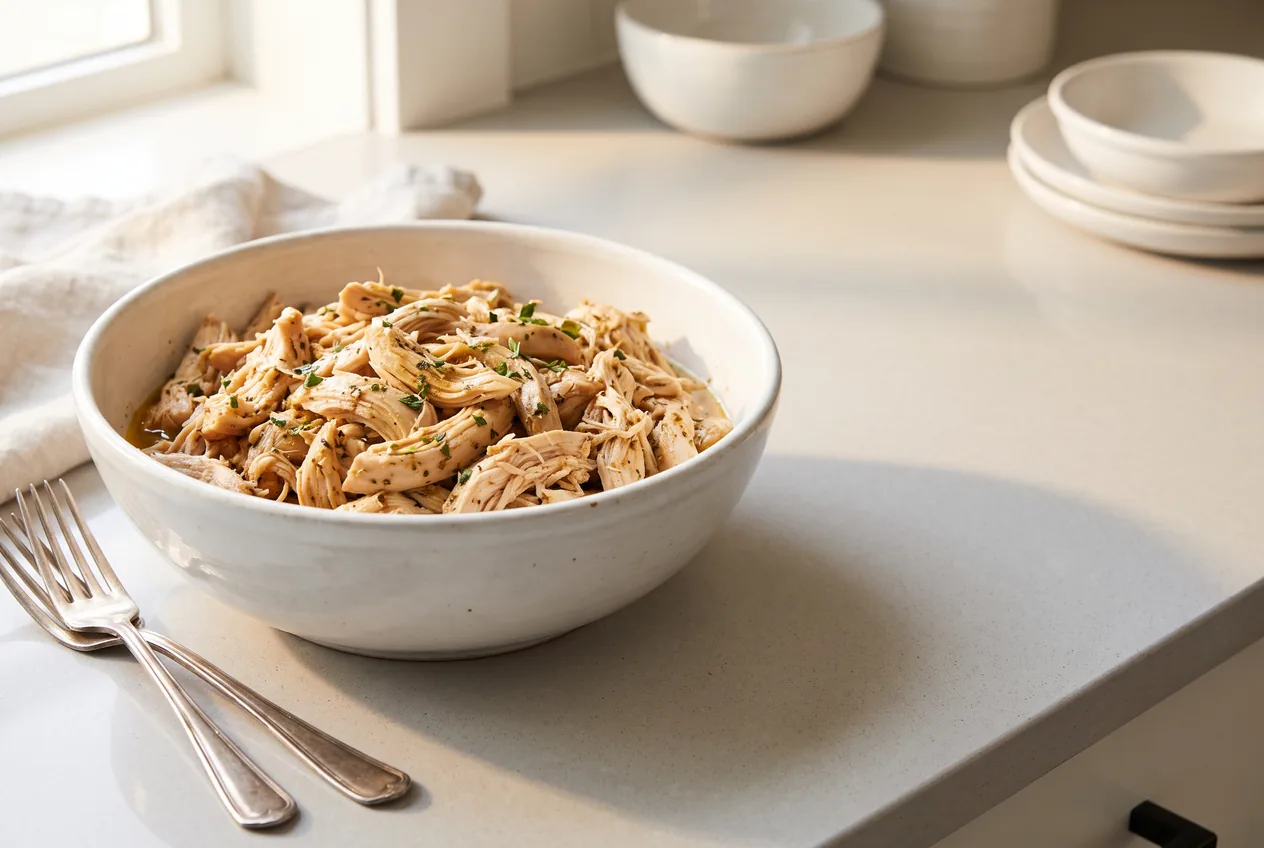
Open both cans and drain them thoroughly, pressing out the liquid with the lid so the finished casserole is creamy and not watery. Flake the chicken into a large bowl. There is no cooking here; canned chicken is already fully cooked.
Melt the butter in a saucepan over medium heat and soften the diced onion for a few minutes. Whisk in the flour, then slowly pour in the milk and broth, whisking until it thickens into a smooth sauce, about 3 to 4 minutes. Stir in about three-quarters of the cheese and the garlic powder, salt, and pepper until melted. This milk sauce stands in for a can of cream soup for less money and less salt.
Add the cooked rice, drained chicken, and frozen vegetables to the bowl and pour the sauce over. Stir until every bit is coated. The vegetables can go in still frozen; they thaw in the oven.
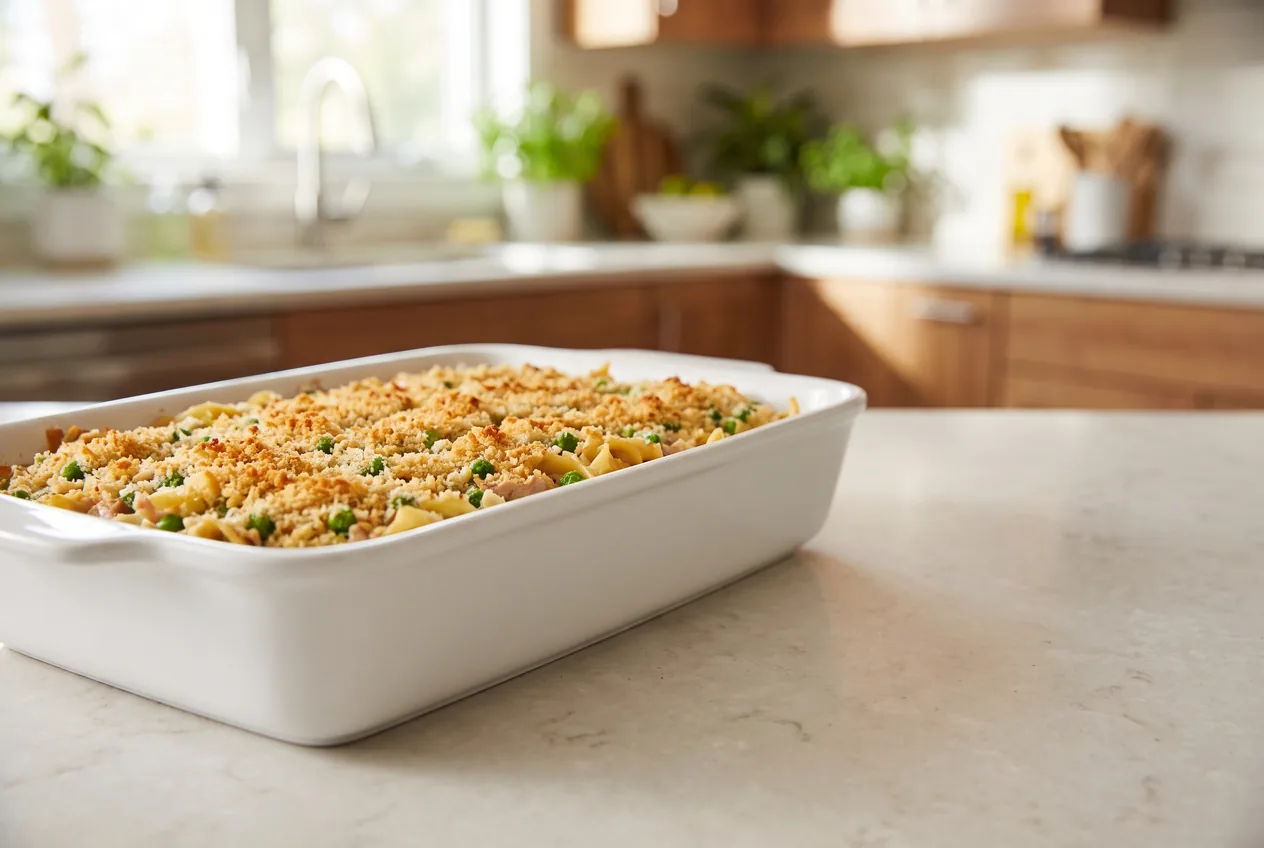
Spread the mixture into the dish, scatter the crushed crackers and the last of the cheese over the top, and bake 25 to 30 minutes, until hot through and bubbling at the edges with a golden top. Everything started out cooked, so you are baking until creamy and browned, not to cook raw meat.
Let the casserole sit 5 minutes so the sauce settles and scoops cleanly. Serve on its own or with a simple green salad on the side.
Refrigerate leftovers in an airtight container for up to 4 days. Like most casseroles, the flavor settles overnight and it reheats well.
Freeze it baked and fully cooled, whole or in portions, for up to 3 months. Thaw overnight in the fridge before reheating. The creamy rice can soften a little but holds up well.
Reheat covered in a 325 F oven until hot all the way through, about 165 F, or microwave a portion with a splash of milk stirred in so the rice and sauce stay creamy.
Estimates per serving, calculated from standard ingredient data. Not a substitute for medical advice.
No. Canned chicken is fully cooked, so you just drain it and stir it in. That is the whole point of this casserole: no poaching, no browning, and nothing to thaw.
Two standard 12.5-ounce cans, drained. That 12.5 ounces is the weight of the can before you pour off the liquid; drained, each can gives you roughly a cup of flaked chicken.
The usual causes are undrained chicken or icy vegetables. Press the liquid out of the cans and shake the frost off the vegetables, and the milk-and-flour sauce will stay creamy instead of soupy.
About $7.53 for the whole 8-inch casserole, four servings, so roughly $1.88 each. The two cans of chicken drive most of the cost, so buy them when they are on sale.
As an Amazon Associate, Budget Plates may earn from qualifying purchases.