Sausage
$1.50per plate
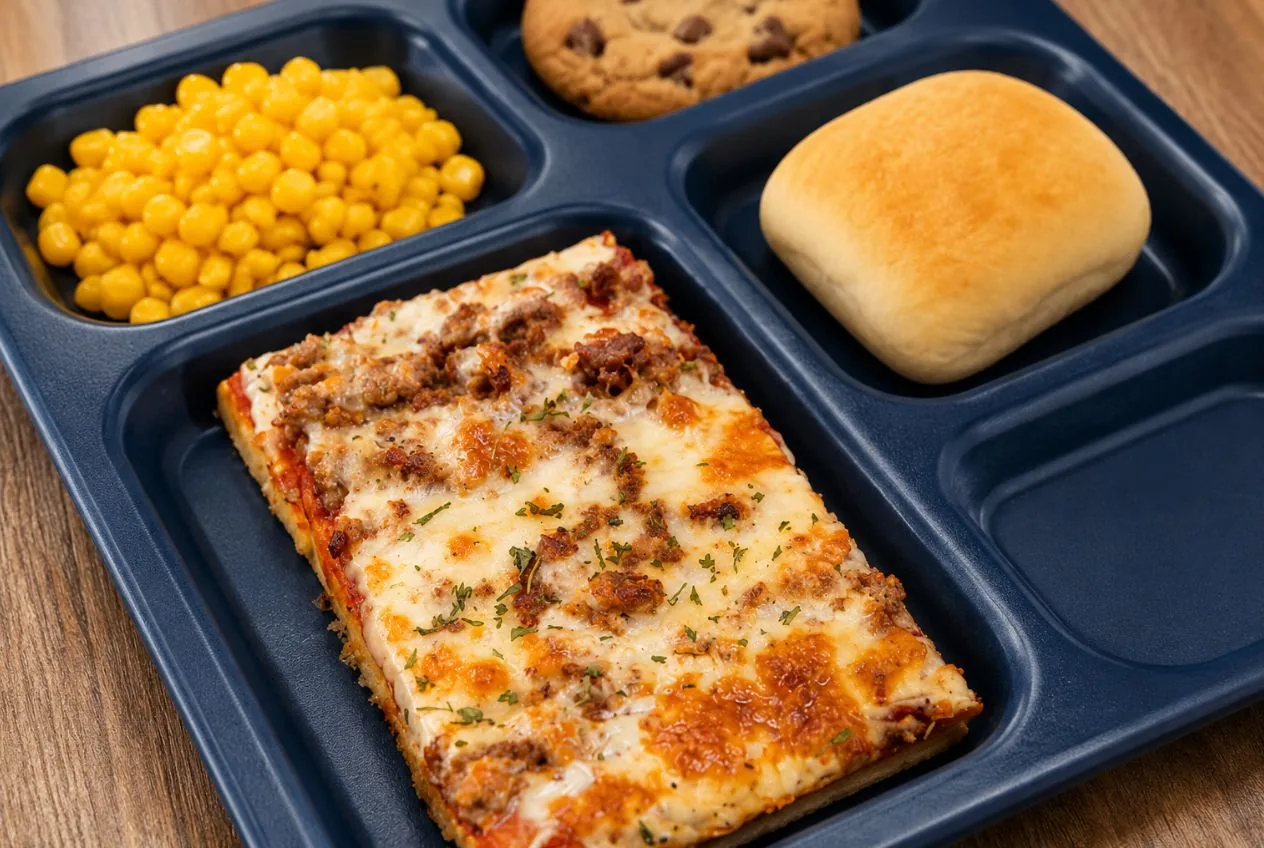
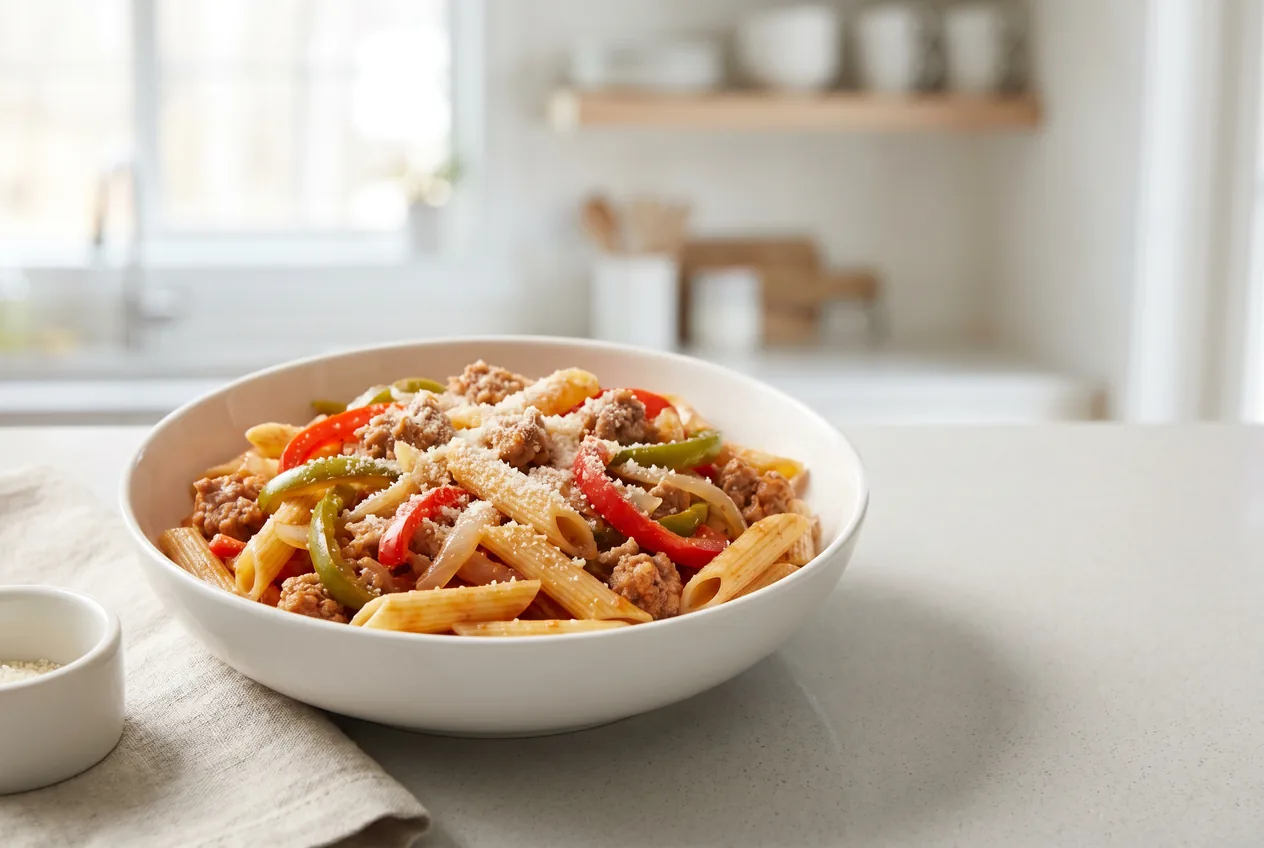
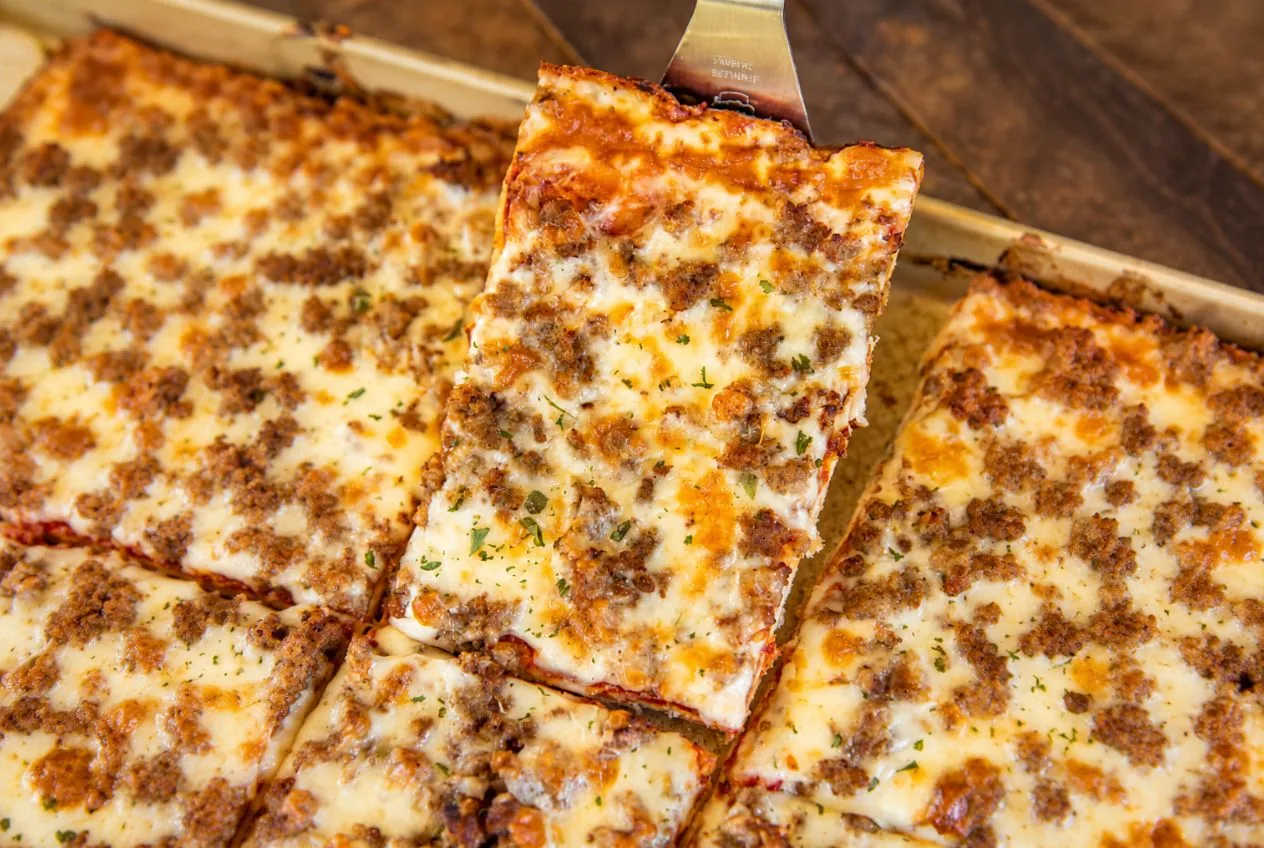
This school pizza recipe is inspired by the rectangular cafeteria pizza many people remember from school lunches in the 1980s and 1990s. What made old school pizza different from a pizzeria pie was never the toppings - it was the crust. Cafeteria kitchens worked from a batter, not a dough: too wet to knead, poured straight into a sheet pan and spread to the corners, so it baked up soft and mildly spongy instead of chewy. That is exactly what this recipe does, with nonfat dry milk in the batter for the tender crumb and gentle browning that school lunch pizza always had. A half sheet pan makes twelve rectangles for about $1.51 a plate, topped with crumbled pork sausage and a mozzarella-cheddar blend. If you want more from the same pound of sausage, our Italian sausage and peppers pasta is close by, and there are more easy dinner ideas for the rest of the week.
Recipe from Budget Plates · https://www.budgetplates.com/school-pizza
Whisk the flour, dry milk, instant yeast, sugar, and 1 1/2 tsp salt together in a large bowl - instant yeast goes straight into the dry ingredients and does not need proofing first. Pour in the warm water and 2 tablespoons of the oil, then stir hard with a sturdy spoon for about a minute until no dry flour remains. You are not making dough. The batter should be thick, sticky, and just barely pourable, closer to very stiff pancake batter than to pizza dough, and far too wet to knead or shape by hand. If it holds a stiff ball, add water a tablespoon at a time; if it runs off the spoon in a thin stream, add flour a tablespoon at a time.
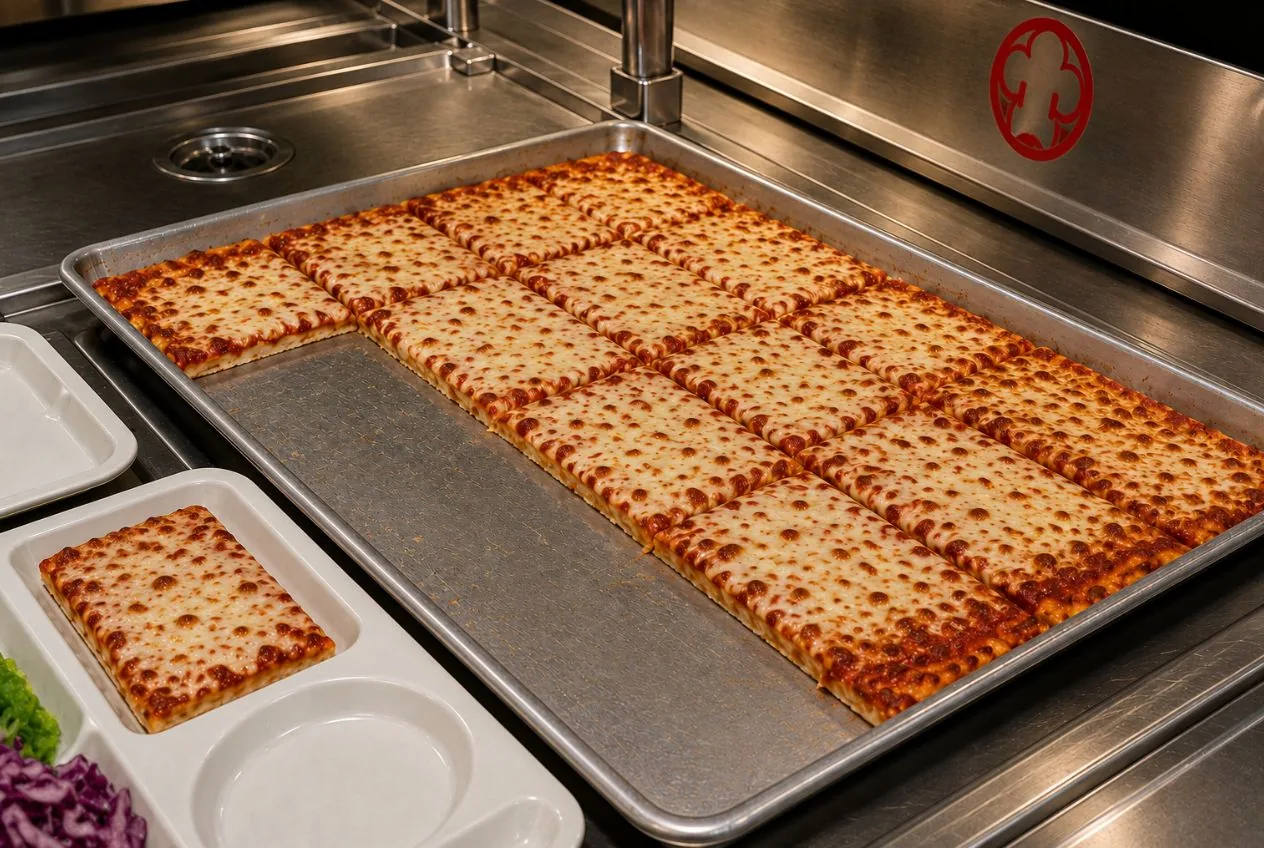
Grease a 13x18-inch rimmed half sheet pan generously with the remaining tablespoon of oil, corners included - this batter sticks, and oil rather than spray is what reliably releases it. Scrape the batter in and spread it to the edges with an oiled offset spatula or the back of an oiled spoon, working it into all four corners. It will fight back a little; keep pushing until the layer is even, roughly a quarter inch thick. Cover loosely and rest 30 minutes at room temperature. It will not double like bread dough - you are looking for a slightly puffed, bubbled surface.
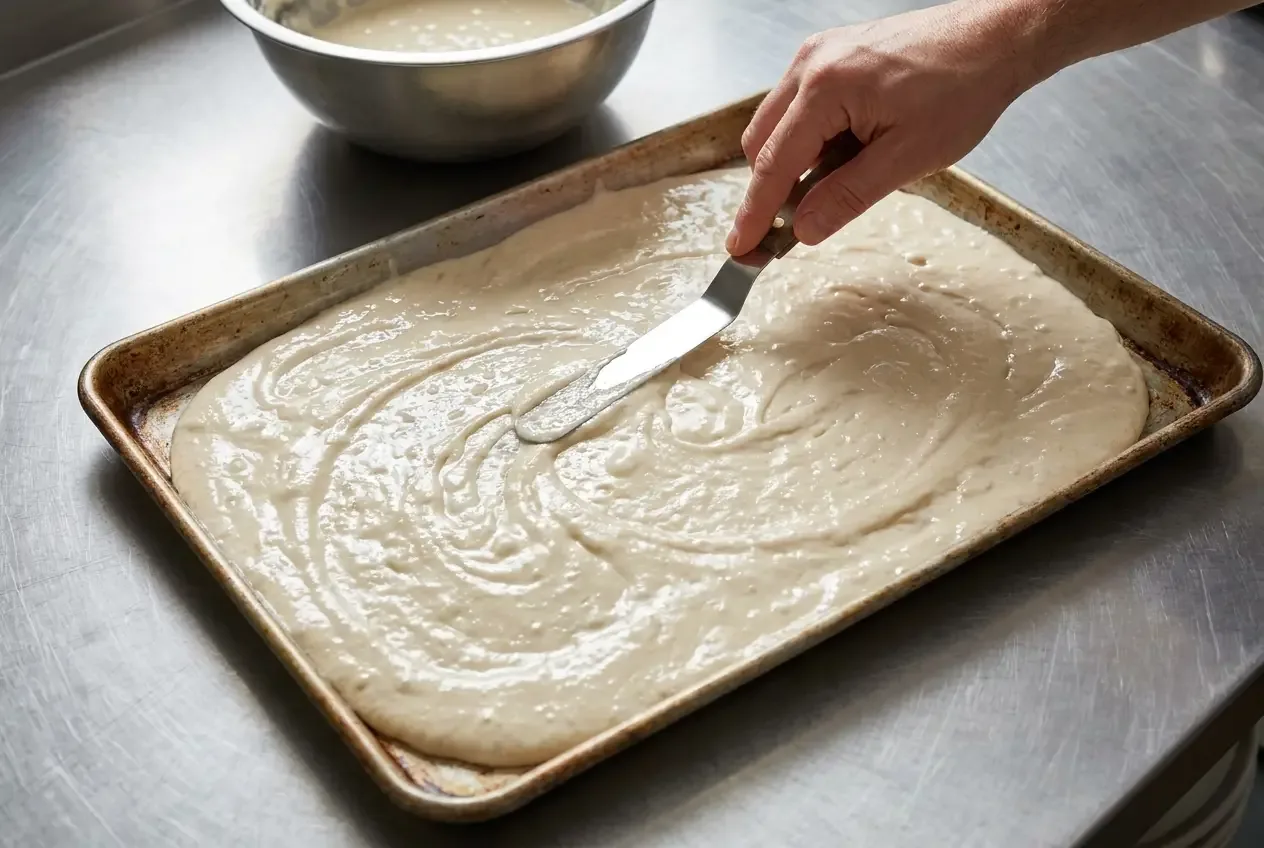
While the batter rests, heat the oven to 425 F and brown the sausage in a skillet over medium heat, breaking it into small crumbles as it cooks, 8 to 10 minutes until no pink remains. Drain it well in a strainer or on paper towels - sausage fat left in the pan is the main reason cafeteria-style pizza turns out greasy on top. In a bowl, stir the tomato paste with 1 1/4 cups water, the oregano, onion powder, garlic powder, paprika, salt, and pepper. It should be noticeably thicker than jarred pizza sauce: a spoon dragged through it should leave a trail that closes slowly. If it looks thin, hold back some of the water.
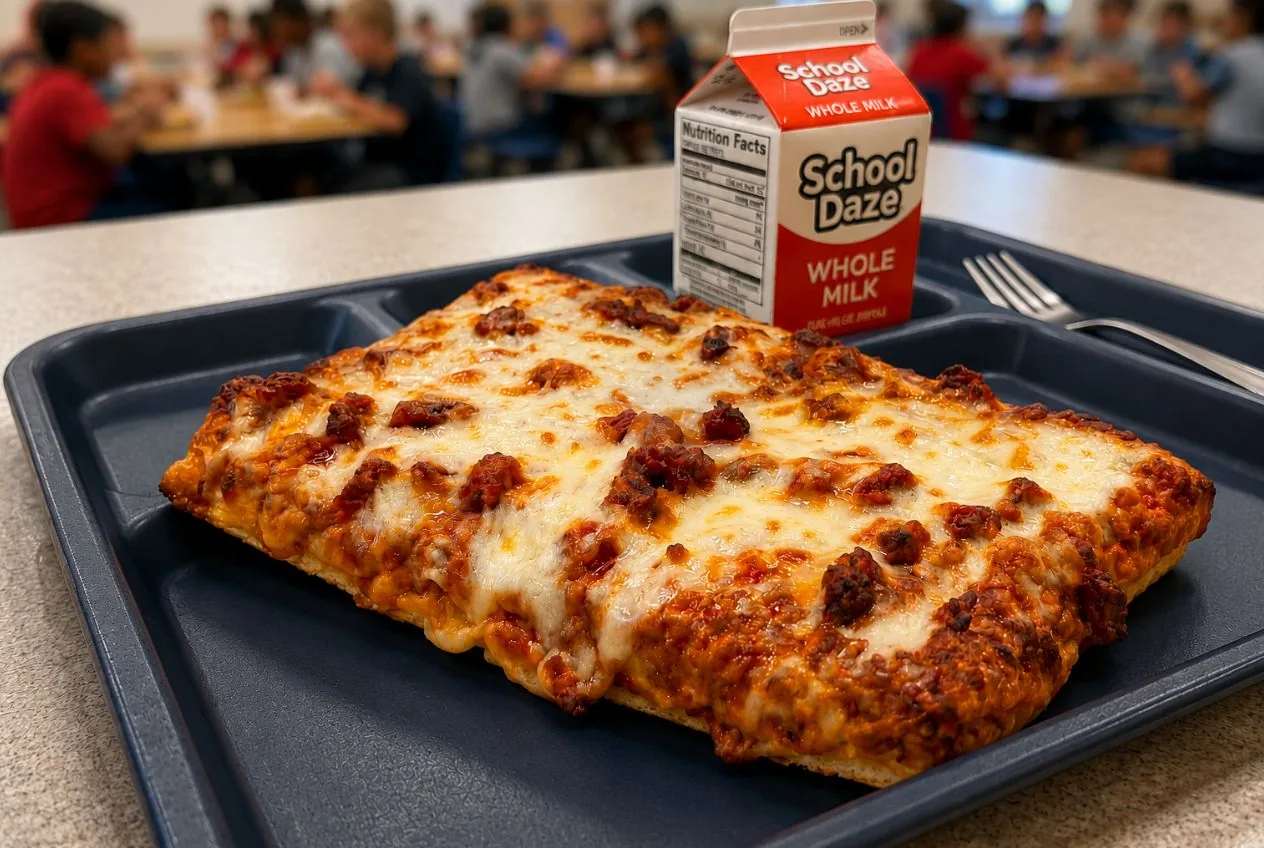
Bake the rested crust on its own for 8 to 10 minutes. This step is not optional - topping raw batter traps steam underneath and gives you a pale, gummy center. It is ready when the surface looks set and dry rather than wet, the top has lost its shine, and the very edges are barely starting to color. It should still be pale overall; the second bake does the browning.
Spread the sauce over the warm crust in a thin, even layer, leaving about half an inch bare at the edges. Scatter the drained sausage evenly, then the mozzarella and cheddar. Put the cheese on last, over the sausage - cheese laid under the meat is what makes toppings slide off in sheets when you cut it. Bake another 12 to 15 minutes, until the cheese is fully melted with scattered golden blistered spots and the crust edge is a light golden brown. Lift a corner with a spatula to check the bottom is set and cooked through, not damp.
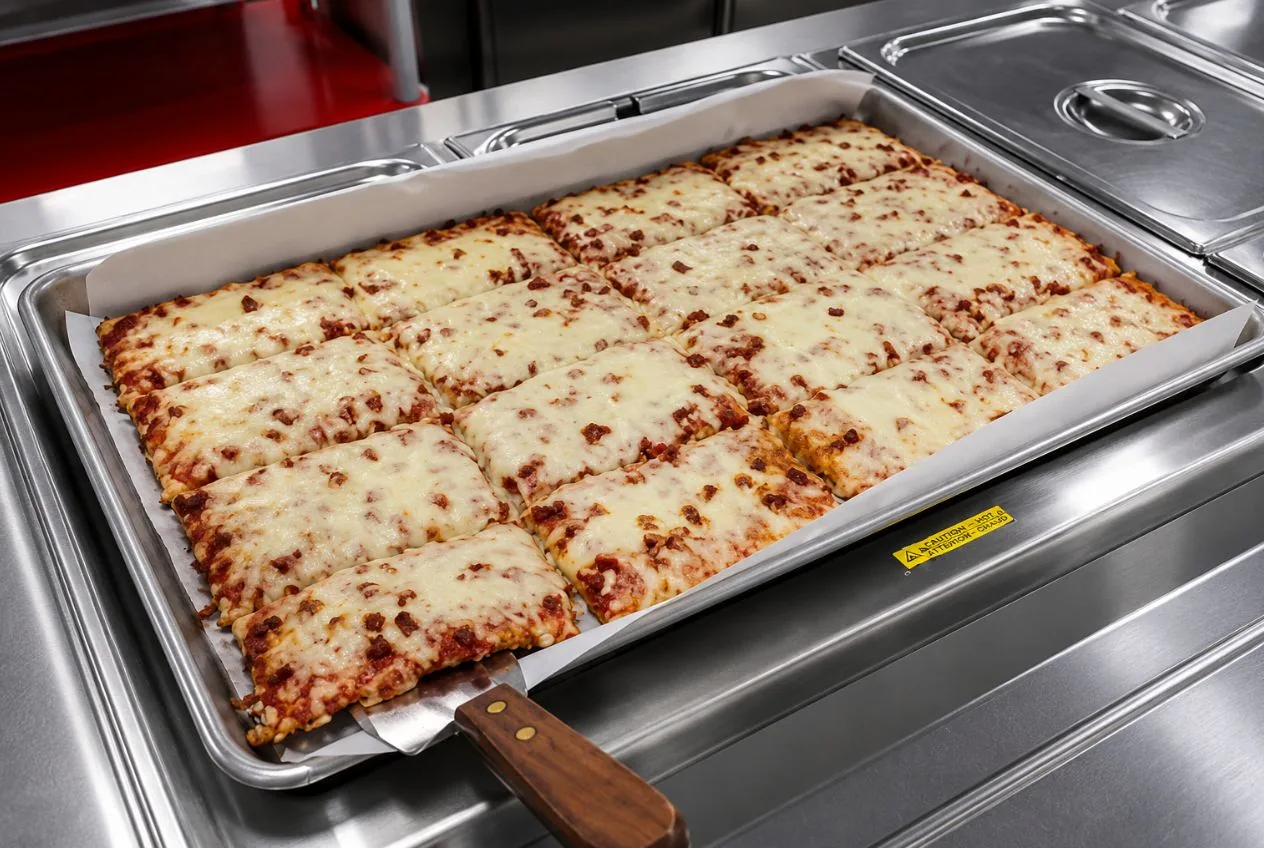
Let the pan rest 5 minutes on a rack before cutting. Cut straight down the long side into 4 columns and across into 3 rows for 12 rectangles of roughly 4 1/2 by 4 1/3 inches - the cafeteria proportion. Resting matters: cut it straight from the oven and the molten cheese drags sideways and the slices tear instead of separating cleanly. Two rectangles make an adult dinner portion.
Refrigerate leftover slices in an airtight container for up to 4 days. Cool them to room temperature first and get them into the fridge within 2 hours of baking - a warm pan of pizza sitting out is exactly the condition cooked sausage and dairy should not be held in. Stack slices with a sheet of parchment between them so the cheese does not weld them together.
This freezes very well, which is what school kitchens did too. Cool completely, wrap slices individually in foil or plastic, and freeze up to 3 months. Reheat from frozen at 375 F for 15 to 20 minutes, or thaw overnight in the fridge first and reheat as below.
The oven or an air fryer is worth it here: 375 F for 6 to 8 minutes brings the crust back and re-melts the cheese, and 165 F is the target if you are checking. A skillet over medium-low with a lid for 4 to 5 minutes also works well. The microwave is fastest but softens the crust considerably.
Estimates per serving of two rectangles (one sixth of the pan), accounting for the sausage fat that is drained off and discarded rather than eaten. Not a substitute for medical advice.
The rectangular sheet-pan pizza served in American school cafeterias, most familiar to people who ate school lunch in the 1980s and 1990s. It is defined by a soft, slightly thick crust baked in a large rimmed pan, a thick tomato sauce, and a mild cheese blend, cut into rectangles rather than wedges. Recipes varied a great deal between districts and suppliers - there was never one single official version.
Because of the pans and the math. Cafeterias baked in large rimmed sheet pans that go straight into commercial ovens and stack for holding, and a rectangle cuts into a predictable number of equal portions with no waste and no leftover middle piece. Round pizzas would have wasted pan space and made portioning inconsistent.
Mostly the crust. It was made from a wet batter rather than a kneadable dough, so it baked soft and cake-like instead of chewy, and dry milk in the mix added a faint sweetness and helped it brown gently. The sauce was also thicker and milder than pizzeria sauce, and the cheese was usually a mozzarella blend rather than pure mozzarella.
A yeast batter wet enough to pour and spread rather than roll. It has roughly the consistency of very thick pancake batter, which is why it is scraped into a greased pan and pushed to the corners with a spatula. It is the single thing that separates this from ordinary homemade sheet-pan pizza.
Four reasons, all of them real. The milk proteins tenderize the crumb, milk sugars help the crust brown at a lower temperature, it adds a mild dairy flavor you notice immediately if it is missing, and it keeps the finished crust softer for longer. Cafeteria kitchens used it because it was shelf-stable and cheap, and the texture it produced is exactly what people remember.
Yes. If it looks like something you could knead, it is too dry and the crust will come out dense. It should be thick and tacky, slump slowly off a spoon, and need a spatula to move it around the pan. Resist adding flour to make it easier to handle.
Wet batter under wet sauce cannot dry out. Baking the crust alone for 8 to 10 minutes sets the surface so the sauce sits on top rather than soaking in, which is the difference between a cooked center and a gummy one. Skipping it is the most common way this recipe goes wrong.
Yes, and many cafeterias did. Use a pound of 80/20 beef, drain it well, and season it more aggressively than you would sausage, which arrives already seasoned. Fennel seed is the ingredient that gets beef closest to the sausage flavor.
Three things, in order of importance: par-bake the crust, drain the sausage properly, and keep the sauce thick rather than watery. If your center is still damp after all three, your sauce layer is too heavy - it should be a thin coat, not a pool.
Yes. You can par-bake the crust up to a day ahead, cool it, and keep it covered at room temperature, then top and finish it in about 15 minutes. Fully baked pizza also reheats well, so making it the day before genuinely works - this is a recipe built around holding and reheating.
About $9.09 for the whole pan - flour, dry milk, yeast, oil, tomato paste, seasonings, a pound of sausage, and the cheese - divided by six dinner servings of two rectangles each. That is roughly $1.51 a plate, or about $0.76 per rectangle if you are serving it as lunch portions. Sausage and cheese together are about 60 percent of the cost.
As an Amazon Associate, Budget Plates may earn from qualifying purchases.
Feeding a crowd tonight? This one is also part of our Easy Family Dinner Recipes collection.