Breakfast
$0.60per plate
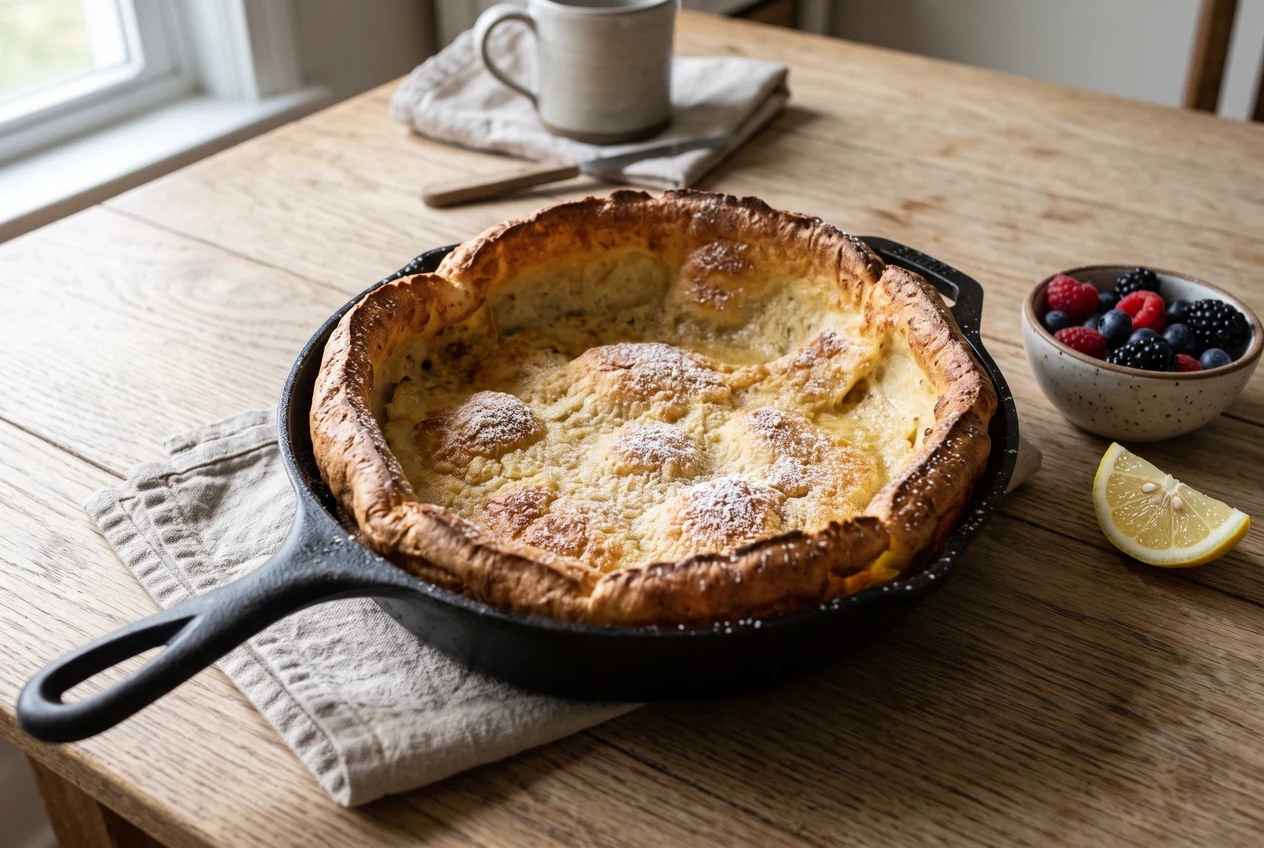
German pancakes, also called a Dutch baby, are one big oven-baked pancake that puffs up dramatically at the edges and settles into a soft, custardy middle, and this version feeds six for about $0.35 a plate. The batter is nothing but eggs, milk, flour, butter, and a little vanilla, blended smooth and poured into a hot buttered skillet, so there is no flipping and no standing at the stove. It bakes tall and golden in about 20 minutes, then deflates into tender folds you dust with powdered sugar or drizzle with syrup. It is the cheapest way to turn six eggs and a cup of flour into a breakfast that looks like a bakery made it. Serve it next to the savory breakfast casserole for a spread, or on its own with fruit.
Recipe from Budget Plates · https://www.budgetplates.com/german-pancakes
Place a 12-inch cast-iron skillet or a 9x13 inch baking dish in the oven and heat to 425 F. A hot pan is what makes the edges climb and crisp, so let it heat for the full time the oven takes to preheat.
While the pan heats, blend the eggs, milk, flour, vanilla, and salt until completely smooth, about 20 seconds in a blender or 1 minute by hand with a whisk. Room-temperature eggs and milk puff higher, so pull them out first if you have time, and a few minutes of rest lets the flour hydrate for a better texture.
Carefully pull out the hot pan, add the butter, and swirl until it melts and coats the bottom and sides. The pan should be hot enough that the butter sizzles the moment it lands.
Pour the batter into the center of the hot buttered pan and return it to the oven right away. Bake 20 to 25 minutes, until the pancake is puffed tall, deep golden at the edges, and set in the middle. Do not open the oven before 20 minutes; the rush of cool air makes it fall early.
The pancake starts to deflate the moment it leaves the oven, which is normal, so serve it fast. Dust with the powdered sugar and add lemon, syrup, or fruit. Cut the skillet version into wedges or the 9x13 into squares.
Refrigerate leftovers, covered, for up to 3 days. A German pancake is best fresh and puffed, but leftovers are still good reheated and are lovely cut up cold with fruit.
Freeze cooled pieces, wrapped well, for up to 1 month. Thaw in the fridge and reheat to bring back some crispness.
Reheat in a 350 F oven or a toaster oven for 5 to 8 minutes to re-crisp the edges. The microwave works in a pinch but softens the texture.
Estimates per serving, calculated from standard ingredient data. Not a substitute for medical advice.
Yes. A German pancake and a Dutch baby are the same oven-baked, puffed pancake made from a thin egg-and-flour batter. The main difference is size and pan: a Dutch baby is often baked in a single cast-iron skillet, while German pancakes are sometimes baked in a 9x13 dish to feed more. This recipe works in either.
The two biggest reasons are a pan that was not hot enough and opening the oven too early. Preheat the pan with the oven, pour the batter into a sizzling buttered pan, and leave the door shut until at least 20 minutes in. Room-temperature eggs and milk also help it climb higher.
That is normal and expected. The tall puff is steam, and it collapses into soft folds as soon as the pancake hits cooler air. Serve it straight from the oven for the most dramatic look, but it tastes just as good once it settles.
About $2.13 for the eggs, milk, flour, butter, and a little vanilla and sugar, divided across six servings, which comes to roughly $0.35 each. Eggs are the biggest line, so their price moves the total the most.
As an Amazon Associate, Budget Plates may earn from qualifying purchases.
This one is also part of our American Comfort Classics collection.