Pork
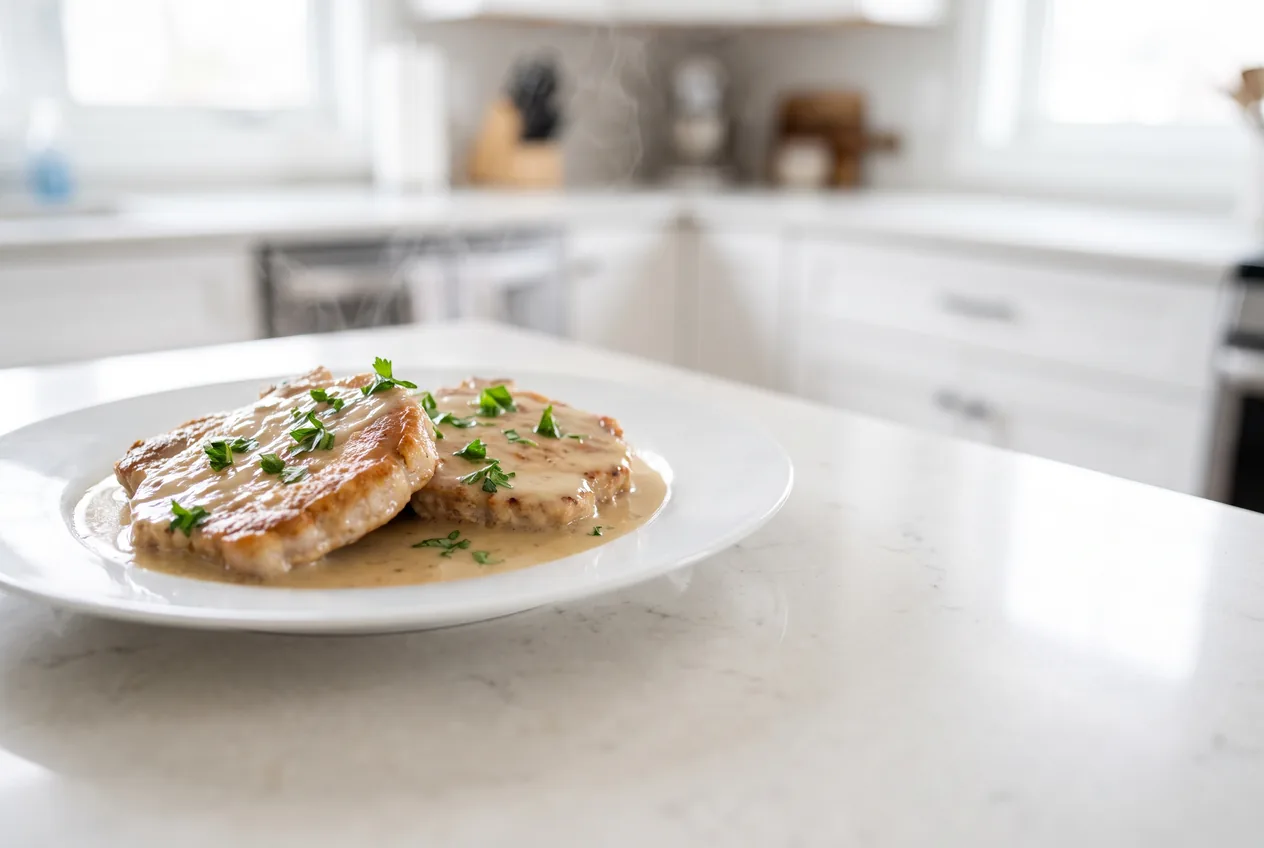
$1.27per plate
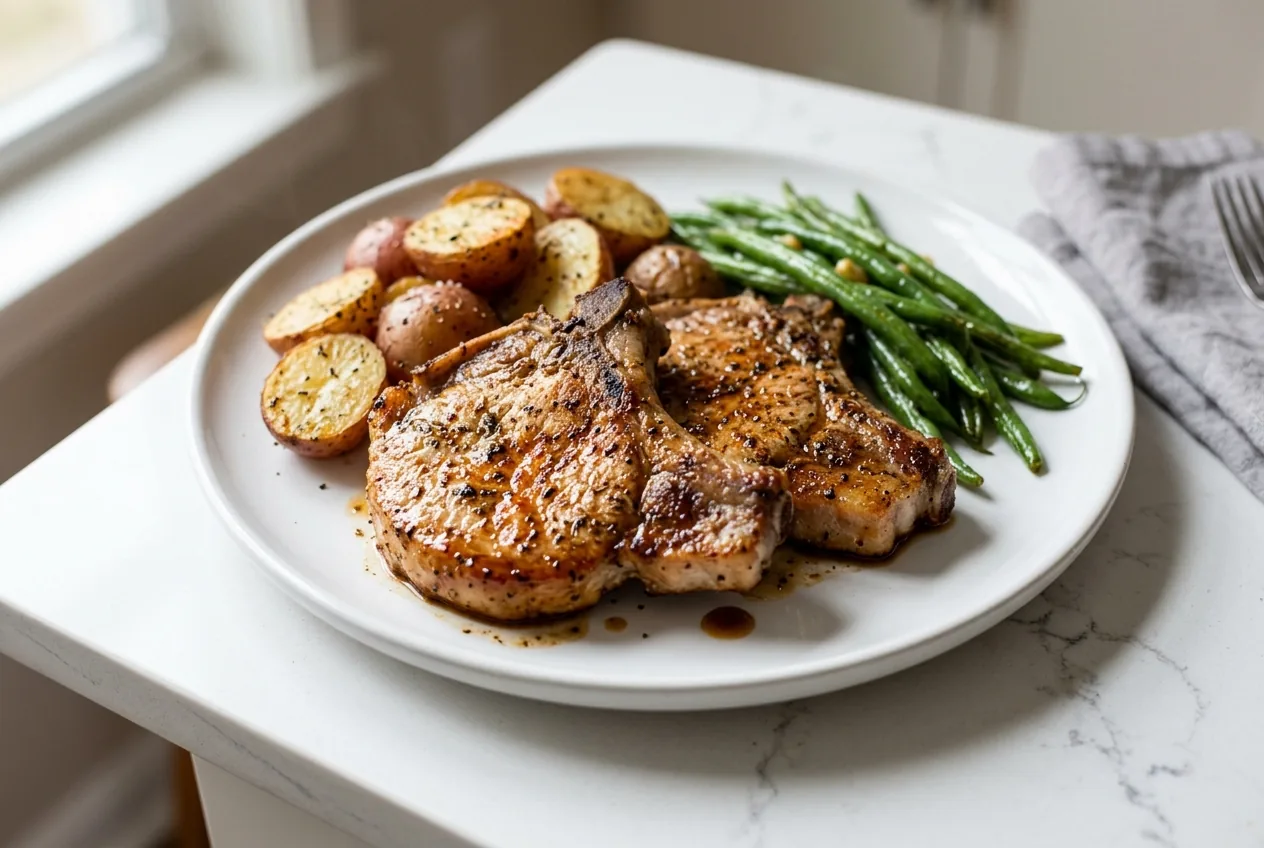
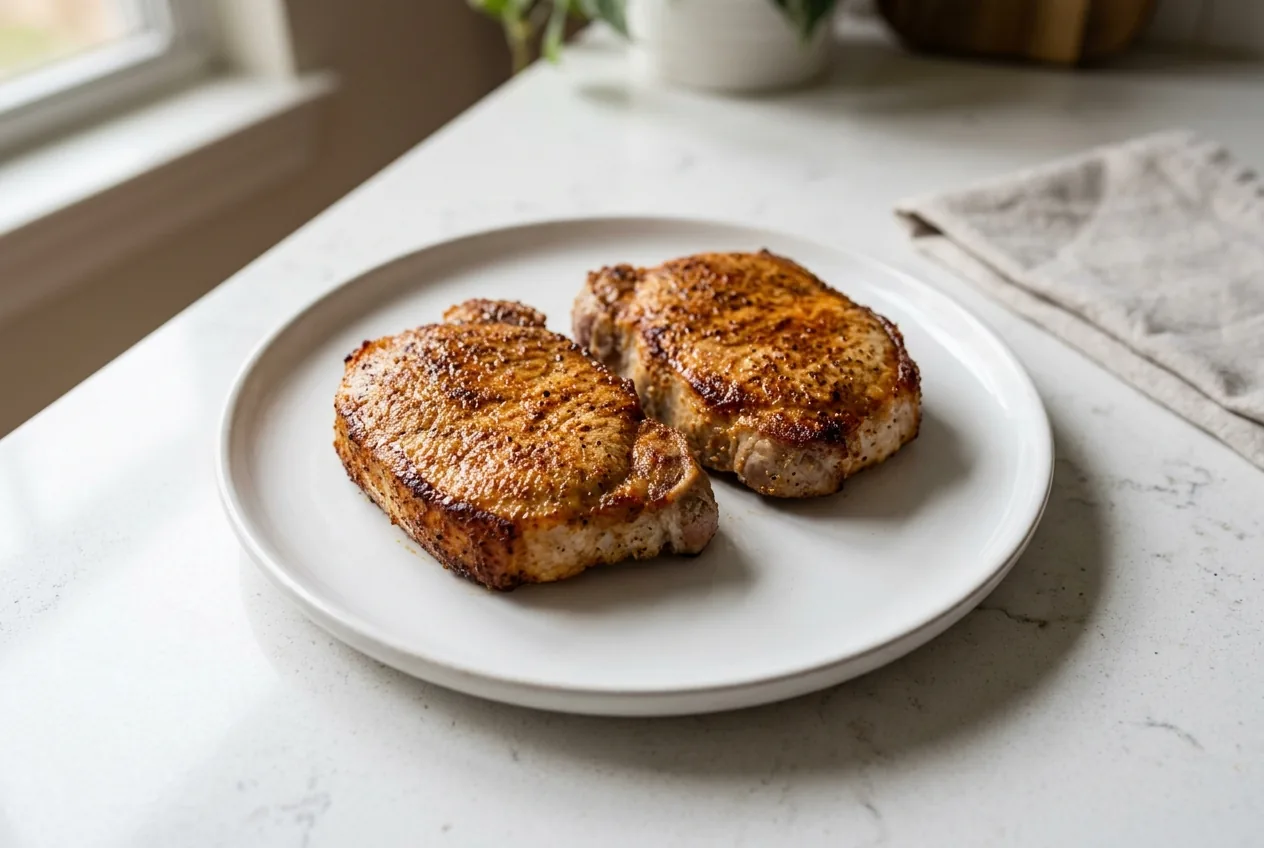
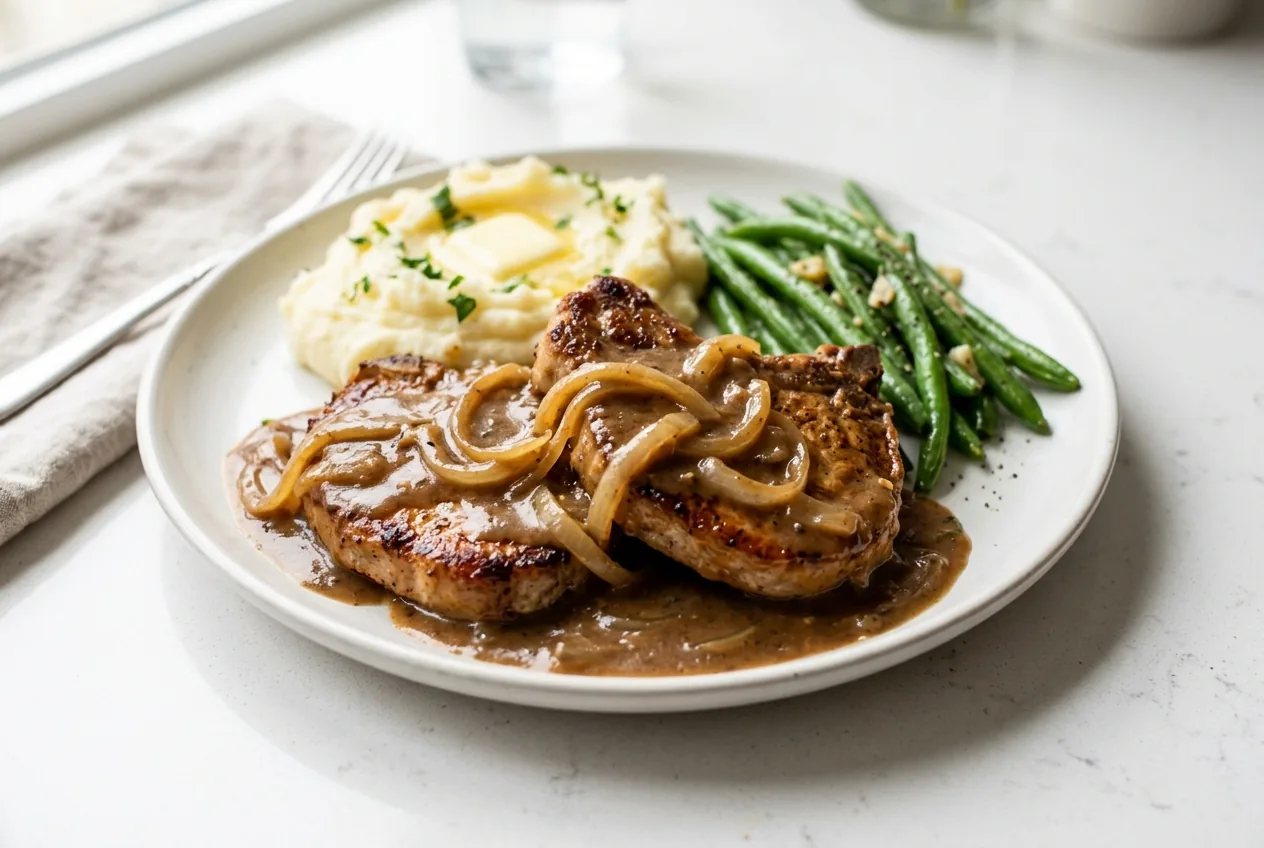
When you want pork chops with almost no hands-on work, the oven does the job better than the stove. A quick sweet-and-savory rub, a sheet pan, and twenty-odd minutes give you thick, juicy chops with lightly caramelized edges and no splatter to clean up. The one rule with lean pork is to pull it at 145 F so it stays tender instead of drying out, which a cheap thermometer makes easy. Four chops feed a family of four for about a dollar thirty-seven a plate. For a faster stovetop version, try our thin pork chops in a skillet, or roast a whole pork loin when it is on sale. At 3g of carbs a serving it is a fixture of our low-carb dinners. See all our pork chop recipes.
Recipe from Budget Plates · https://www.budgetplates.com/oven-baked-pork-chops
Heat the oven to 400 F and line a rimmed baking sheet with foil for easy cleanup. Set the chops out while it heats so they lose their chill; a cold chop straight from the fridge cooks unevenly. Pat them very dry with a paper towel, which helps the rub stick and the edges brown.
Stir the brown sugar, paprika, garlic powder, onion powder, salt, and pepper together in a small bowl. The little bit of sugar helps the outside caramelize in the oven's dry heat without burning.
Rub each chop all over with the olive oil, then press the spice mix onto both sides. The oil helps the rub cling and keeps the lean pork from sticking to the pan.
Arrange the chops on the sheet with space between them and bake 22 to 28 minutes, until the center reaches 145 F. Thickness matters more than the clock, so a thermometer is the surest way to juicy chops; bone-in chops run a few minutes longer than boneless.
Move the chops to a plate, top each with a thin pat of butter, and let them rest 5 minutes. Resting lets the juices settle back into the meat instead of running out when you cut in, and the butter melts into an easy pan-free sauce.
Refrigerate leftover chops in an airtight container for up to 4 days. Slice them cold over a salad or into a sandwich for an easy next-day lunch.
Freeze cooked chops for up to 3 months. Cool them completely first, then thaw overnight in the fridge; lean pork reheats best from thawed, not from frozen.
Reheat gently, covered, in a 300 F oven or the microwave at half power with a splash of broth so the lean meat does not dry out. A quick sear in a hot pan also revives the edges.
Estimates per serving, calculated from standard ingredient data. Not a substitute for medical advice.
At 400 F, thick bone-in chops take about 22 to 28 minutes and boneless a little less. Go by temperature, not the clock: pull them at 145 F in the center. Thicker chops need longer, so a thermometer is the surest guide.
Do not overcook them. Lean pork dries out fast past 145 F, so pull the chops right at temperature and let them rest 5 minutes. Patting them dry and using a little oil also helps them brown instead of steam.
No. The dry heat of the oven browns the sugar-and-spice rub on its own, which is what makes this version so hands-off. Skipping the skillet also means one less pan to wash.
About $5.48 for four chops and the rub, divided by four servings, comes to roughly $1.37 each. The chops are nearly the whole cost; sides like potatoes or green beans are figured separately.
As an Amazon Associate, Budget Plates may earn from qualifying purchases.