Pasta
$0.60per plate
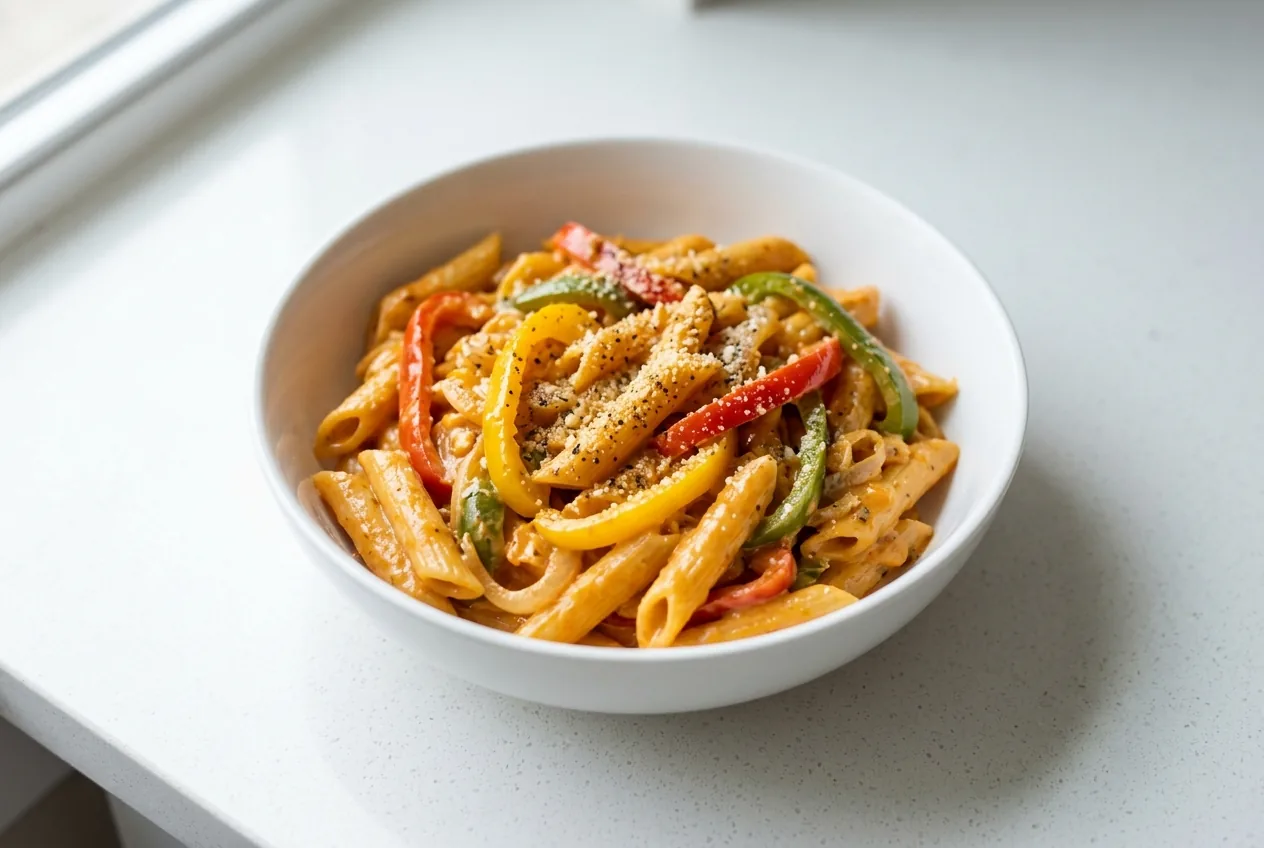
Rasta Pasta is a Jamaican-inspired creamy pasta named for the red, yellow, and green bell peppers, whose colors echo those of the Rastafari movement. Warm jerk seasoning gives it a garlicky, peppery, gently spicy backbone that sets it far apart from a plain creamy pasta, and the peppers keep it bright and fresh instead of heavy. This vegetarian base is a complete meatless dinner for about a dollar twenty a plate, and it happily takes add-ins like chicken, shrimp, or sausage if you want them. It joins our other pasta recipes, all cheap dinners with the price up front.
Recipe from Budget Plates · https://www.budgetplates.com/rasta-pasta
Boil the penne in salted water until just al dente, a minute shy of the box time since it finishes in the sauce. Scoop out a cup of the starchy pasta water before draining; it is what loosens the sauce later, and pulling the pasta early keeps it from turning mushy.
While the pasta cooks, melt the butter in a large skillet over medium-high and add the sliced peppers and onion. Cook just 4 to 5 minutes, until crisp-tender and still bright; the whole point of rasta pasta is colorful peppers, so stop before they go soft and dull. Stir in the garlic for the last minute.
Sprinkle in the jerk seasoning and stir for about 30 seconds to wake up its flavor. Add it a little at a time and taste as you go, because jerk blends vary a lot in heat; you can always add more, but you cannot take it out.
Lower the heat to low, pour in the cream, and let it warm through without boiling. A hard boil is what makes a cream sauce break or turn grainy, so keep it at a gentle simmer. Stir in the Parmesan until melted and smooth.
Add the drained pasta and toss to coat. Splash in the reserved pasta water a little at a time until the sauce is creamy and clings to the noodles, not soupy and not dry.
Adjust the salt and jerk heat, and serve right away while it is glossy. For a heartier plate, this is where cooked chicken, shrimp, or sausage can be stirred in.
Refrigerate leftovers in an airtight container for up to 3 days. The pasta keeps absorbing the sauce, so loosen it with a splash of milk or water when reheating.
Cream-based pasta can be frozen for up to 2 months, though the sauce may separate a little and the peppers soften on thawing. Freeze in portions and stir well as it reheats.
Reheat gently on the stovetop or in the microwave at half power, stirring in a splash of milk or water to bring the sauce back together. High heat will make it greasy or grainy.
Estimates per serving, calculated from standard ingredient data. Not a substitute for medical advice.
Rasta pasta is a Jamaican-inspired creamy pasta made with red, yellow, and green bell peppers, whose colors give the dish its name, and warm jerk seasoning. It is often served with chicken or shrimp, but the base is a colorful, meatless creamy pasta like this one.
Jerk seasoning is warm and peppery but usually not fiery. Start with a tablespoon, taste, and add more for heat; a pinch of cayenne or a little Scotch bonnet adds fire, while extra cream and Parmesan mellow it.
Add the cream over low heat and keep it at a gentle simmer, never a hard boil. Boiling is what makes a cream sauce split or turn grainy. Loosen it with starchy pasta water rather than more heat.
About $6.00 for the whole pan, five servings, so roughly $1.20 each. The peppers and cream are the biggest costs. Optional chicken, shrimp, or sausage would add to that and are figured separately.
As an Amazon Associate, Budget Plates may earn from qualifying purchases.