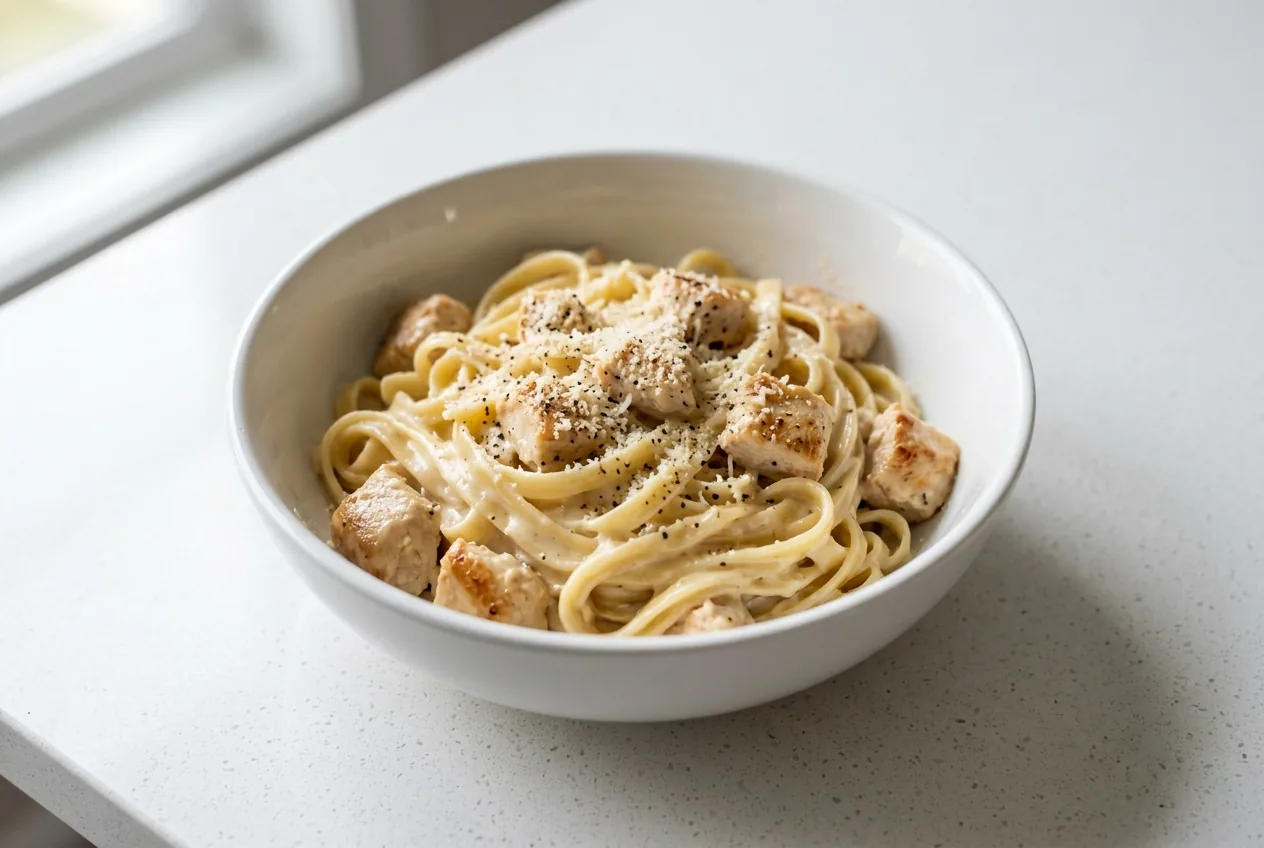
Pasta
$0.60per plate
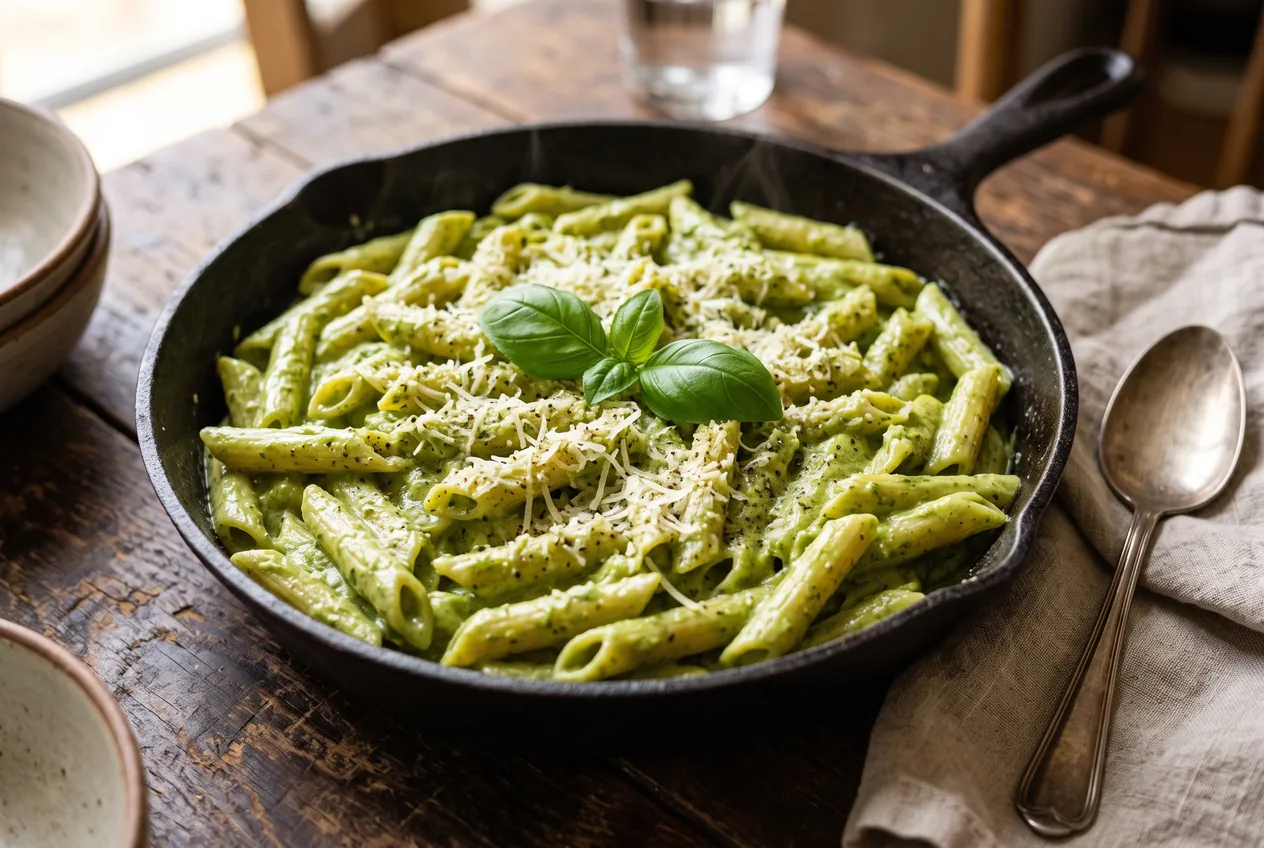
Creamy Pesto Pasta turns a jar of basil pesto into a silky green sauce that clings to every piece of penne, and it comes together in the time the pasta boils. A little cream and Parmesan round the pesto out so it is rich and smooth instead of oily, while still tasting clearly of basil, not just cheese. It is meatless, faster than an Alfredo, and where our creamy pasta recipes starter leans on garlic, this one leans on fresh, green pesto. No chicken, no fuss, about 20 minutes and $1.28 a plate. It rounds out the rest of our pasta recipes, every one priced up front.
Recipe from Budget Plates · https://www.budgetplates.com/creamy-pesto-pasta
Boil the penne in salted water until just al dente, a minute shy of the box time since it finishes in the sauce. Scoop out a cup of the starchy pasta water before draining, then set the pasta aside.
In a large skillet over medium heat, melt the butter and cook the garlic for about a minute until fragrant but not browned. Keep the heat gentle so the garlic stays sweet and does not fight the fresh basil.
Turn the heat to low and pour in the heavy cream. Let it warm through for a minute or two, but do not let it hard boil, which can make a cream sauce break.
Pull the pan from the heat and stir in the basil pesto and Parmesan until the sauce turns an even green and looks glossy. Adding the pesto off the heat keeps it bright and green instead of dull and cooked-tasting. Season with salt, black pepper, and the red pepper flakes.
Add the drained penne and toss to coat, splashing in reserved pasta water a little at a time until the sauce clings and looks silky rather than thick. Serve right away with extra Parmesan and torn fresh basil if you have it.
Refrigerate leftovers in an airtight container for up to 3 days. Pesto can darken a little in the fridge, which is normal; a splash of milk or pasta water and a stir freshens it back up when reheating.
Pesto cream sauces are best fresh, since the cream can separate and the basil dulls on thawing. Keep leftovers to a few days in the fridge instead of freezing.
Reheat gently on the stovetop or in the microwave at half power, stirring in a splash of milk or pasta water to loosen the sauce. High heat can make it greasy or grainy, so keep it low and slow.
Estimates per serving, calculated from standard ingredient data. Not a substitute for medical advice.
Stir the pesto in off the heat, after the cream is warm and the pan is off the burner. Cooking pesto hard is what turns it a drab olive color, so adding it at the end keeps it bright and green.
Here the pesto is a main ingredient, not a garnish: half a cup goes into a smaller amount of cream and Parmesan, so basil leads and the sauce is green, not white. It is built to taste of pesto first and cream second, rather than a rich Alfredo with a spoon of pesto swirled in.
Yes, a jar of basil pesto is exactly what this recipe is built around and keeps it cheap and fast. Homemade works too if you have fresh basil, but it costs more; either way, use about half a cup.
About $5.12 for the whole skillet, four servings, so roughly $1.28 each. The jar of pesto is the biggest cost, and half of it sauces the entire pan with no meat needed.
As an Amazon Associate, Budget Plates may earn from qualifying purchases.