Breakfast
$1.12per plate
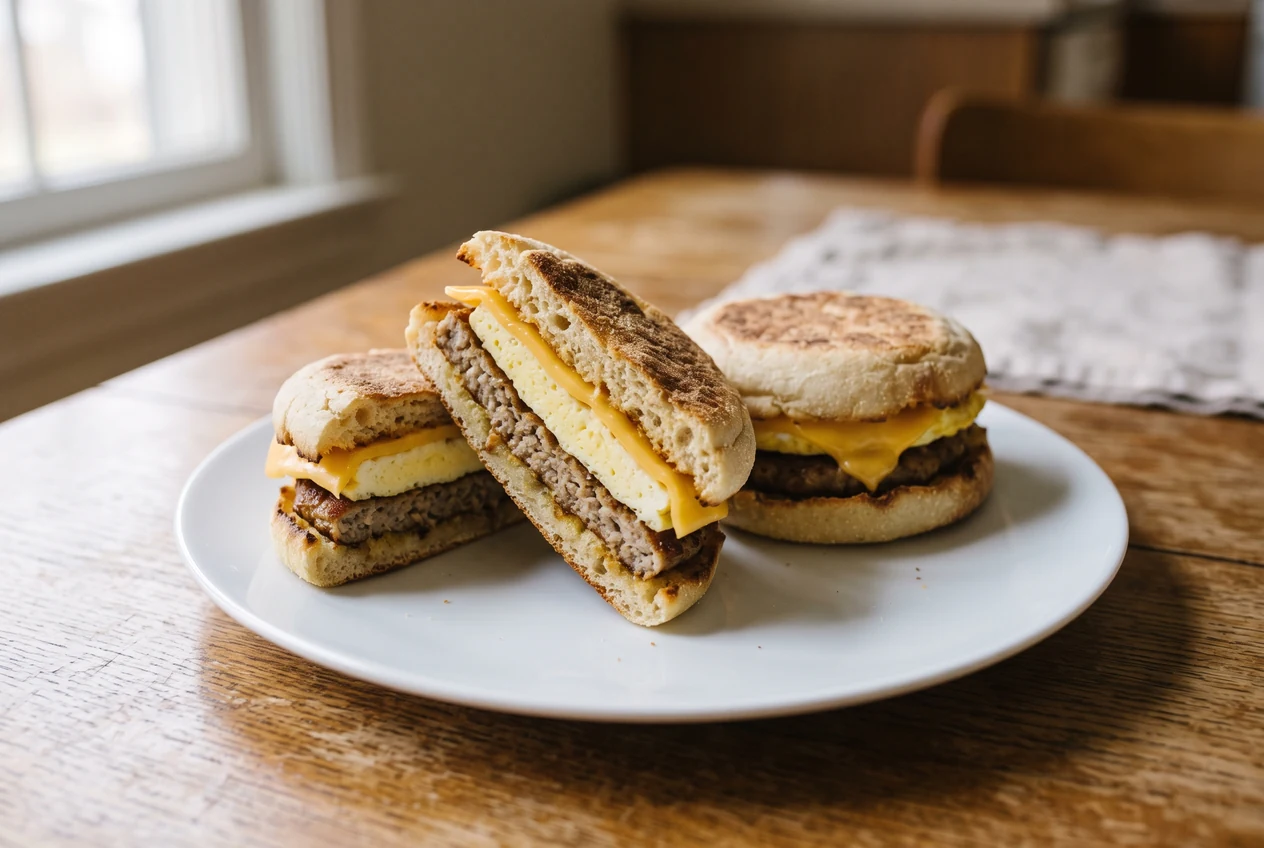
These breakfast sandwiches are sausage, egg, and cheese on a toasted English muffin, and they cost about $1.37 each against three or four dollars at a drive-through. The batch makes six at once because the oven does the eggs for you: twelve eggs go into a 9x13 pan, bake into one flat sheet, and get cut into six squares that sit on the muffin without hanging off the edges. Each sandwich lands at about 30g of protein, so it earns a place in our high-protein meals collection. They freeze well for a month, which is the point of making six, and they reheat in about two minutes. If you would rather wrap breakfast in a tortilla, our freezer breakfast burritos work the same way.
Recipe from Budget Plates · https://www.budgetplates.com/breakfast-sandwich
Heat the oven to 375 F. Line a 9x13 baking pan with parchment and grease it with the butter or oil, going up the sides. The parchment is what lets you lift the whole egg sheet out in one piece and cut clean squares.
Whisk the eggs with the salt and pepper until the yolks and whites are fully combined and no streaks remain, then pour into the pan. Bake 15 to 18 minutes, until the eggs are just set and no longer wet in the center, and a knife tip in the middle comes out clean. Pull them the moment they set. Overbaked eggs are what turn rubbery in the freezer, and they will firm up a little more as they cool.
While the eggs bake, divide the sausage into 6 equal portions and press each into a thin patty a little wider than your English muffin, since they shrink as they cook. Cook in a skillet over medium heat for 3 to 4 minutes a side, until browned and cooked through to 160 F on an instant-read thermometer. Move them to a paper-towel-lined plate to drain, which keeps the finished sandwich from going greasy.
Split and toast the English muffins until they are lightly golden and dry to the touch. Do not skip this even if you are eating one right away. The toasted, dried surface is the barrier that keeps the egg and sausage from soaking into the bread, and it is the single biggest thing standing between you and a soggy sandwich later.
Lift the egg sheet out by the parchment and cut it into 6 squares roughly the size of a muffin. Build each sandwich bottom to top: muffin, sausage patty, egg square, then the cheese slice, then the muffin top. Putting the cheese straight onto the hot egg is what melts it, so assemble while everything is still warm.
Serve right away while the cheese is melting. To store or freeze, let the assembled sandwiches cool completely to room temperature first, about 20 minutes. Wrapping a warm sandwich traps steam, and that steam is what makes a reheated muffin soggy.
Refrigerate assembled, fully cooled sandwiches wrapped individually for up to 4 days. Cool them completely before wrapping, or trapped steam softens the muffin.
Wrap each cooled sandwich tightly in parchment or foil, then put them all in a freezer bag with the air pressed out, for up to 1 month. The double wrap is what prevents freezer burn. Label the bag with the date, since they look the same frozen.
From frozen, unwrap completely, wrap in a paper towel, and microwave at 50 percent power for 1 minute, then in 30-second bursts at full power until hot in the center, about 2 minutes total. The lower power first is what thaws the middle without turning the egg rubbery. From the fridge, 45 to 60 seconds is enough. To reheat in the oven, keep the foil on and bake at 375 F for 20 to 25 minutes from frozen.
Estimates per sandwich, calculated from standard ingredient data. Values shift with the brand of sausage, cheese, and muffin you use. Not a substitute for medical advice.
Two steps do almost all the work. Toast the cut sides of the muffin so the surface is dry, which stops the egg and sausage from soaking in. Then let the assembled sandwiches cool all the way to room temperature before wrapping them, because wrapping while warm traps steam and that steam softens the bread overnight.
Yes, for up to a month. Cool them completely, wrap each one tightly in parchment or foil, then bag them all together with the air pressed out. The inner wrap holds the sandwich together and the outer bag keeps freezer burn off. Reheat from frozen at 50 percent power first so the center thaws before the egg overcooks.
Twelve eggs baked as one sheet cook in a single 15-minute stretch instead of six rounds in a skillet, and they cut into flat squares that sit flush on the muffin rather than doming. Flat also reheats more evenly, which matters when the sandwich comes out of the freezer. Fry them in an egg ring instead if you want the round shape and are eating right away.
About 30g per sandwich, from two eggs, a sausage patty, a slice of cheese, and the English muffin, calculated from standard food data. The exact number moves with the sausage and cheese you buy, so check the labels if you want a precise figure for your batch.
About $8.22 for the muffins, eggs, sausage, cheese, and pan butter, divided across six sandwiches, which is roughly $1.37 each. The sausage is the biggest single line at $3.30 and the eggs are next at $2.28.
As an Amazon Associate, Budget Plates may earn from qualifying purchases.