Pork
$1.15per plate
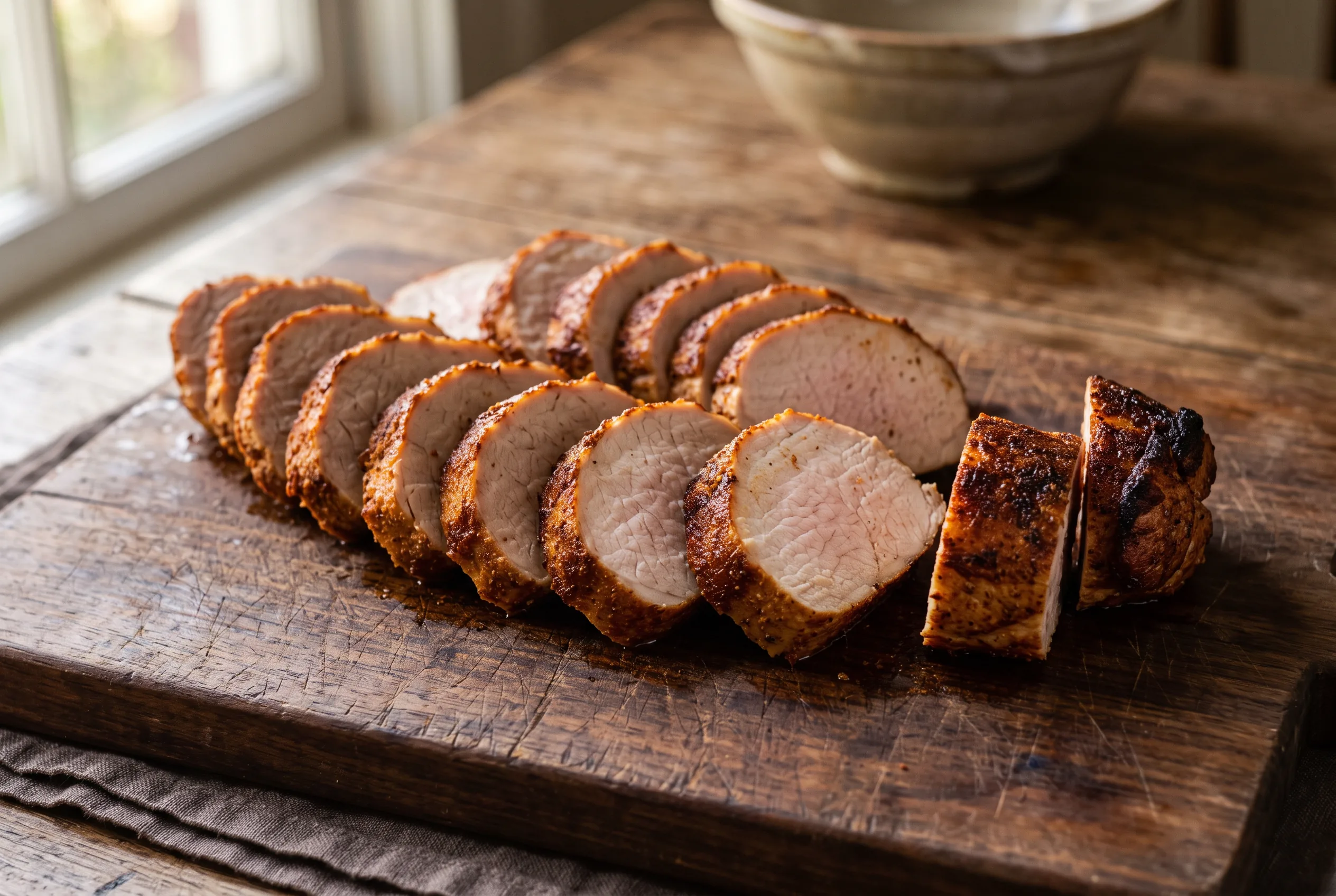
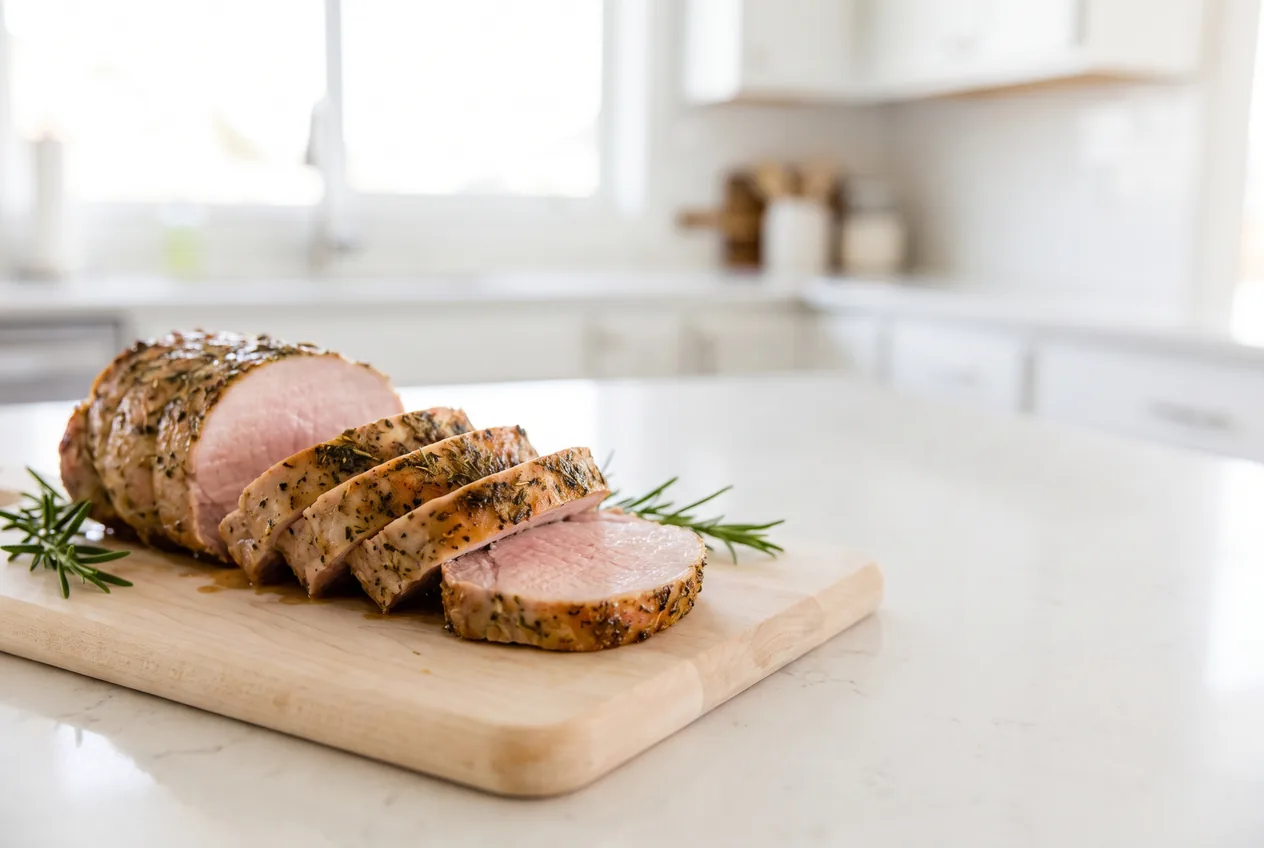
Pork tenderloin is the fastest-cooking cut in the meat case: a whole tenderloin roasts to a safe, juicy finish in about 20 minutes, not the hour-plus a pork loin roast needs. This recipe sears two tenderloins in a skillet first for a real browned crust, then finishes them on a sheet pan in a hot oven so the center stays moist instead of drying out. A five-minute sweet-savory spice rub is all the seasoning it needs. Two tenderloins feed six for about two dollars a plate. It is a different cut from a pork loin roast, so do not swap them without adjusting the time.
Recipe from Budget Plates · https://www.budgetplates.com/pork-tenderloin-recipe
Pat both tenderloins dry and trim off the thin silverskin membrane if still attached (it will not soften as it cooks). Mix the brown sugar, paprika, garlic powder, onion powder, salt, and pepper in a small bowl, then rub it evenly over both tenderloins.
Heat the oil in a large skillet over medium-high heat. Sear the tenderloins about 2 to 3 minutes per side, turning with tongs, until deep golden brown on the outside. This is what builds the crust; do not skip it or move the meat too soon.
Heat the oven to 425 F while you sear. Transfer the seared tenderloins to a rimmed baking sheet and roast for 15 to 18 minutes, until an instant-read thermometer inserted in the thickest part reads 145 F. Start checking at 12 minutes; tenderloins are thin and can go from done to overcooked quickly.
Move the tenderloins to a cutting board, tent loosely with foil, and rest 5 minutes. The temperature will climb a few more degrees as it rests. Slice against the grain into medallions about 1/2 inch thick.
Refrigerate leftovers, covered, for up to 4 days.
Slice or leave whole, wrap tightly, and freeze up to 3 months. Thaw overnight in the refrigerator before reheating.
Pork tenderloin is lean and dries out fast on reheat. Warm slices gently in a covered skillet over low heat with a splash of broth, or microwave in short 20-second bursts, rather than blasting it on high.
Estimates per serving, calculated from standard ingredient data. Not a substitute for medical advice.
Pull it at 145 F in the thickest part, then rest 5 minutes; the temperature climbs a few more degrees while it rests. That is the USDA-recommended safe minimum for whole-muscle pork, and pulling right at 145 F is what keeps this lean cut from drying out.
The tenderloin is a small, slim cut that roasts in about 20 minutes; the loin is a large, wide roast that takes closer to an hour. They cook very differently, so do not substitute one for the other without changing the time.
Searing first is what gives the outside a real browned crust; a straight roast at this temperature browns much less before the inside is already done, since tenderloin is such a fast-cooking cut. The extra 5 to 6 minutes at the stove is worth it.
About $12.20 for both tenderloins plus the spice rub, split six ways. The two-pack of pork is nearly the entire cost; the rub is pennies from pantry staples.
As an Amazon Associate, Budget Plates may earn from qualifying purchases.
Feeding a crowd tonight? This one is also part of our Easy Family Dinner Recipes collection.