Dessert
$0.20per plate
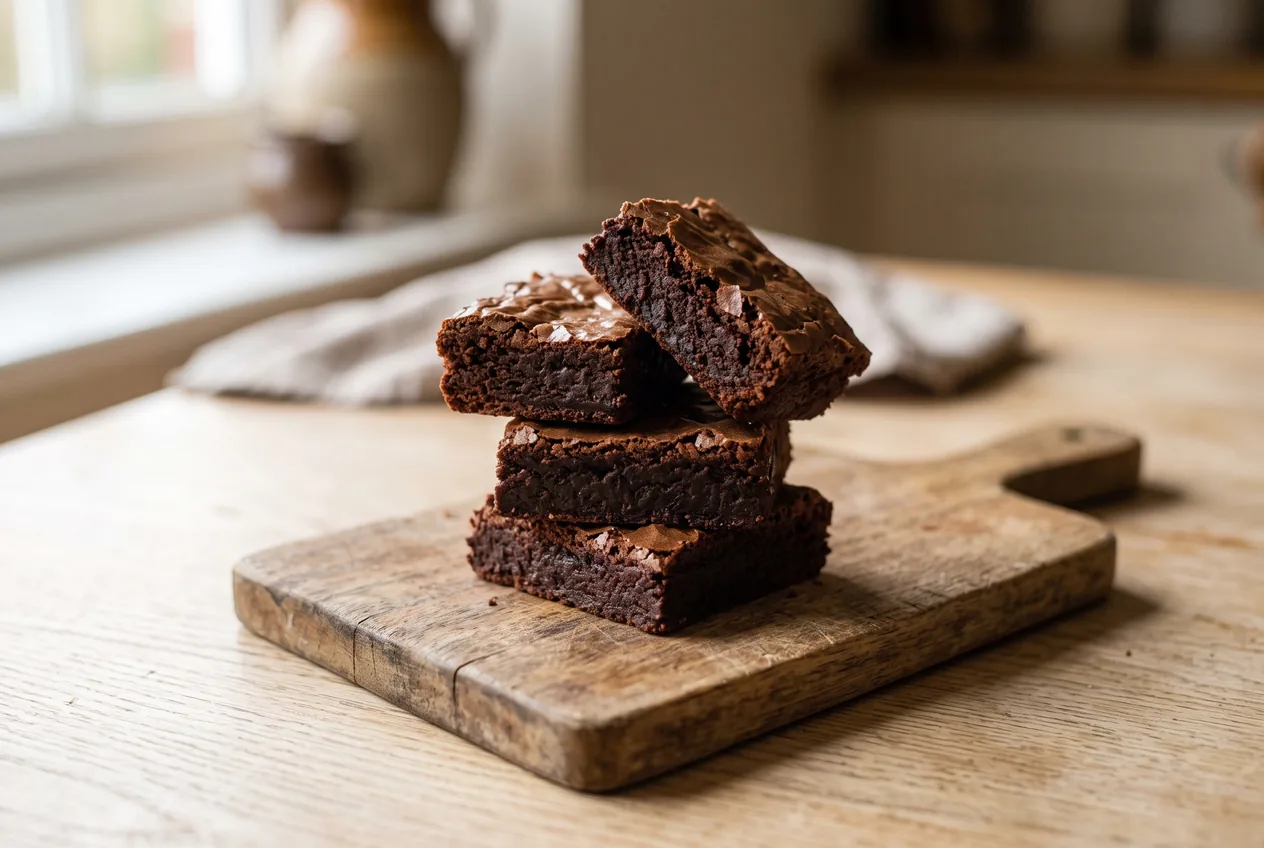
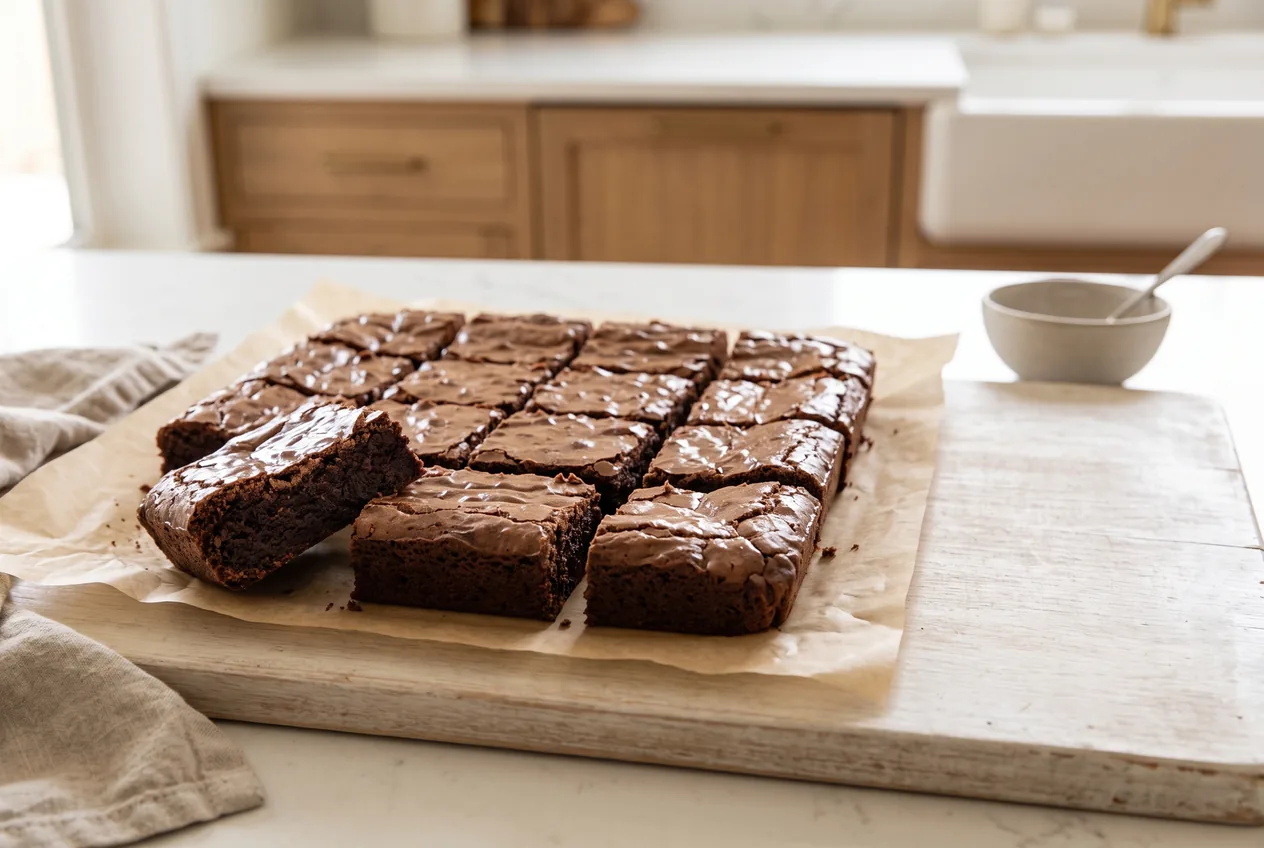
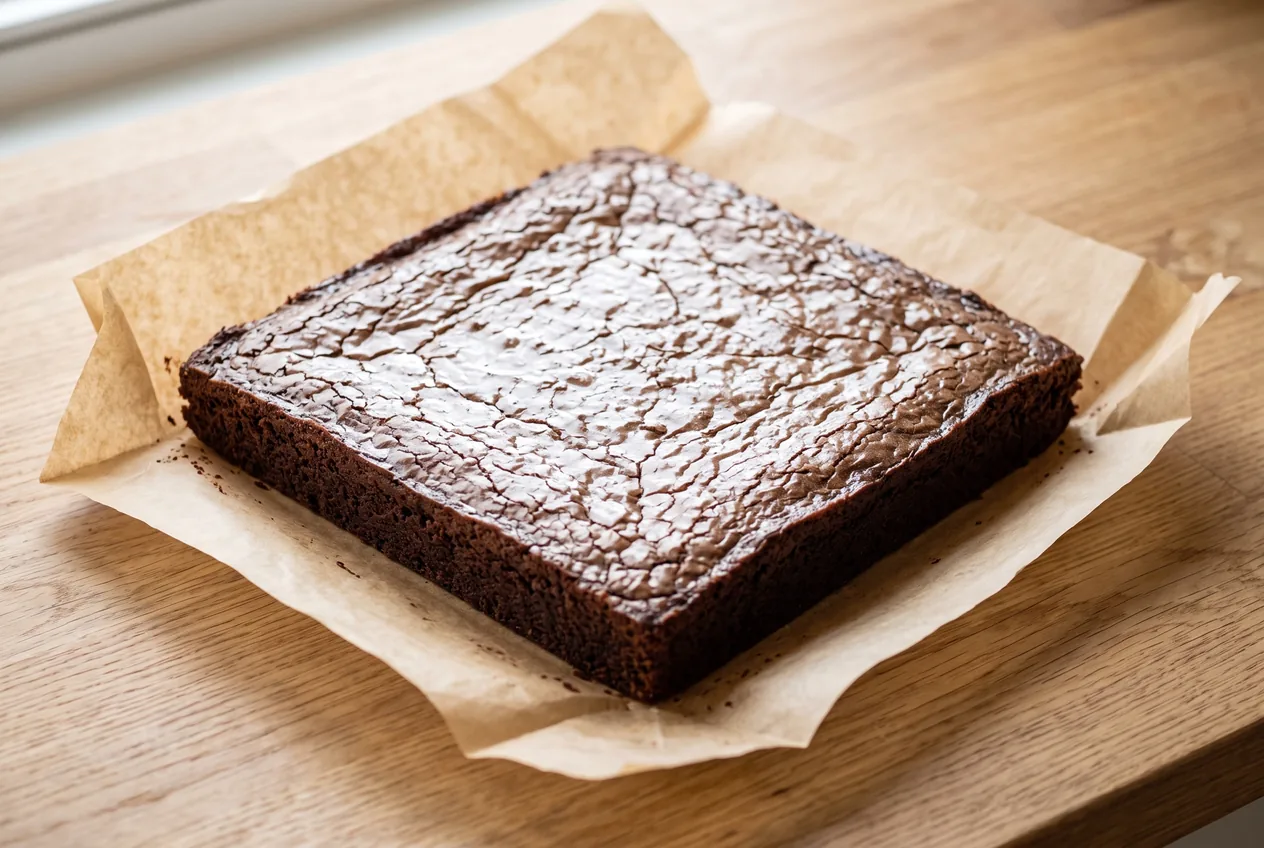
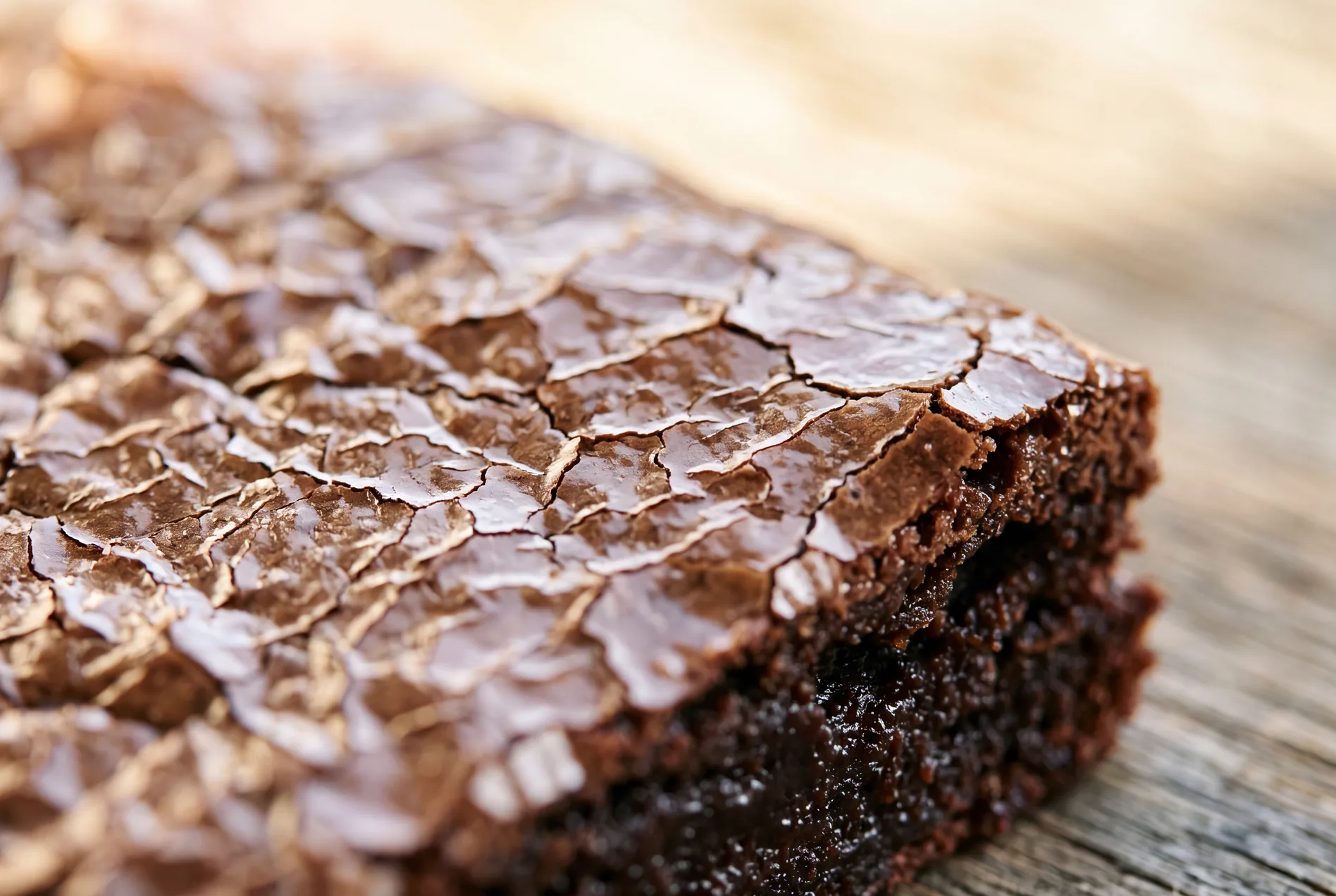
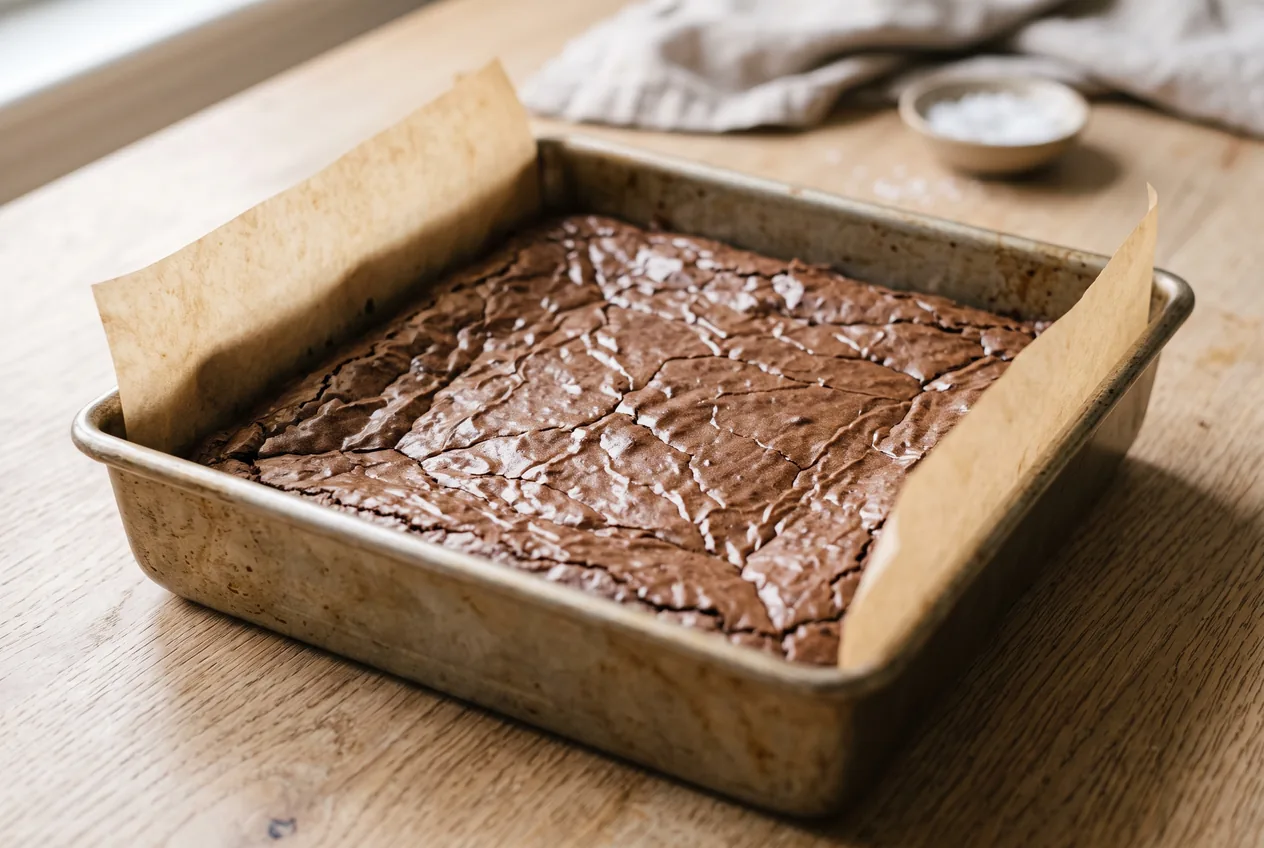
These are fudgy brownies with a shiny crackly top, and they cost about $0.28 each. The chocolate flavour comes from two places at once, which is the single biggest difference between these and a one-note brownie: cocoa powder carries more pure cocoa solids than any other form of chocolate, but cocoa alone bakes dry because it brings starch with it, so melted chocolate goes in alongside it for fat, gloss and depth. The crackly top is not luck either. It is a paper-thin layer of dissolved sugar that rises to the surface and sets during baking, so the recipe dissolves the sugar twice, once by whisking it into the eggs and again by adding warm melted chocolate. That is also why there is no brown sugar in the list: brown sugar carries enough extra moisture to keep that surface from ever drying into a crust. There is no baking powder and not much flour, because both of those are what turn a brownie cakey.
Recipe from Budget Plates · https://www.budgetplates.com/brownies
Heat the oven to 350 F with a rack in the middle. Line an 8-inch square metal pan with parchment, letting it hang over two opposite sides to make a sling you can lift the finished slab out with. Metal is the pan to use here. Glass holds heat and keeps cooking the edges after the pan leaves the oven, which is the usual reason brownie edges come out dry.
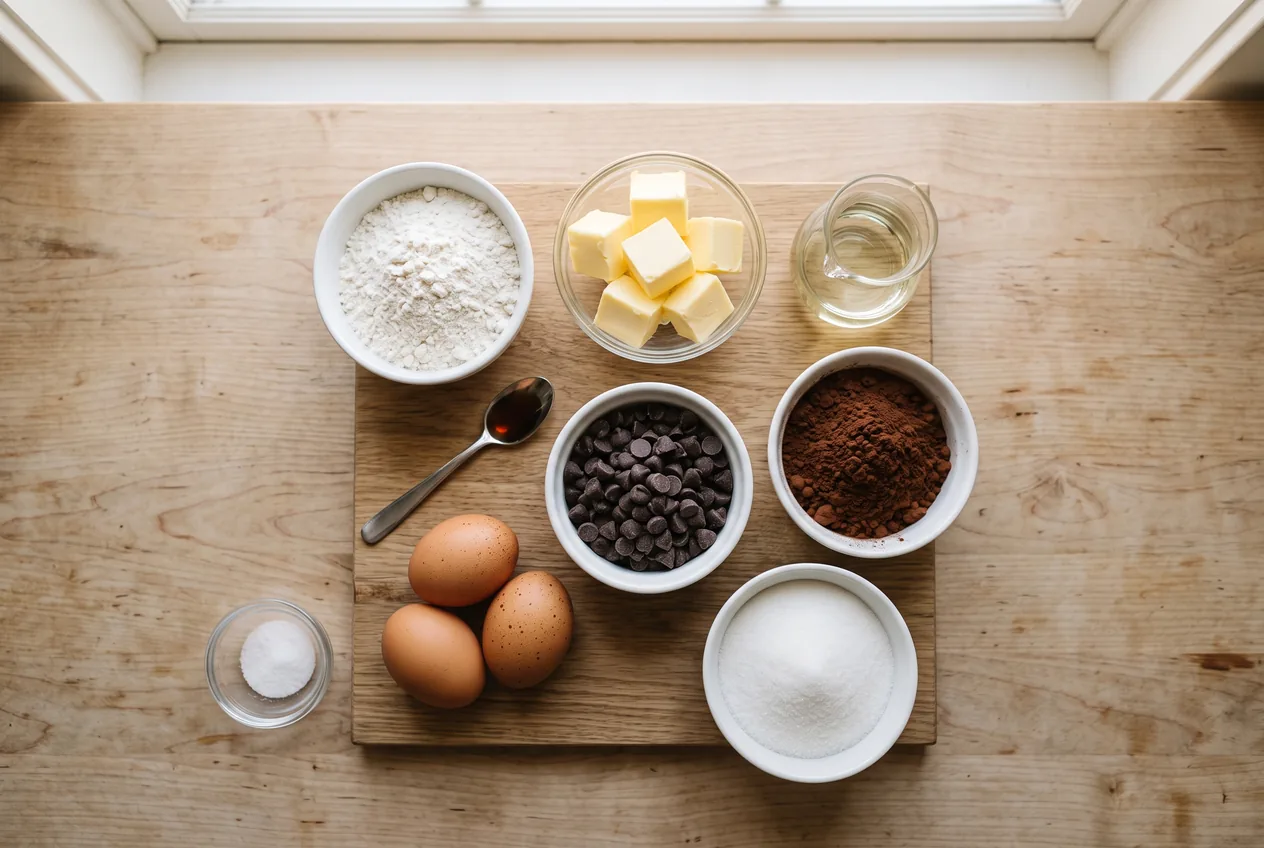
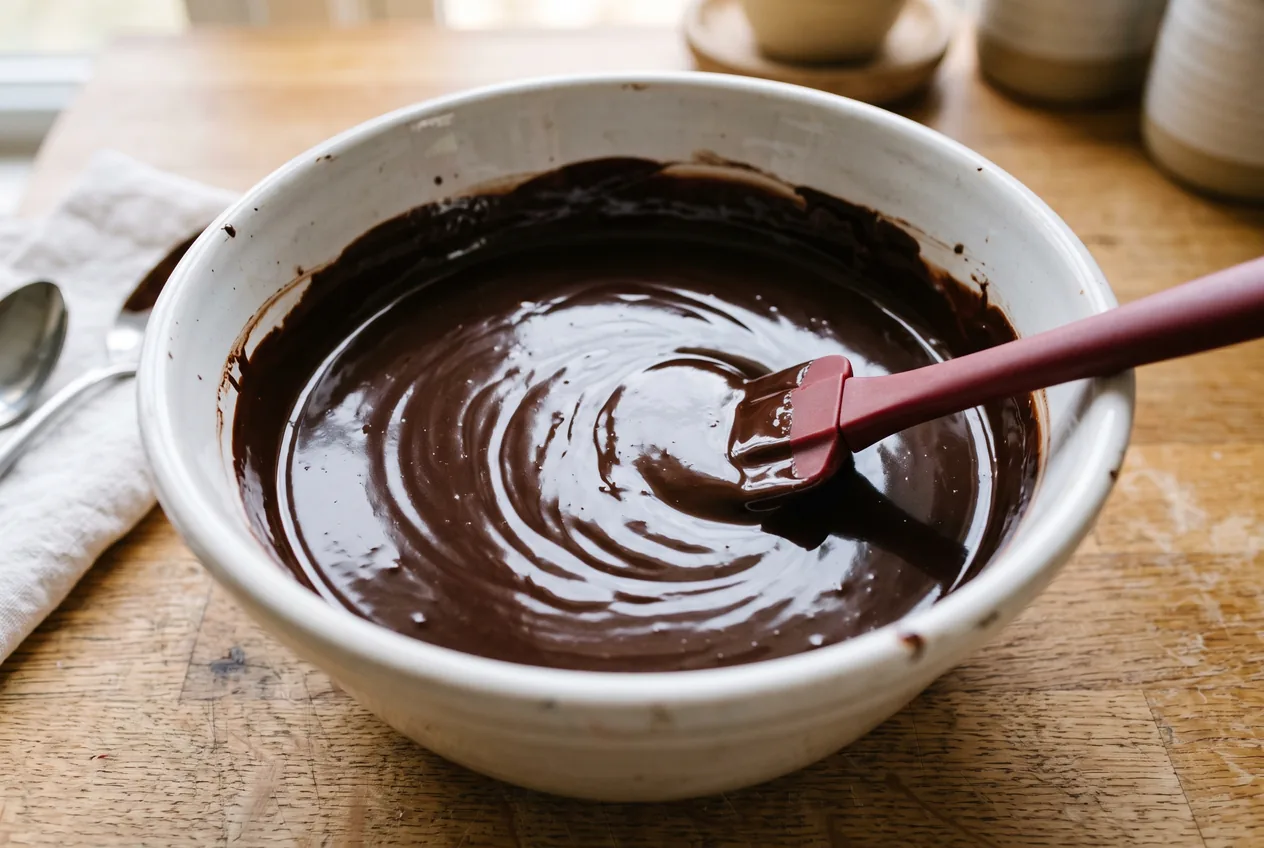
Put the butter, oil and chocolate chips in a large heatproof bowl and melt them together, either in 20-second bursts in the microwave, stirring between each, or over a pan of barely simmering water. Stop as soon as the last lumps disappear and stir smooth. Overheated chocolate turns grainy and will not come back. Set the bowl aside for about 5 minutes so it is warm rather than hot.
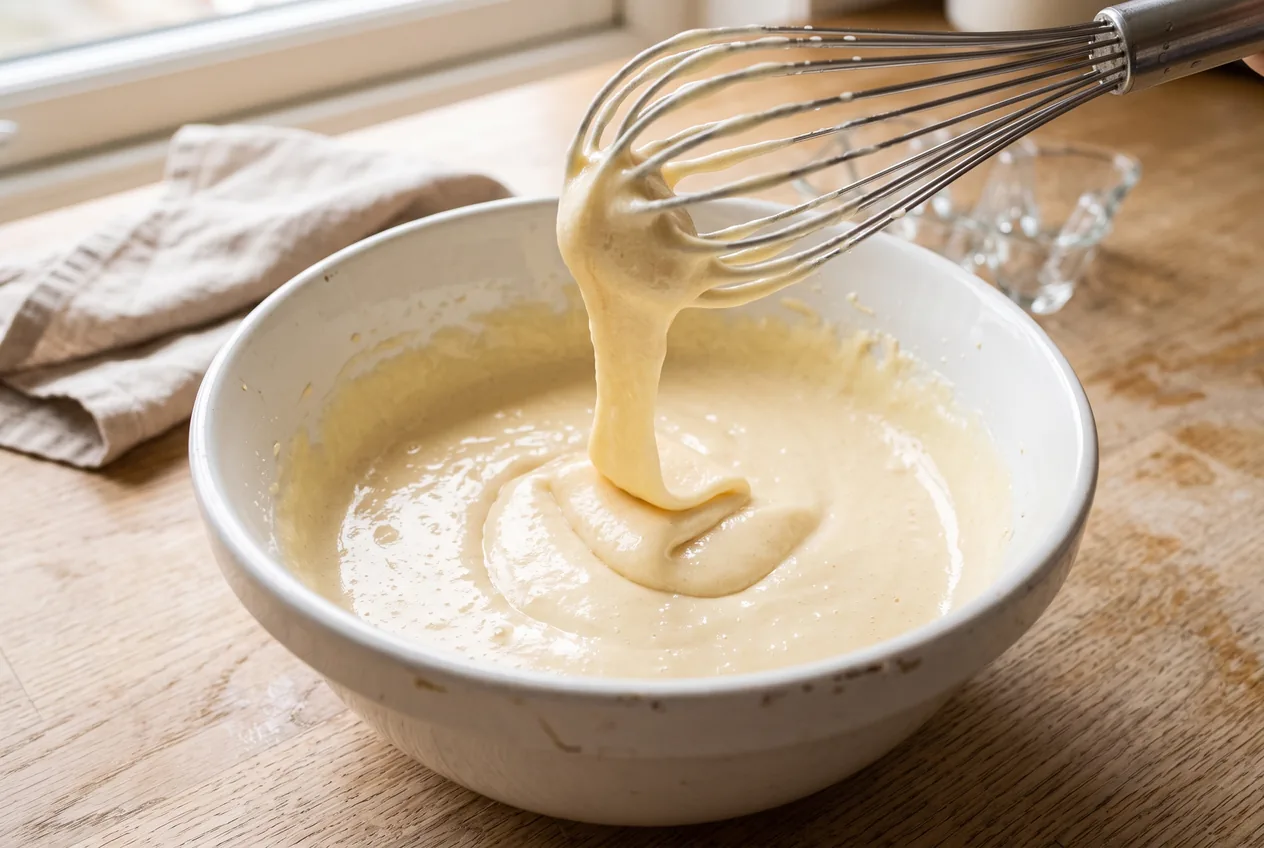
In a second bowl, whisk the eggs, sugar and vanilla hard for about 2 minutes, until the mixture pales, thickens, and falls off the whisk in a ribbon that sits on the surface for a second before sinking. This is the step that makes the crackly top: whisking gives the sugar time to dissolve in the water that is already in the egg whites. A hand whisk is genuinely enough, and you want no flour anywhere near the bowl yet.
Pour the warm chocolate mixture into the eggs in a steady stream, whisking constantly. Warm rather than hot matters: hot chocolate poured in quickly will scramble the egg. The warmth dissolves any sugar the whisking did not, and that dissolved sugar is what rises to the surface in the oven and sets into the thin shiny crust.
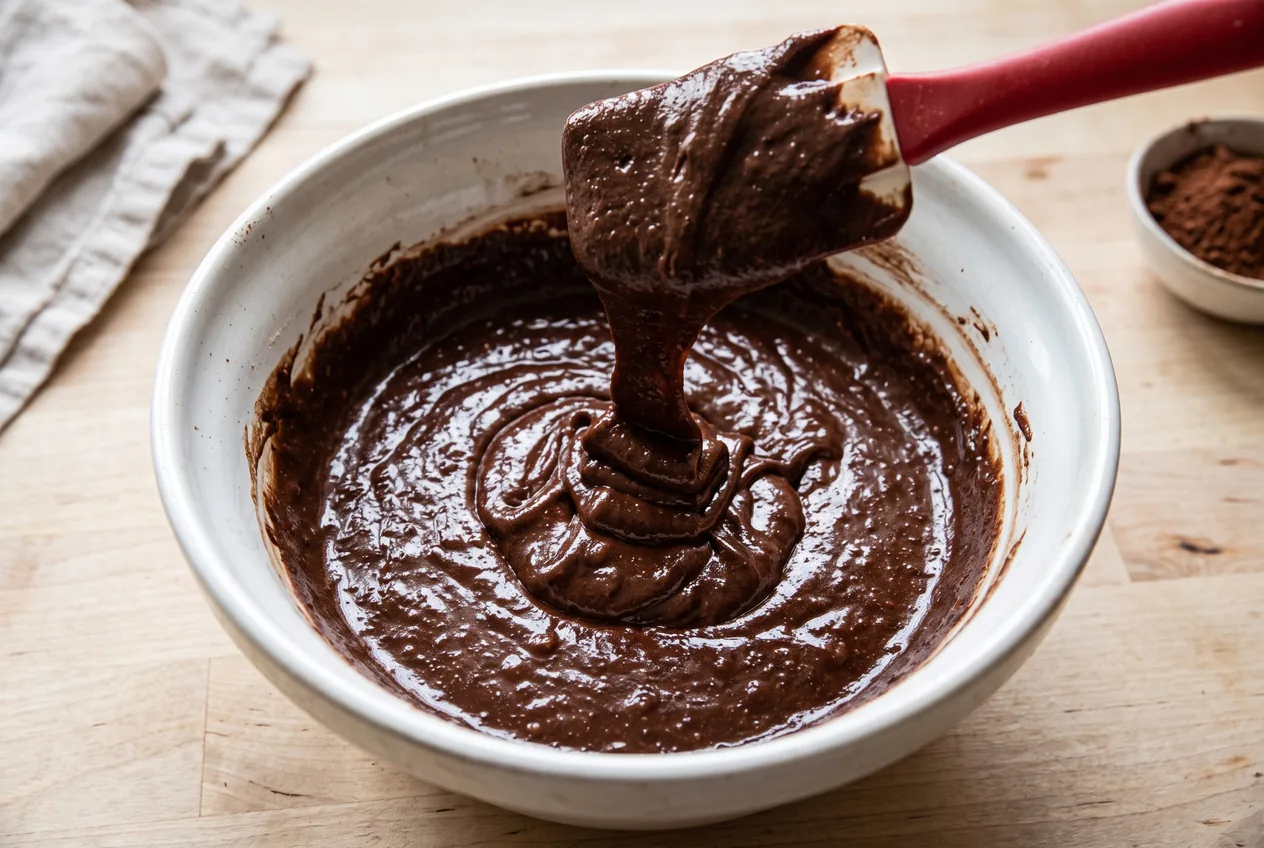
Sift the cocoa over the bowl, add the flour and salt, and fold with a spatula only until the last streak of flour disappears, about 20 strokes. Stop there. Beating flour into brownie batter builds gluten and is the second most common cause of a cakey brownie after adding leavening. The finished batter is thick and glossy and drops slowly off the spatula.
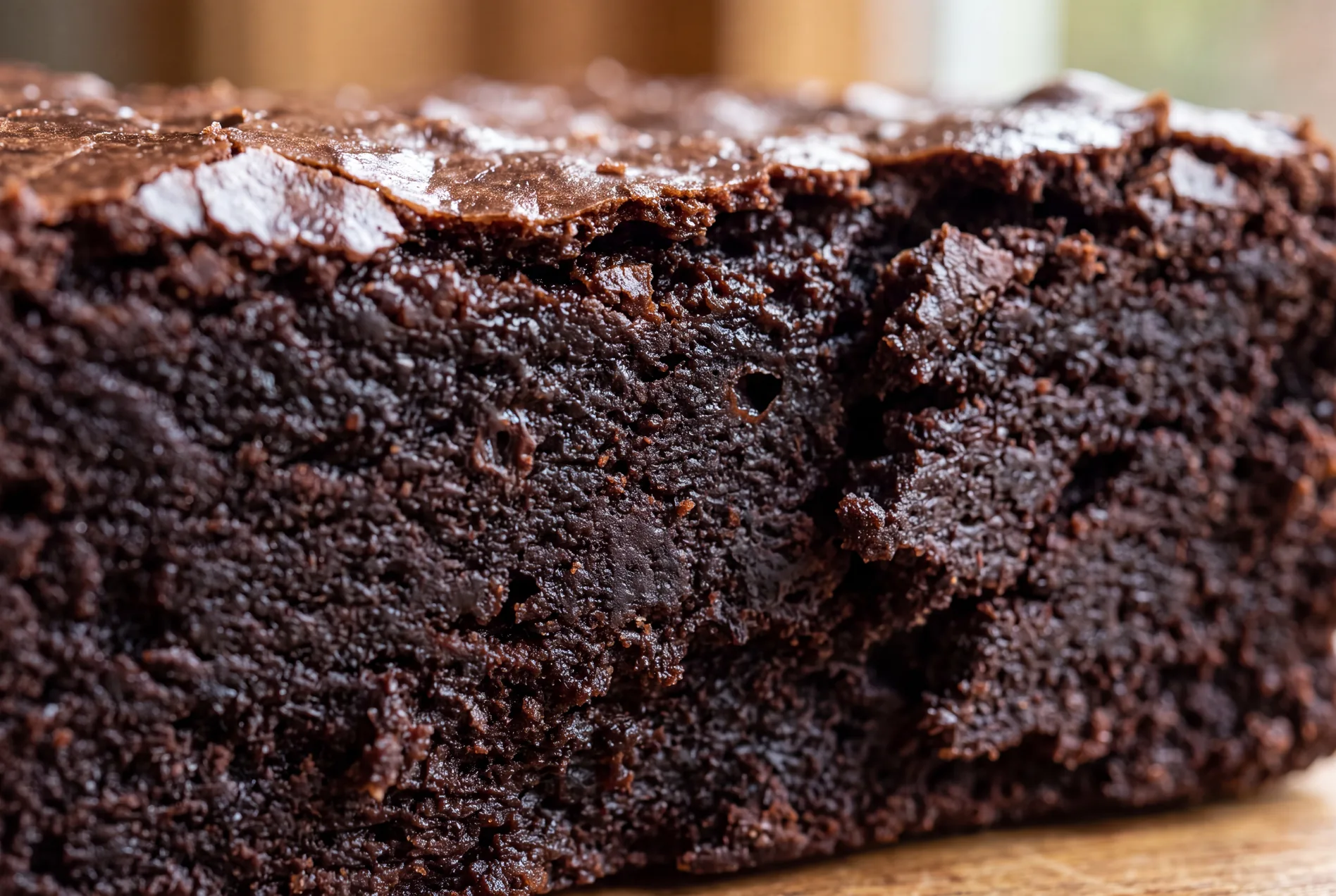
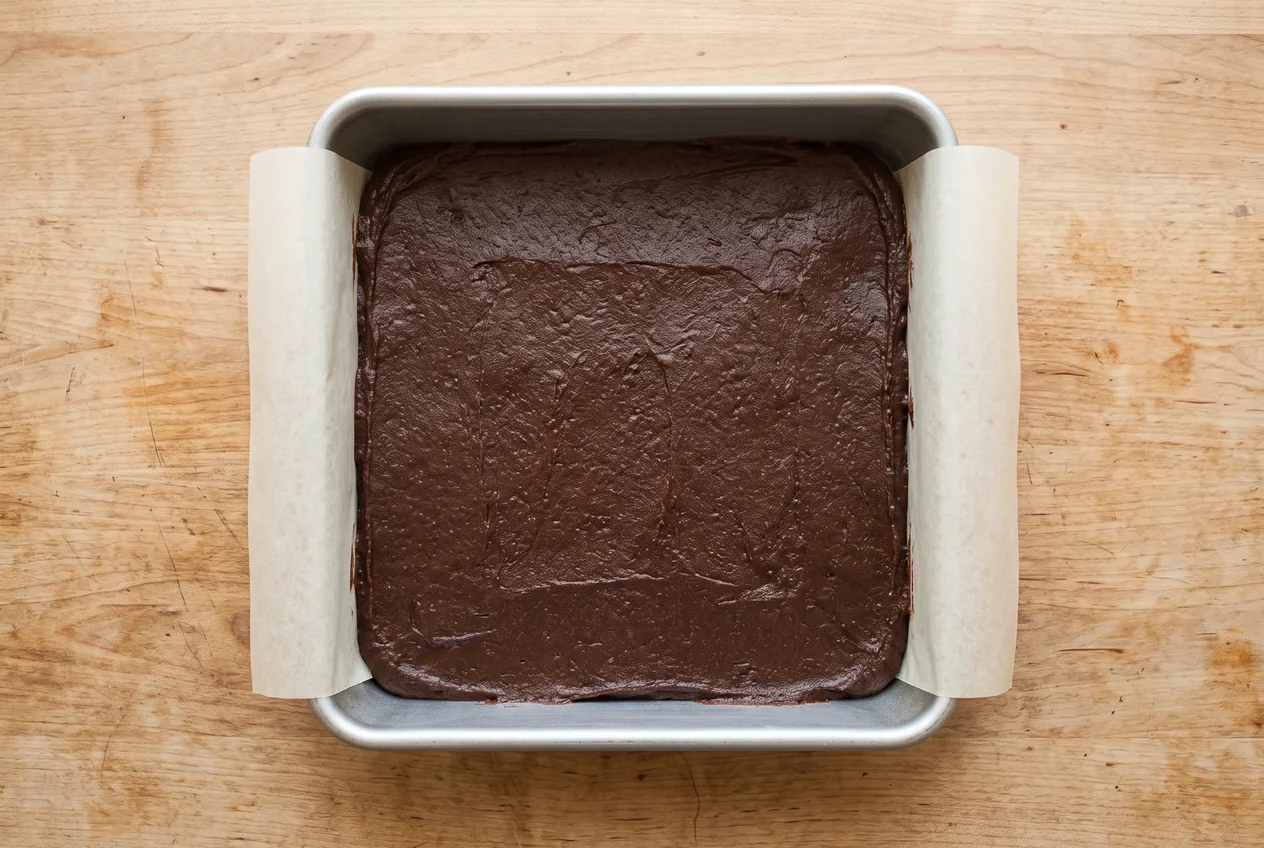
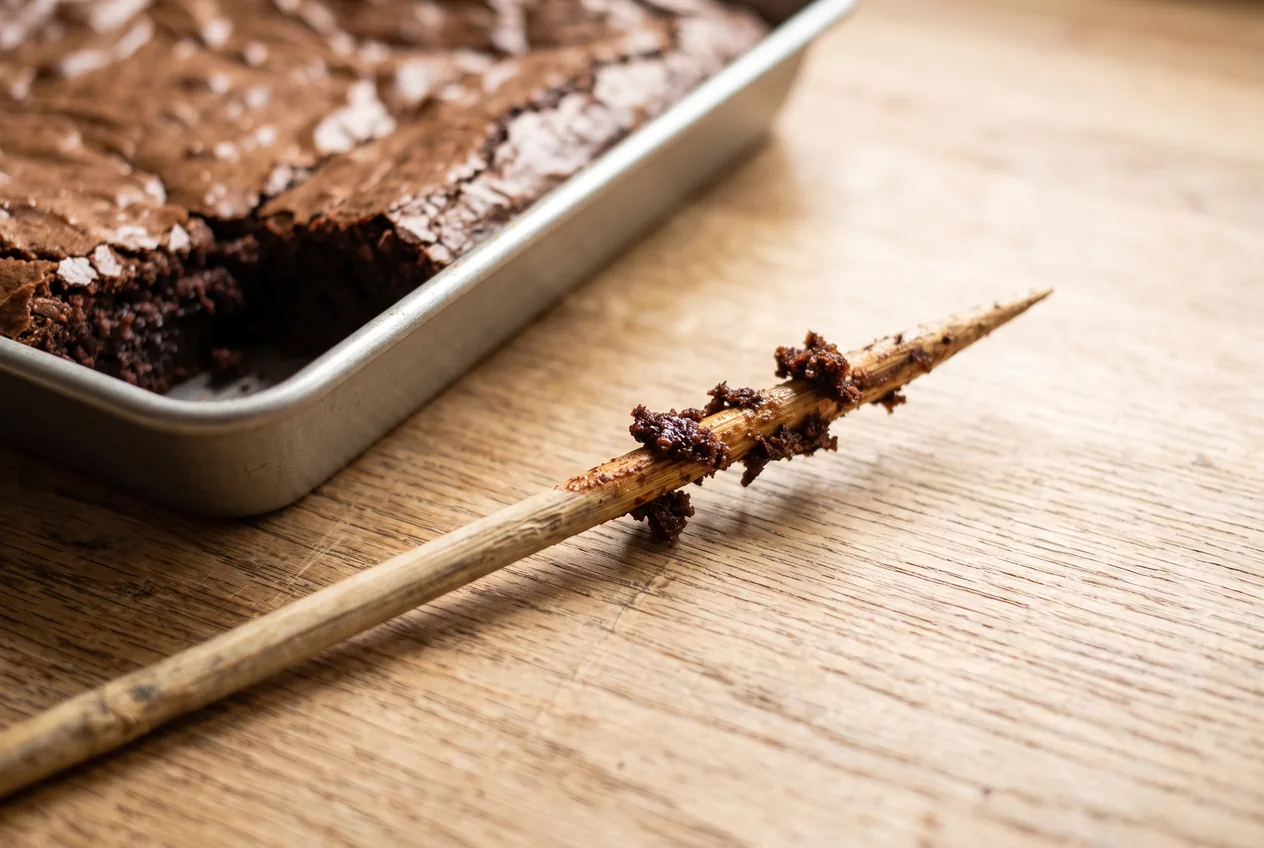
Scrape the batter into the pan and spread it level. Bake for 28 to 32 minutes. The brownies are ready when the top is crackled and set right across, the edges have just started to pull from the sides, and a skewer pushed into the centre comes out with several moist crumbs stuck to it. A completely clean skewer means they are overbaked. Wet, glossy batter on the skewer means they need another 3 minutes.
Leave the pan on a rack and cool completely, about 2 hours. This is not optional and it is not just about neatness: a warm brownie has not set, so it will read as greasy and underdone and will tear rather than slice. Lift the slab out by the parchment, then cut with a long knife, wiping the blade clean between cuts. Cut 4 by 4 for 16 brownies of about 2 inches.
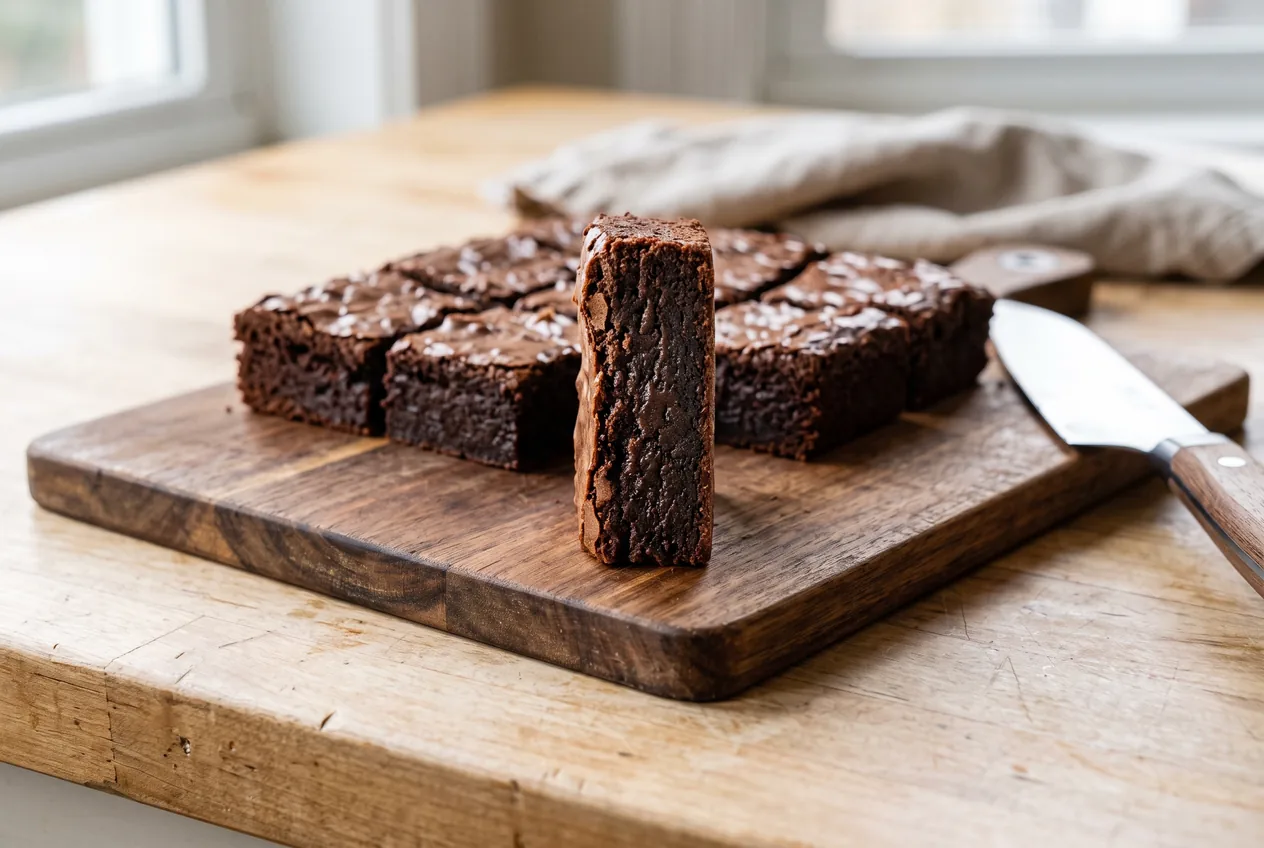
Keep cut brownies in an airtight container at room temperature for up to 4 days. They are at their fudgiest on day two, once the centre has fully set. Do not refrigerate them if you can help it, which firms the fat and dulls the chocolate flavour; if you do, let them come back to room temperature before eating.
Brownies freeze better than almost anything else on this site. Freeze them cut, wrapped individually or layered with parchment in an airtight container, for up to 3 months. Freezing the uncut slab works too and keeps the edges from drying.
Thaw at room temperature for about an hour, or eat them straight from frozen, which some people prefer. A frozen brownie warms through in about 10 seconds in the microwave, which softens the centre again and brings the chocolate smell back.
Estimates per brownie, based on 16 brownies per pan, calculated from standard ingredient data. Not a substitute for medical advice.
The ratio of fat to flour, and the absence of leavening. This recipe uses 95 g of flour against butter, oil and a cup of melted chocolate, and it contains no baking powder or baking soda at all. Leavening lifts and aerates the batter, which is exactly what makes a brownie cakey. Add more flour or add baking powder and you will move it toward cake; the amounts here are set where they are to keep it dense.
Dissolve the sugar. The shiny crust is a paper-thin layer of sugar that migrates to the surface as the brownies bake and sets there as the water evaporates. This recipe dissolves the sugar twice, first by whisking it with the eggs until the mixture ribbons, then by adding warm melted chocolate. Two things break it: skipping the whisking, and using brown sugar, which carries enough extra moisture that the surface never dries out enough to crackle.
Use three cues together rather than the timer alone. The top should be crackled and set right across, the edges should have just started to pull away from the pan, and a skewer in the centre should come out with several moist crumbs on it. Ovens vary by enough that the 28 to 32 minute range is a guide, not a promise.
No, and this is the single most common way good brownies get ruined. A clean toothpick means the centre is fully set and dry, which is the definition of an overbaked brownie. You want moist crumbs clinging to it. Wet, shiny batter means it needs a few more minutes; damp crumbs mean take it out now.
Almost always leavening or flour. If the recipe you used contains baking powder or baking soda, that is the cause. If it does not, the likely culprits are too much flour, usually from scooping the cup straight into the bag rather than spooning and levelling, or beating the batter after the flour goes in, which builds gluten. Whipping the eggs far past the ribbon stage also traps enough air to lift the crumb.
You can, but the brownies come out noticeably drier. Cocoa powder carries more cocoa solids than any other form of chocolate, which is why it is in this recipe, but it also brings starch and almost no cocoa butter. The melted chocolate supplies the fat that keeps the centre fudgy. If you want to bake with cocoa alone, use a recipe built for it rather than pulling the chocolate out of this one.
It works, with an adjustment. Glass heats slowly and then holds that heat, so it keeps baking the edges after the pan comes out of the oven and tends to leave them dry. If glass is what you have, drop the oven to 325 F, start checking at 30 minutes, and take the pan out at the earlier end of the doneness cues. Metal is the better tool here.
About 2 hours, until the pan is no longer warm anywhere. A brownie sets as it cools, so a warm one has not finished becoming a brownie yet and will read as greasy and raw in the middle. Cutting warm also drags the centre and tears the shiny top. If you are in a hurry, an hour on the counter and 30 minutes in the fridge will get you there.
Cool them completely, lift the whole slab out with the parchment sling so you are cutting on a board rather than in the pan, and use a long knife in one downward press rather than a sawing motion. Wipe the blade between every cut. A knife dipped in hot water and dried helps if the brownies are very fudgy.
Yes, and they hold up unusually well for up to 3 months. Freeze them cut, layered with parchment in an airtight container, and thaw at room temperature for about an hour. Freezing the uncut slab protects the edges even better if you have the space.
A sunken centre usually means the middle was still liquid when the structure around it set, so it collapsed as it cooled. That points to underbaking, an oven running cool, or opening the door partway through. A modest dip in a fudgy brownie is normal and not a problem; a deep wet crater is not.
Usually they were cut warm. Butter and chocolate are liquid at baking temperature and set as the pan cools, so a brownie cut before it has cooled will leave grease on the knife and feel oily. Genuinely greasy cooled brownies point elsewhere: overheated chocolate that split during melting, or a batter that was mixed so long the fat separated out.
As an Amazon Associate, Budget Plates may earn from qualifying purchases.