Dessert
$0.28per plate
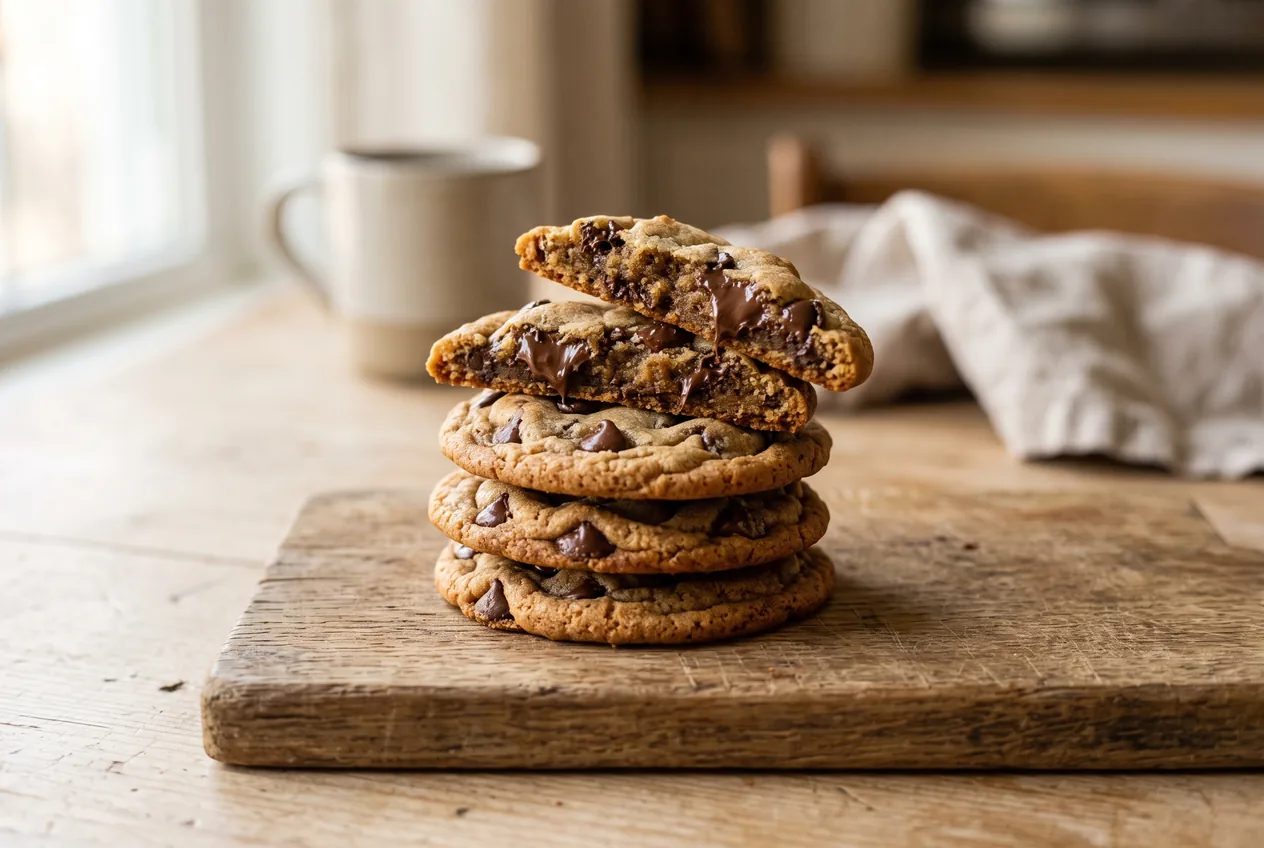
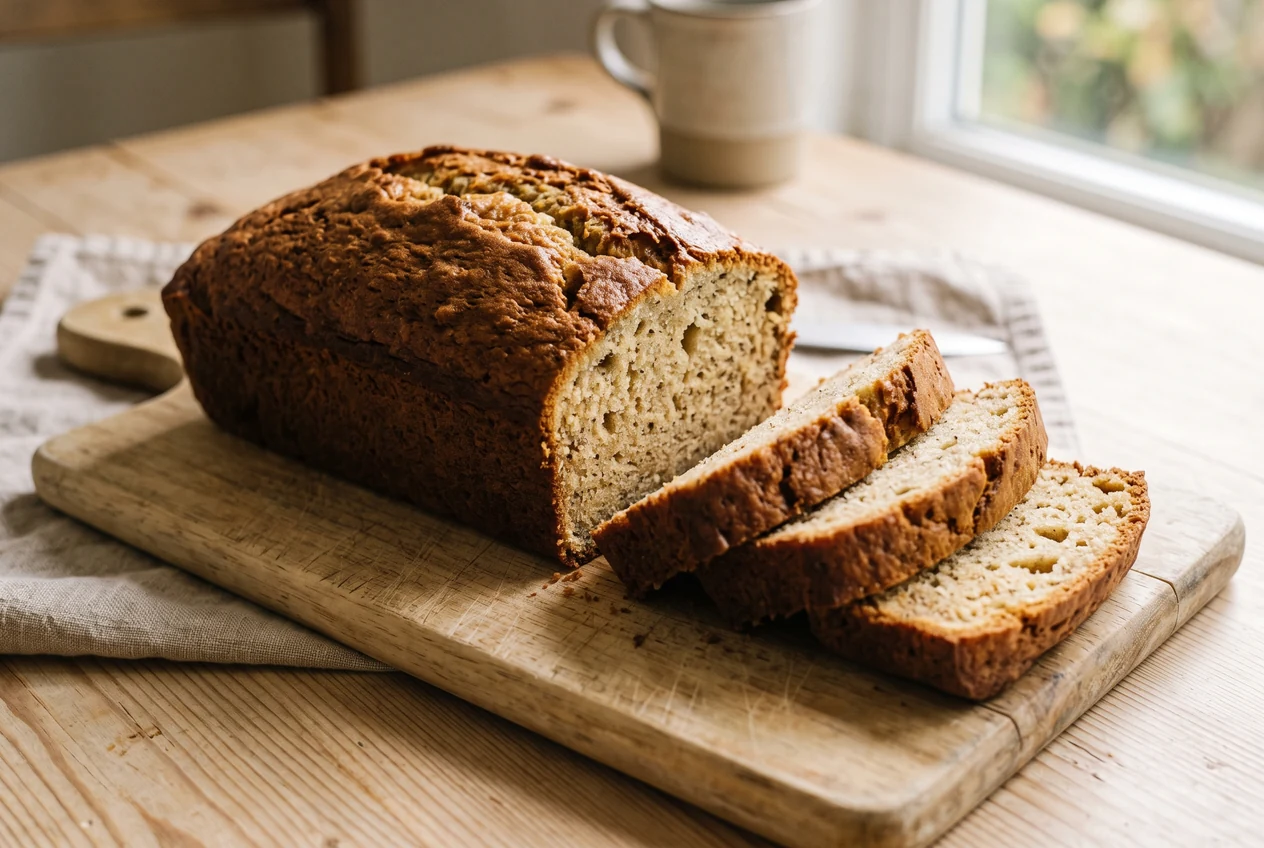
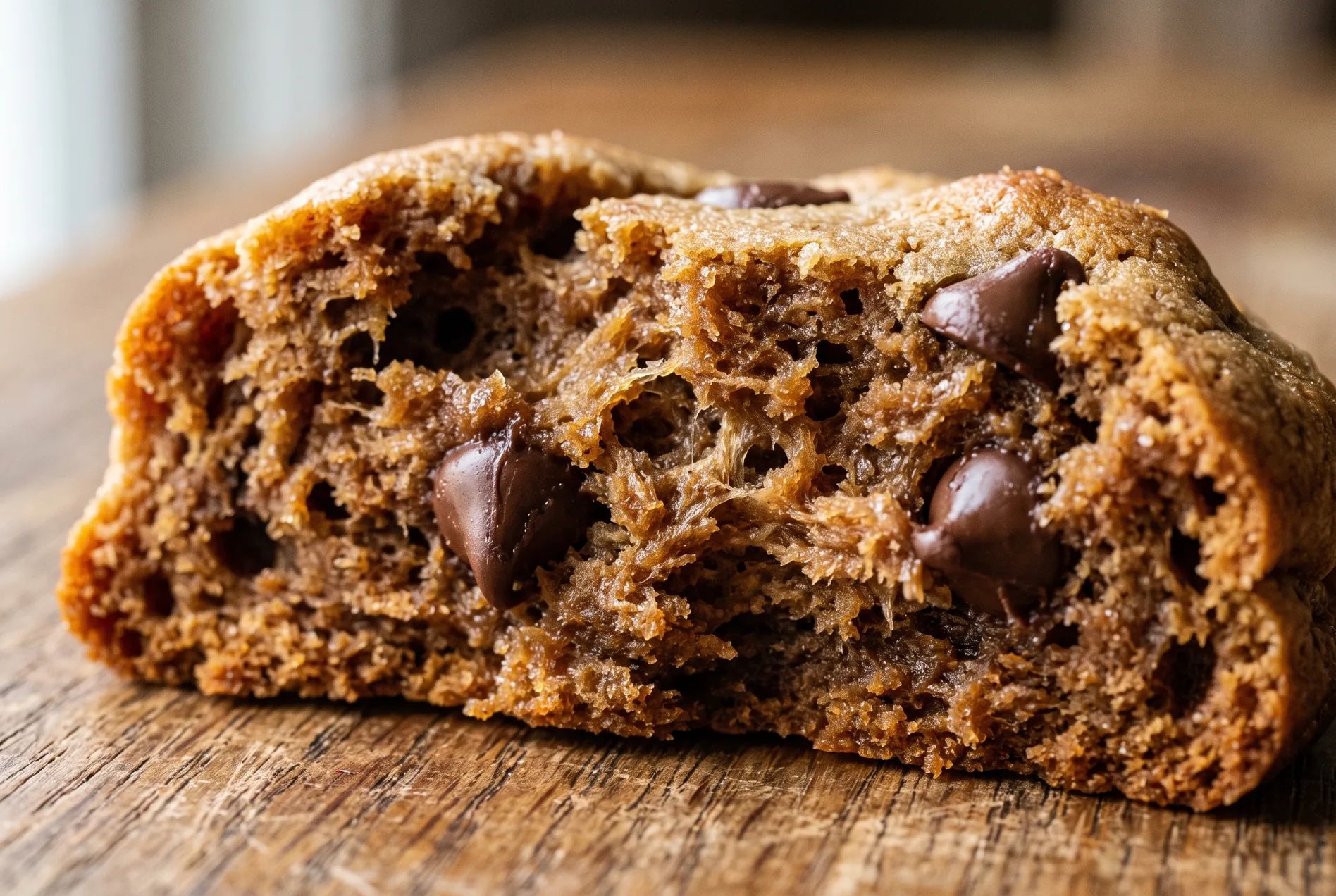
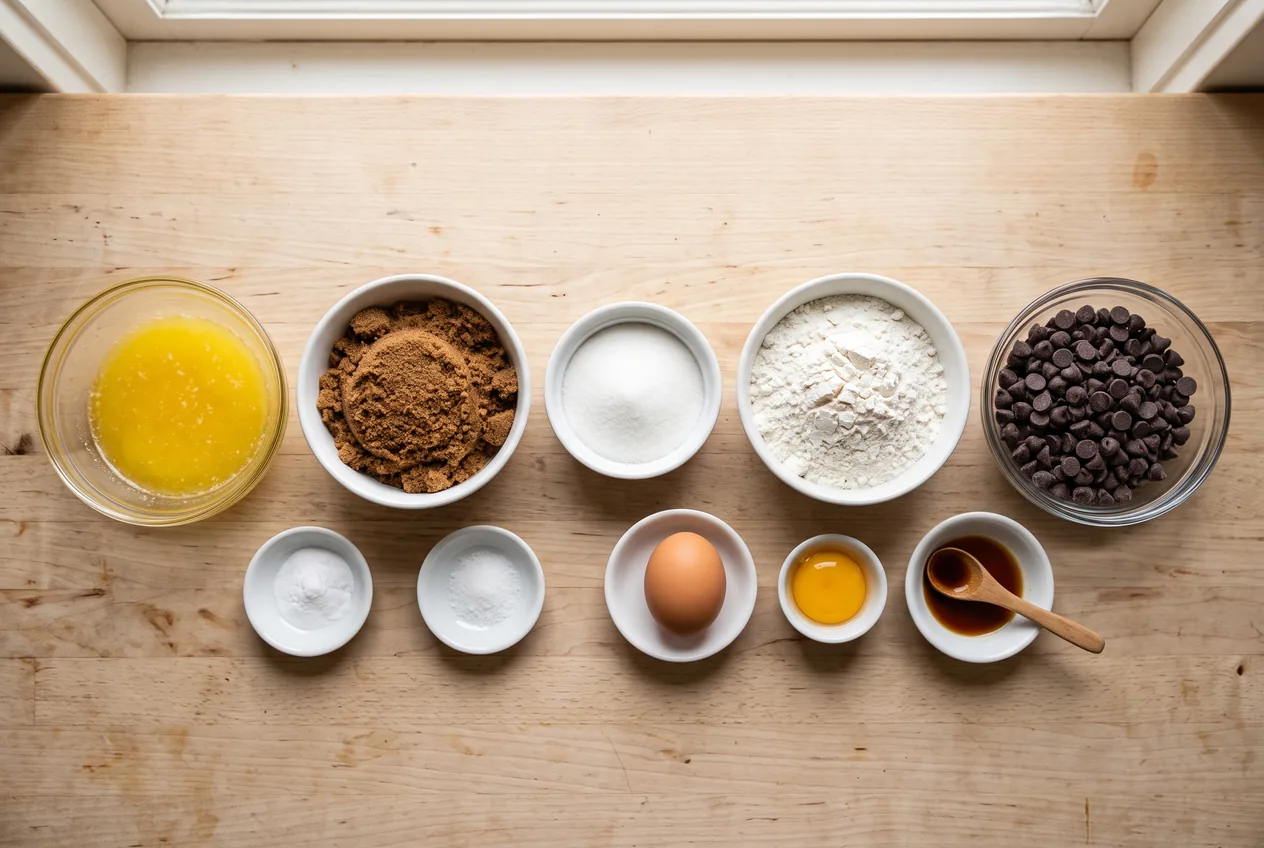
These are chocolate chip cookies with crisp golden edges and a genuinely soft, chewy middle, and they cost about $0.28 each. Three choices do that work. The butter is melted rather than creamed, which means less air and more chew, and it also removes the most common failure in the whole recipe: butter that was too warm or beaten too long. The sugar runs two parts dark brown to one part white, because the molasses in brown sugar holds onto moisture. And there is an extra egg yolk, which adds fat and emulsifier without the egg white's tendency to puff a cookie up into a cakey one. Melted butter does come with one rule: the dough has to chill for thirty minutes, or the cookies spread thin. Everything below is photographed stage by stage so you can compare your bowl to ours. If you want something to bake alongside them, our moist banana bread uses the same pantry.
Recipe from Budget Plates · https://www.budgetplates.com/chocolate-chip-cookies
Melt the butter and set it aside for about 5 minutes, until it is warm rather than hot. Butter straight off the heat will start to cook the egg when you add it and will thin the dough. There is no creaming in this recipe, so you need no mixer and no softened butter, which also removes the guesswork about butter temperature.
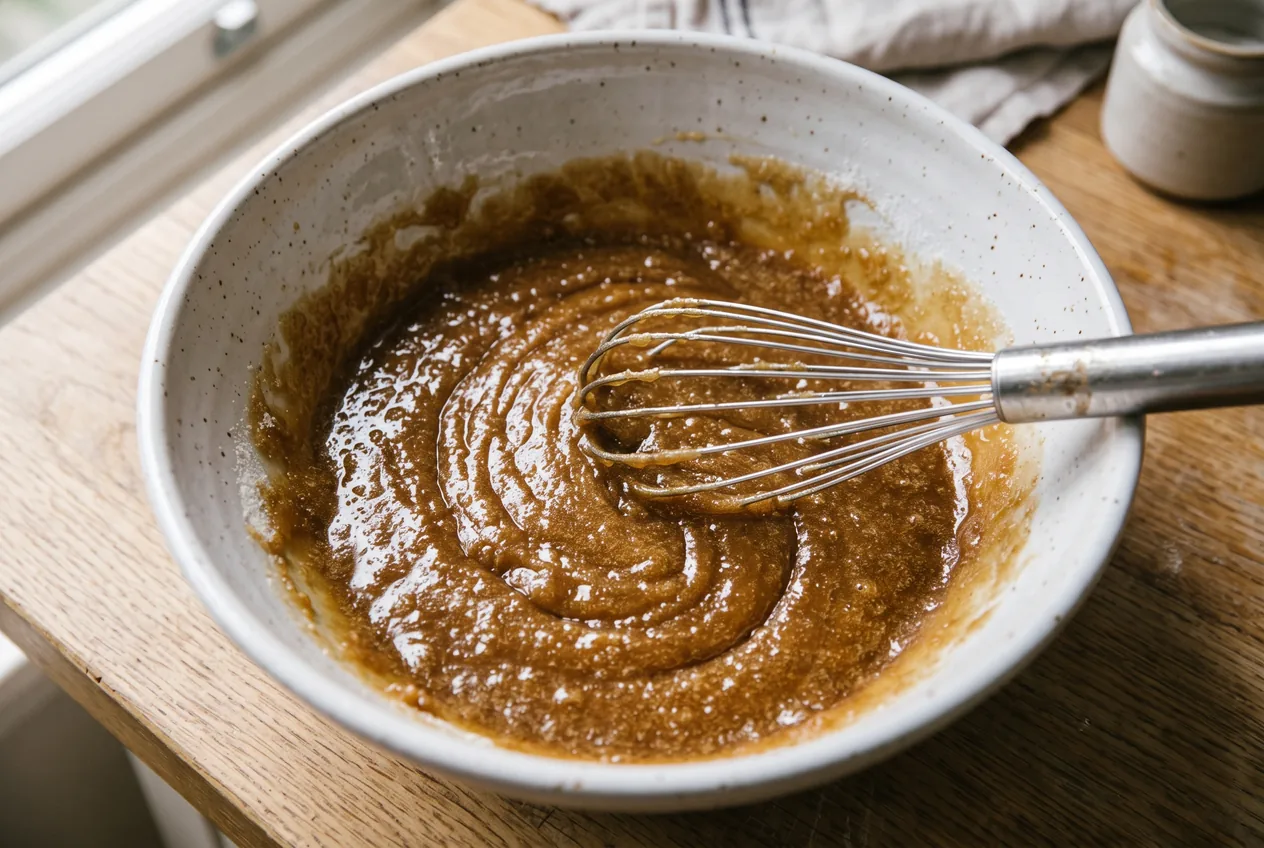
Whisk the melted butter with the dark brown and granulated sugars for about a minute, until the mixture is glossy and looks like a thick, sandy paste. Whisk in the whole egg, the extra yolk and the vanilla until smooth. Stop once it is combined. You are not trying to beat air in; air is what makes a cookie cakey.
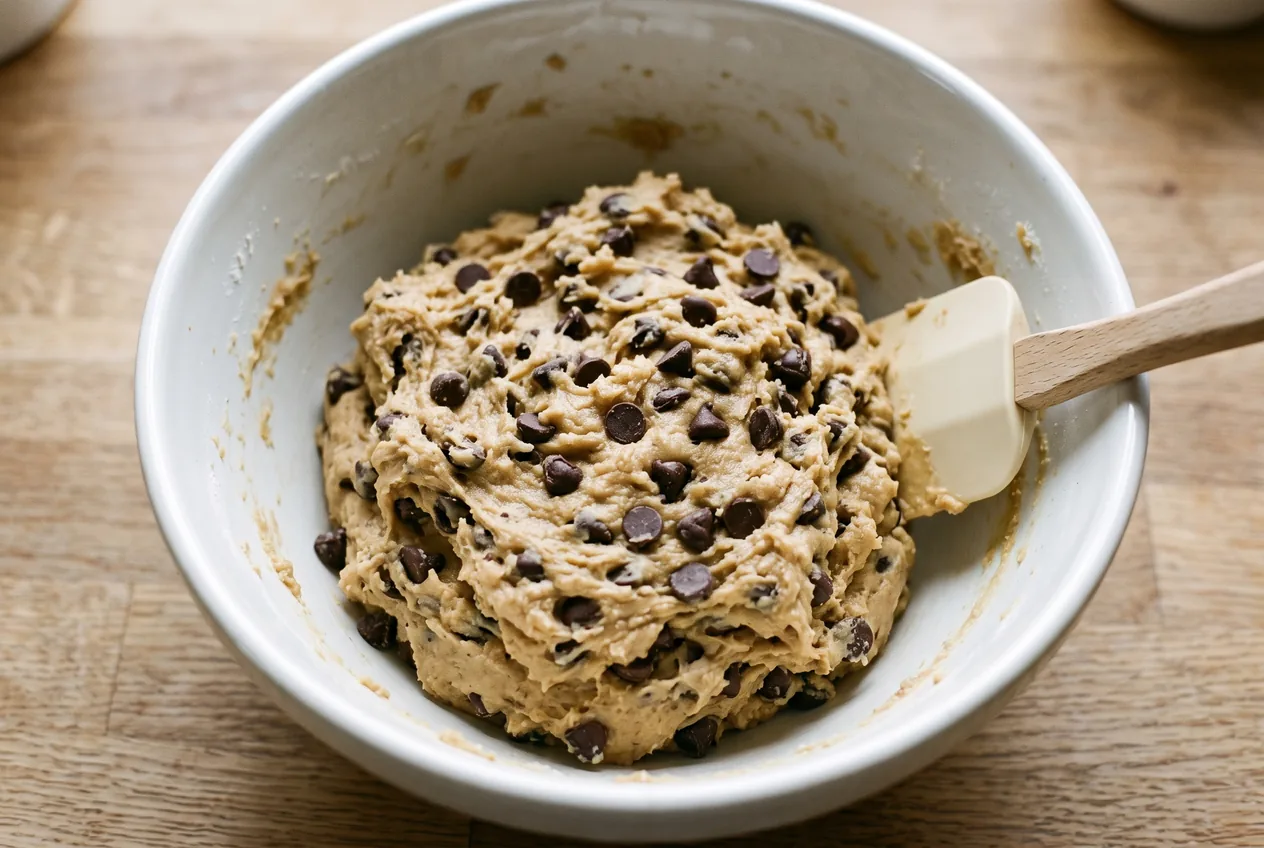
Add the flour, baking soda and salt and fold with a spatula just until the last streak of dry flour disappears. Weigh the flour if you can, or spoon it into the cup and level it. Scooping the cup straight into the bag packs in far more flour than the recipe wants and is the usual reason cookies come out dry and stiff.
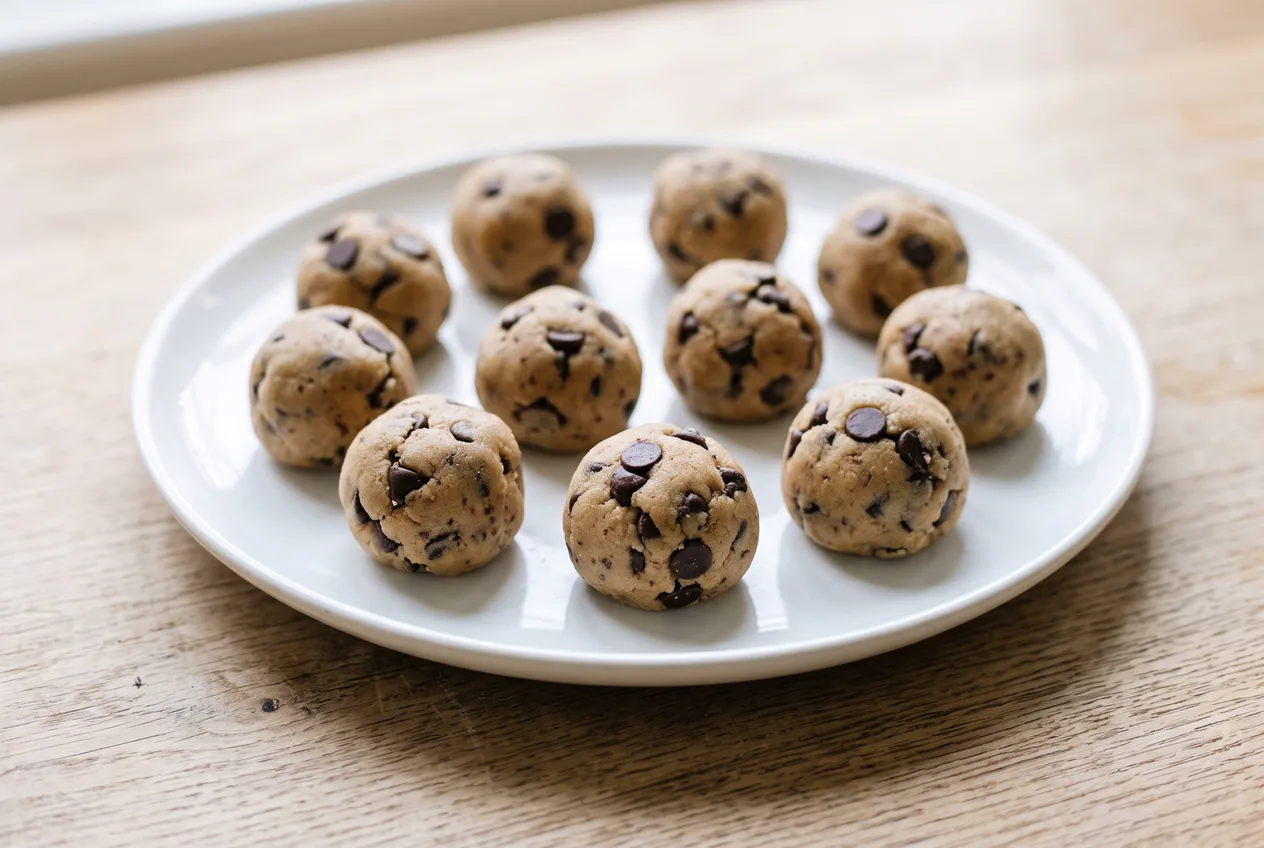
Fold in the chocolate chips, then portion the dough into 24 balls of about 2 tablespoons each, roughly 50 g. Chill the portioned dough for at least 30 minutes, and no longer than a day. Do not skip this. Melted-butter dough baked warm spreads into thin, greasy discs; 30 minutes in the fridge is the difference between a thick cookie and a flat one. In a hurry, 15 minutes in the freezer does the same job.
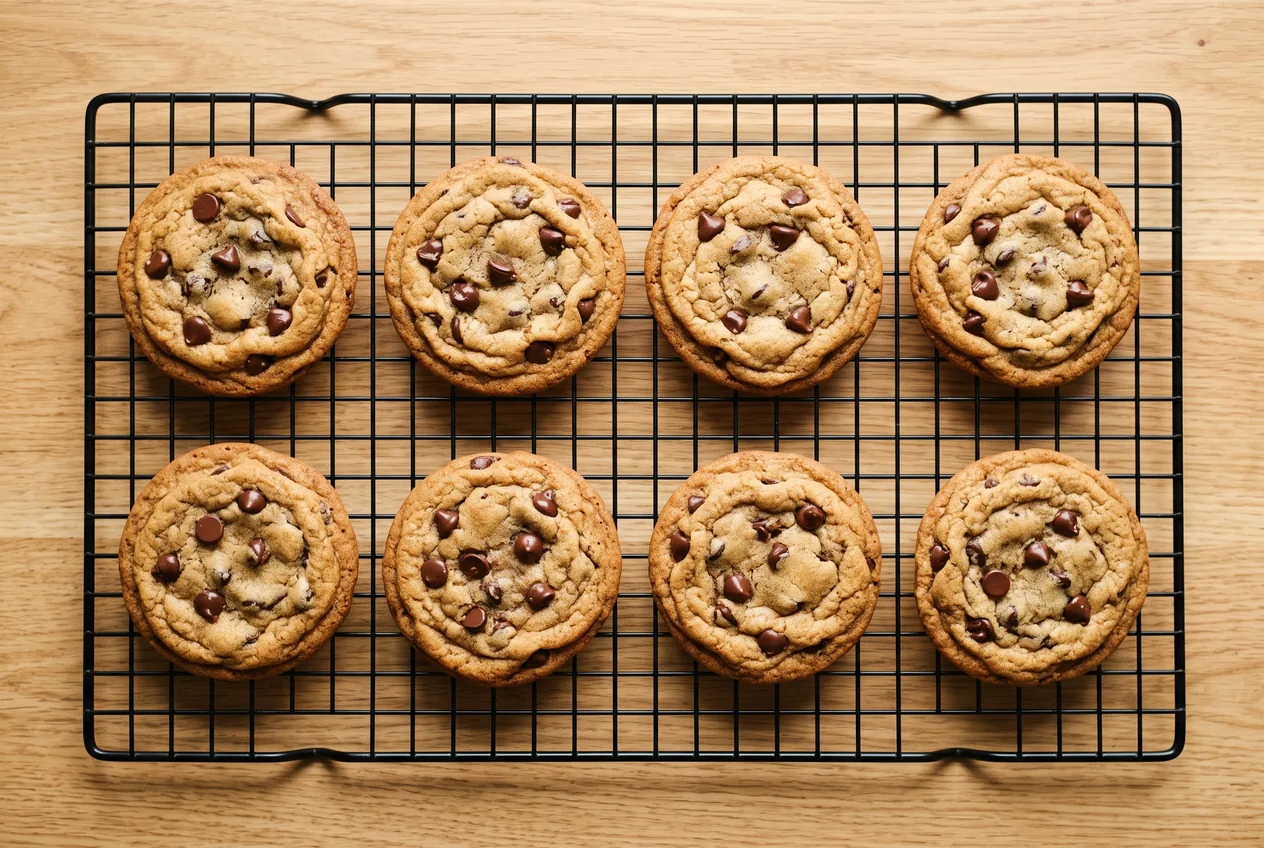
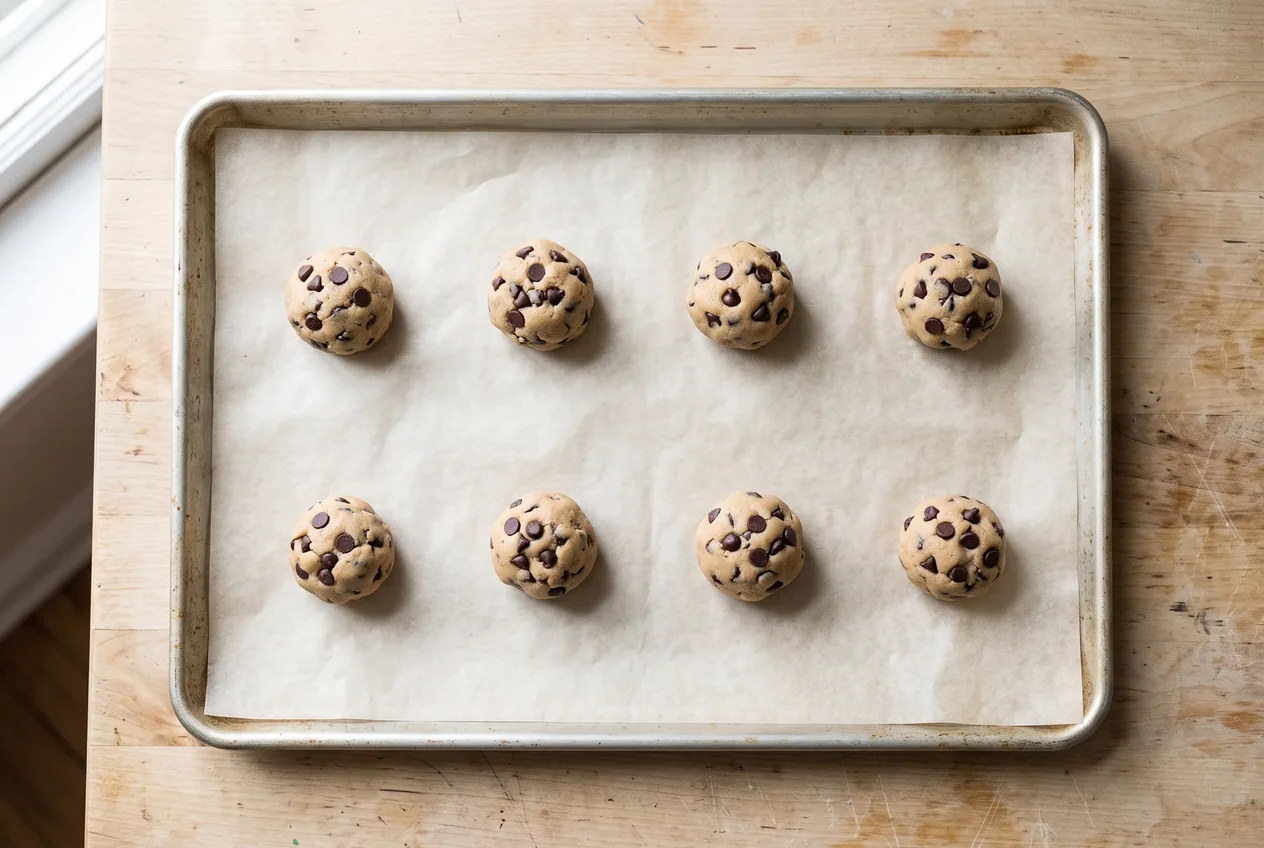
Heat the oven to 350 F with a rack in the middle. Put 8 balls on a parchment-lined baking sheet, spaced about 3 inches apart, and bake 10 to 12 minutes. Bake one sheet at a time on the middle rack for even browning, and always start with a cool sheet: dough placed on a hot pan from the previous batch begins spreading before it reaches the oven.
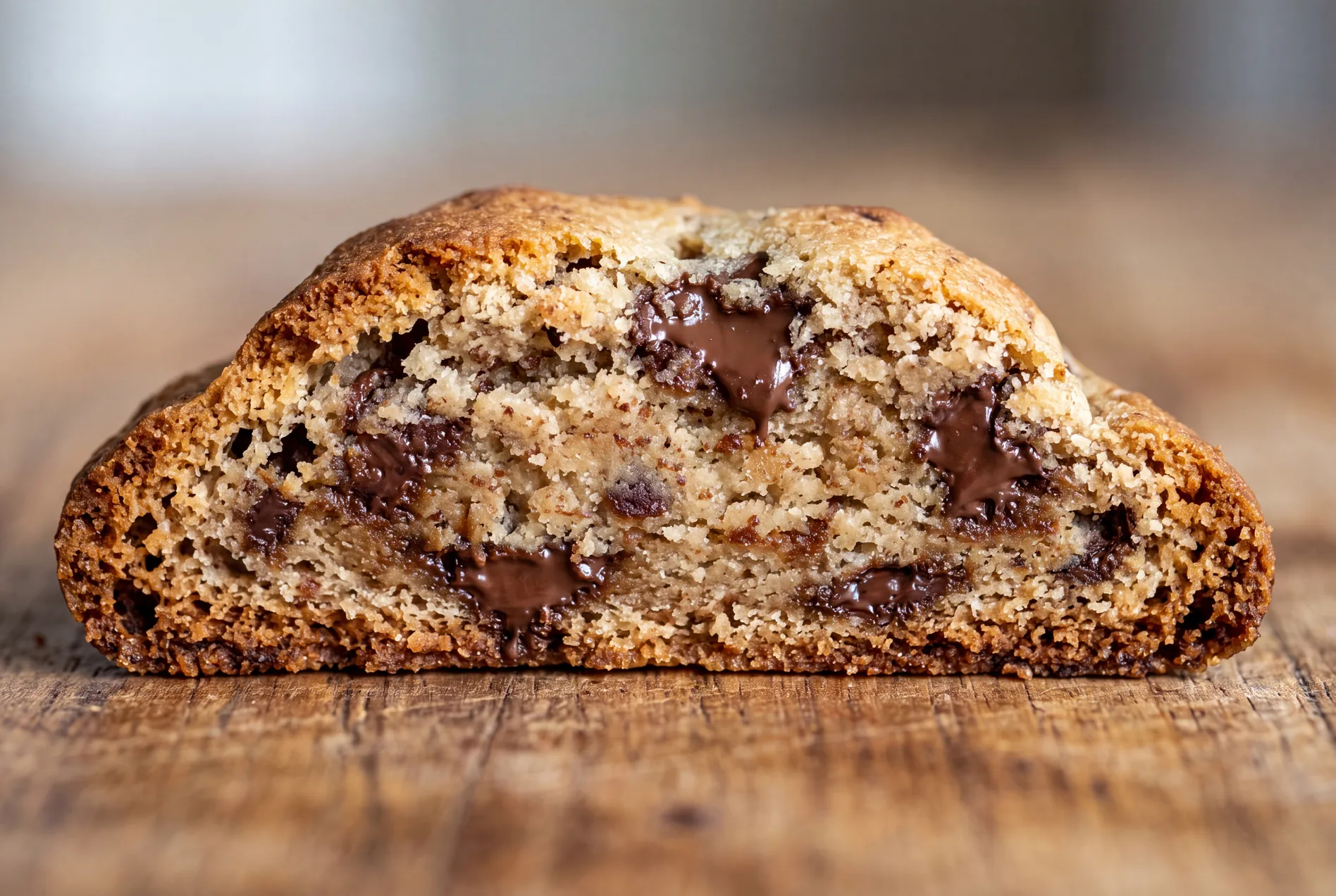
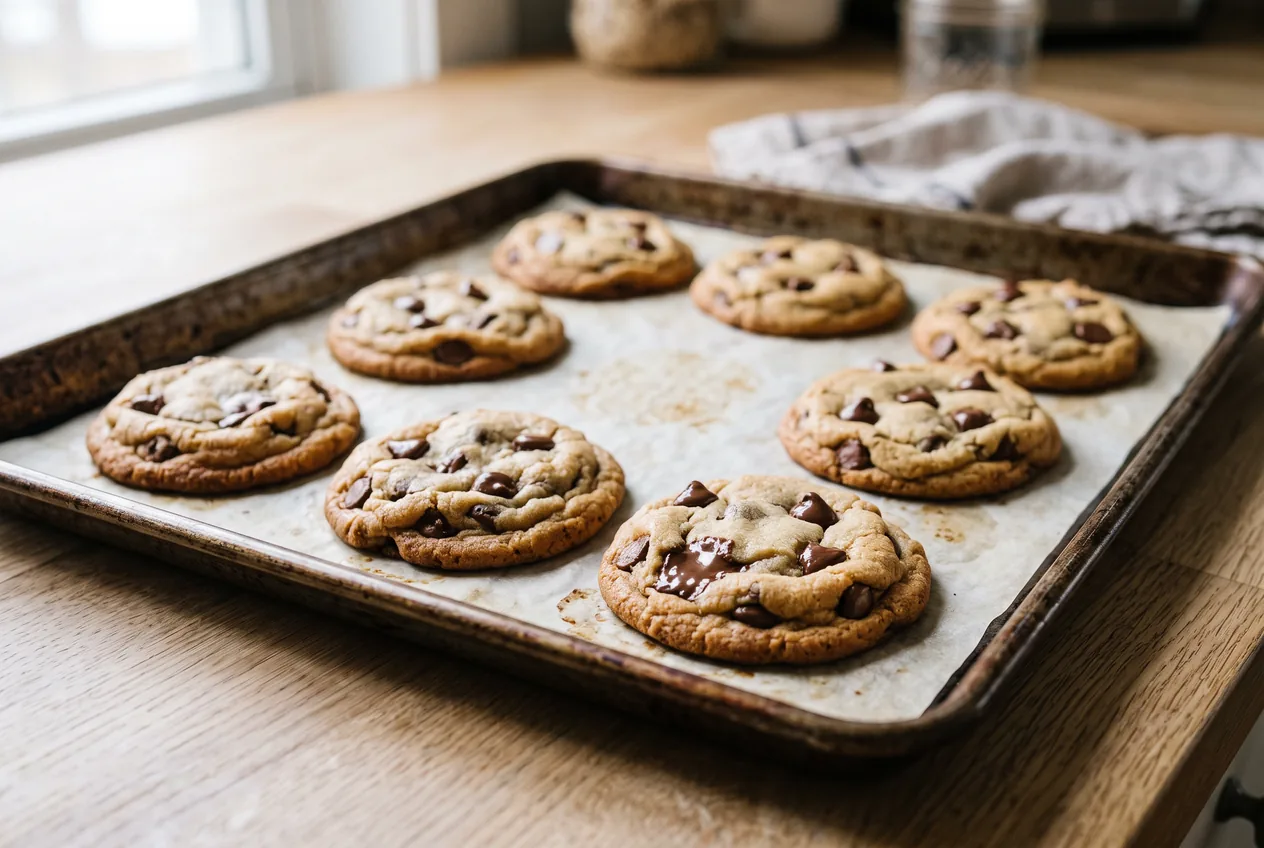
Take them out when the edges are set and lightly browned but the centres still look soft, puffy and slightly underdone. They will not look finished, and that is correct. Cookies keep cooking on the hot sheet, so a tray that looks perfect in the oven is already overbaked by the time it cools.
Leave them on the baking sheet for 5 minutes so the centres finish setting, then move them to a wire rack. Lifting them too early tears the soft middles. They reach their final chewy texture once fully cool, after about 20 minutes.

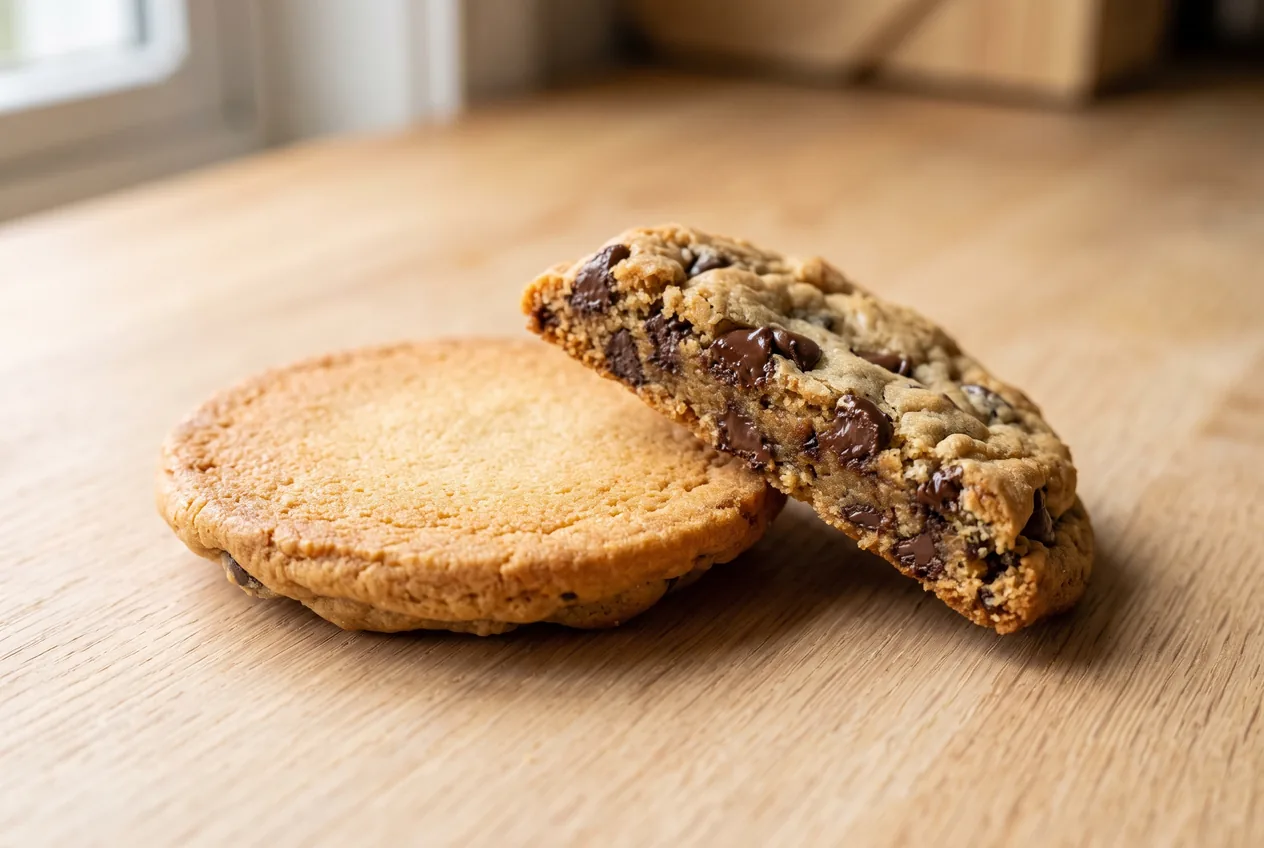
Keep cooled cookies in an airtight container at room temperature for up to 5 days. A slice of sandwich bread in the container keeps them soft; the cookies draw moisture from the bread instead of giving up their own. Do not refrigerate baked cookies, which firms them up and dries them out.
Baked cookies freeze for up to 3 months in an airtight container with parchment between the layers, and thaw in about 20 minutes on the counter. Portioned raw dough freezes better still: freeze the balls solid on a tray, then bag them for up to 3 months.
Bake frozen dough balls straight from the freezer at 350 F, adding 2 to 3 minutes to the time and watching for the same soft-centre cue. A baked cookie warms in about 8 seconds in the microwave, which re-melts the chocolate and is worth doing.
Estimates per cookie, based on 24 cookies per batch, calculated from standard ingredient data. Not a substitute for medical advice.
With this recipe it is almost always skipped or shortened chilling. Melted butter is already liquid, so unchilled dough starts spreading the moment it hits a warm oven. The other three causes are a hot baking sheet reused between batches, too little flour from scooping the cup into the bag rather than spooning and levelling, and an oven running cool. Chill the portioned dough a full 30 minutes and start each batch on a cool sheet.
Too much air, or too much lift. Creaming softened butter beats air into the dough, whipping the eggs does the same, and adding baking powder on top of the soda pushes it further. This recipe whisks melted butter only until glossy, uses an extra yolk instead of a second white, and uses baking soda alone, all to keep the crumb dense and chewy.
For this formula, yes. Because the butter is melted rather than softened, the dough has no solid fat to hold its shape, and baking it warm gives thin, greasy cookies. Thirty minutes in the fridge is the minimum and 24 hours is the useful maximum; beyond a day the dough dries at the surface. If you are short on time, 15 minutes in the freezer works just as well.
Go by appearance, not the timer. The edges should be set and lightly browned while the centres still look soft, puffy and slightly underdone, and the surface should no longer look wet. They finish cooking on the hot sheet during the first few minutes out of the oven. If the centres already look fully baked in the oven, they will be dry once cool.
About 2 tablespoons, roughly 50 g, which gives 24 cookies of about 3 inches across. Space them 3 inches apart, 8 to a standard sheet. These spread a fair way, and crowding is what makes neighbouring cookies run together at the edges.
Yes, and it is the best reason to make a full batch. Freeze the portioned balls solid on a tray, then bag them for up to 3 months. Bake straight from frozen at the same 350 F, adding 2 to 3 minutes, and judge doneness by the same soft-centre cue. There is no need to thaw.
You can, and the cookies get chewier and softer still, but they spread less and the edges lose some of their crispness. The white sugar in this recipe is there specifically to encourage spread and to crisp the rim, which is what gives the edge-to-centre contrast.
No. Both are common additions for chew, but the melted butter, the extra yolk and the two-to-one dark brown sugar ratio already do that job here, and testing generally shows little difference between bread flour and all-purpose in a cookie this size. Plain all-purpose flour keeps the ingredient list shorter and cheaper.
Yes, and it is a genuine upgrade. Chips contain stabilisers that help them keep their shape, while a chopped bar melts into puddles and thin shards through the dough. Use the same 340 g weight. Chopped chocolate usually costs a little more than chips.
About $6.72 for the butter, sugars, eggs, vanilla, flour, chocolate and pantry seasonings, which works out to roughly $0.28 a cookie across 24. The chocolate alone is about $3.08 of that, close to half the batch.
As an Amazon Associate, Budget Plates may earn from qualifying purchases.