Dessert
$0.88per plate
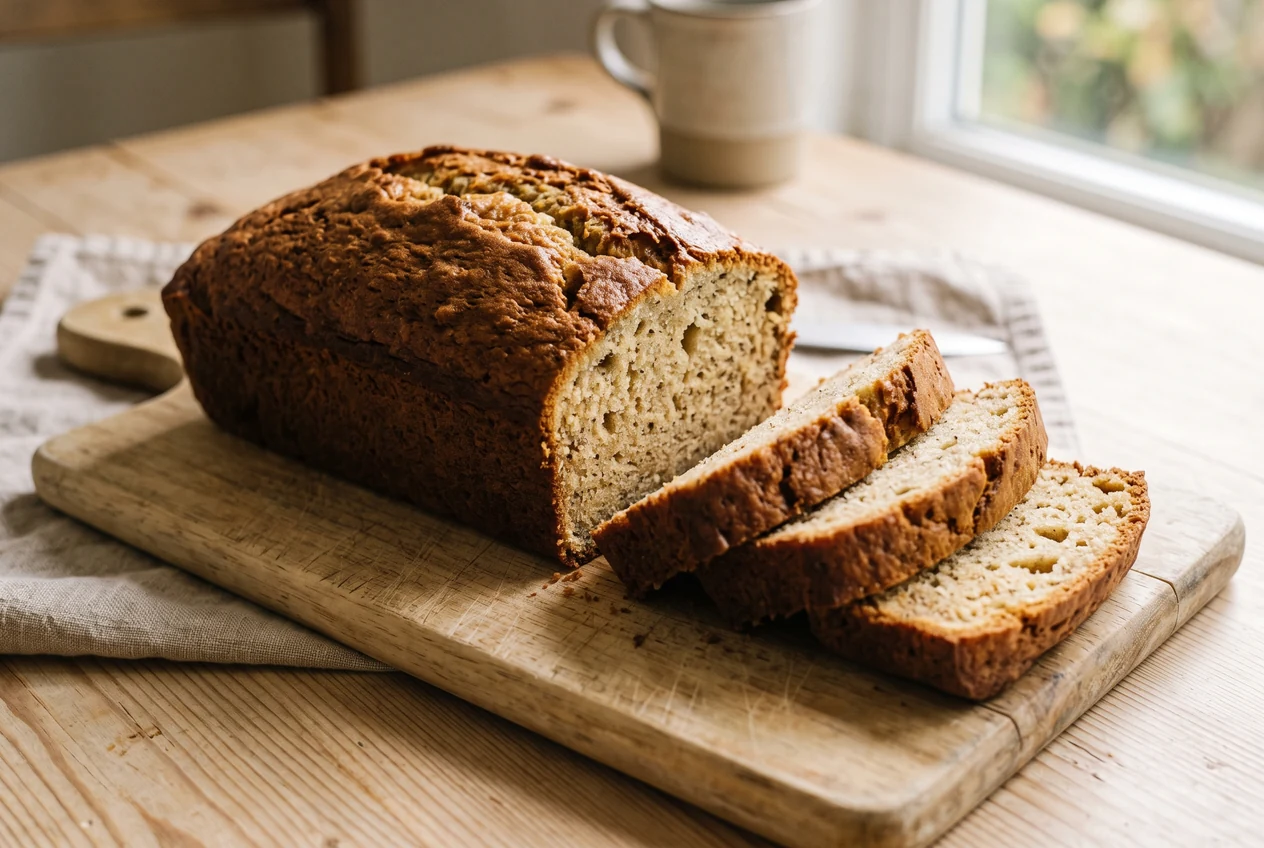
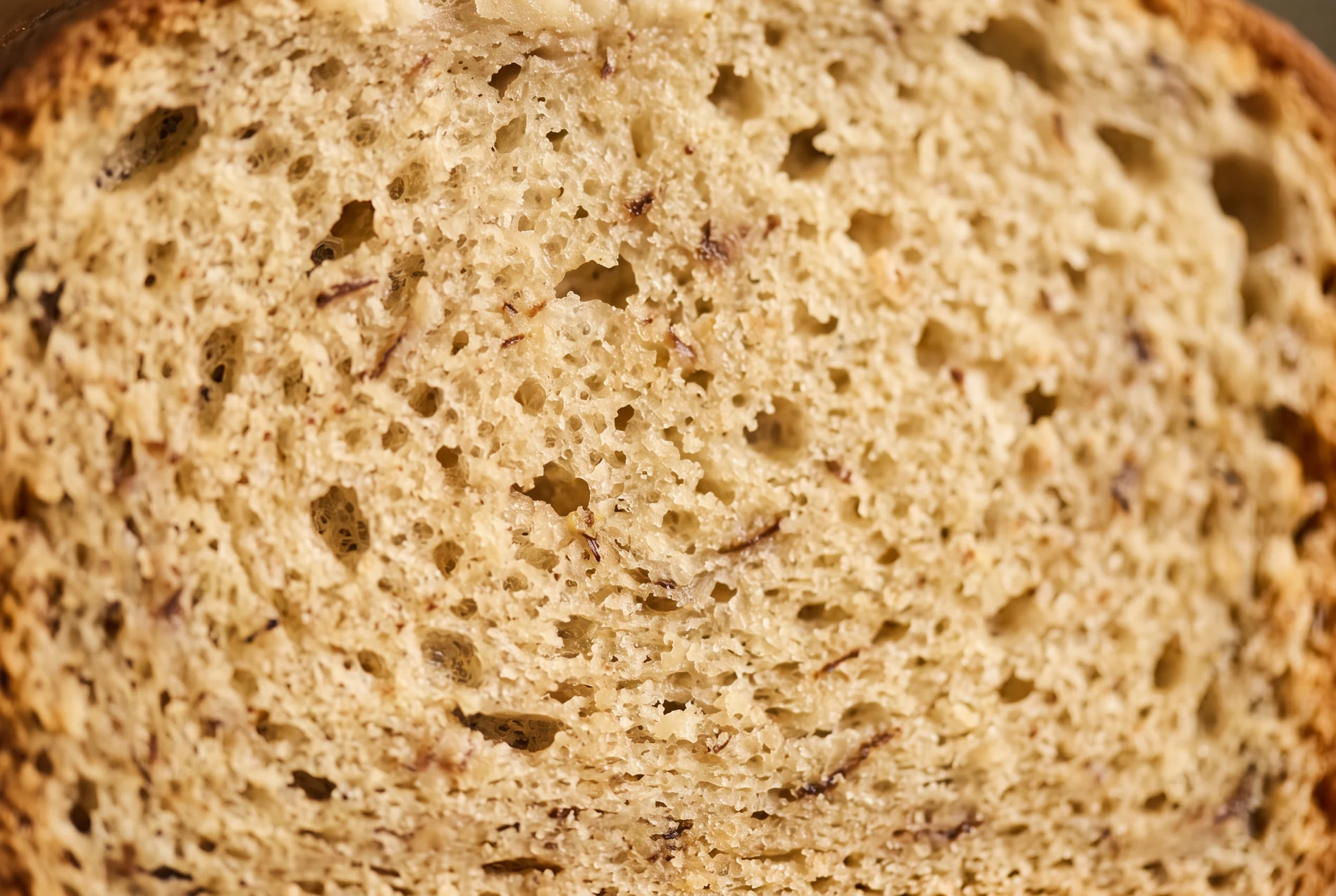
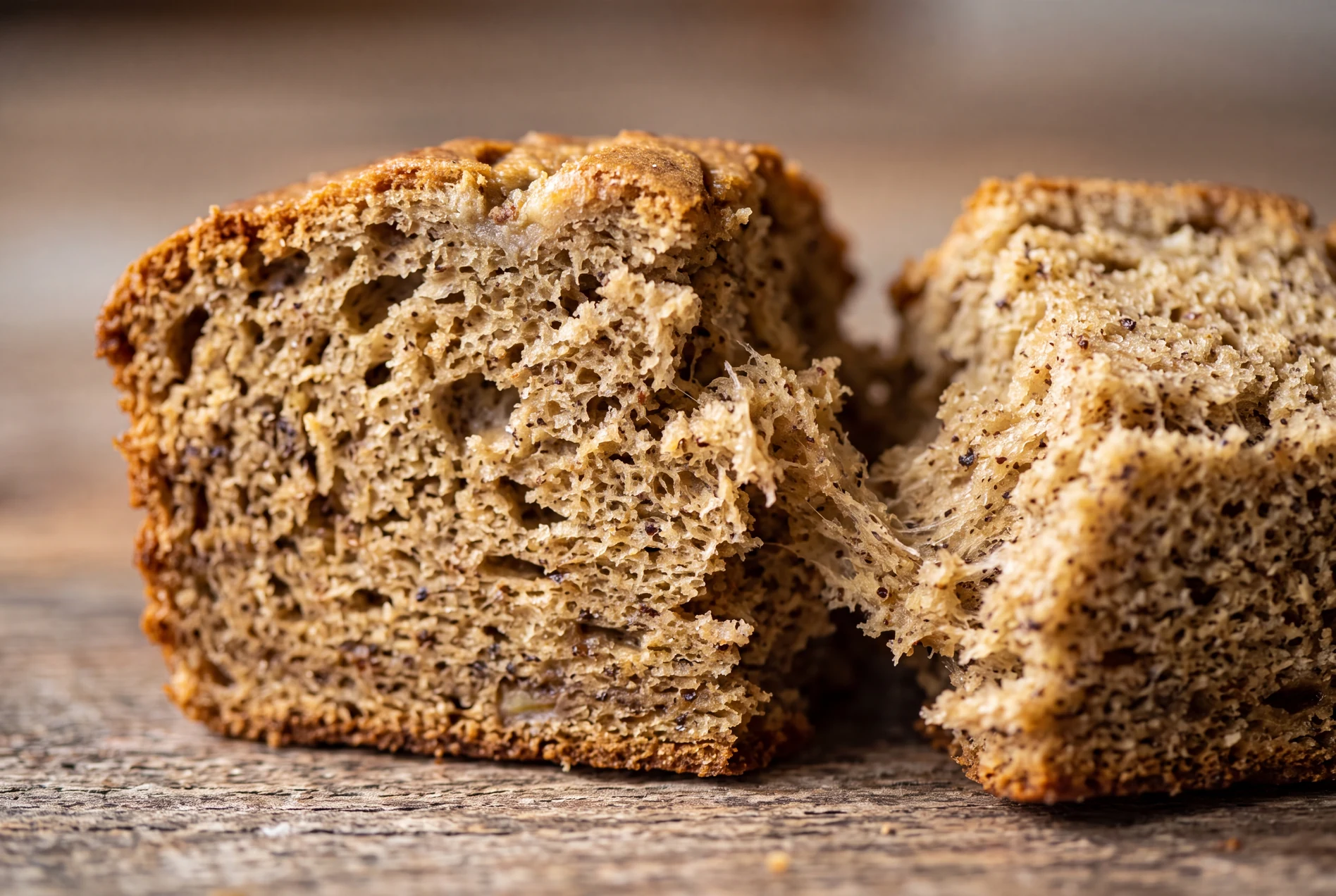
This is a moist banana bread built to survive the two things that go wrong most often: a gummy centre and a dry crumb. The moisture comes from three places that each do a different job - 340 g of very ripe banana, brown sugar that holds onto water, and a third of a cup of sour cream whose acid and fat tenderise the crumb. Melted butter carries the flavour and a couple of tablespoons of oil keep it soft on day three, because butter is part water and that water bakes off. The loaf is baked in a 9x5 pan and pulled at 200 to 205 F in the centre rather than at a fixed time, which is the single most reliable way to avoid the raw middle almost every complaint describes. It makes 12 slices for about $0.30 each. For the rest of the morning, see our breakfast ideas, or bake something else from our cheap dessert recipes.
Recipe from Budget Plates · https://www.budgetplates.com/banana-bread
Heat the oven to 350 F with a rack in the lower third, which keeps the top from browning before the centre is done. Grease a 9x5-inch loaf pan and line it with a strip of parchment running up the long sides, leaving an overhang to lift the loaf out later. A light-coloured metal pan is the reference for the bake time below.
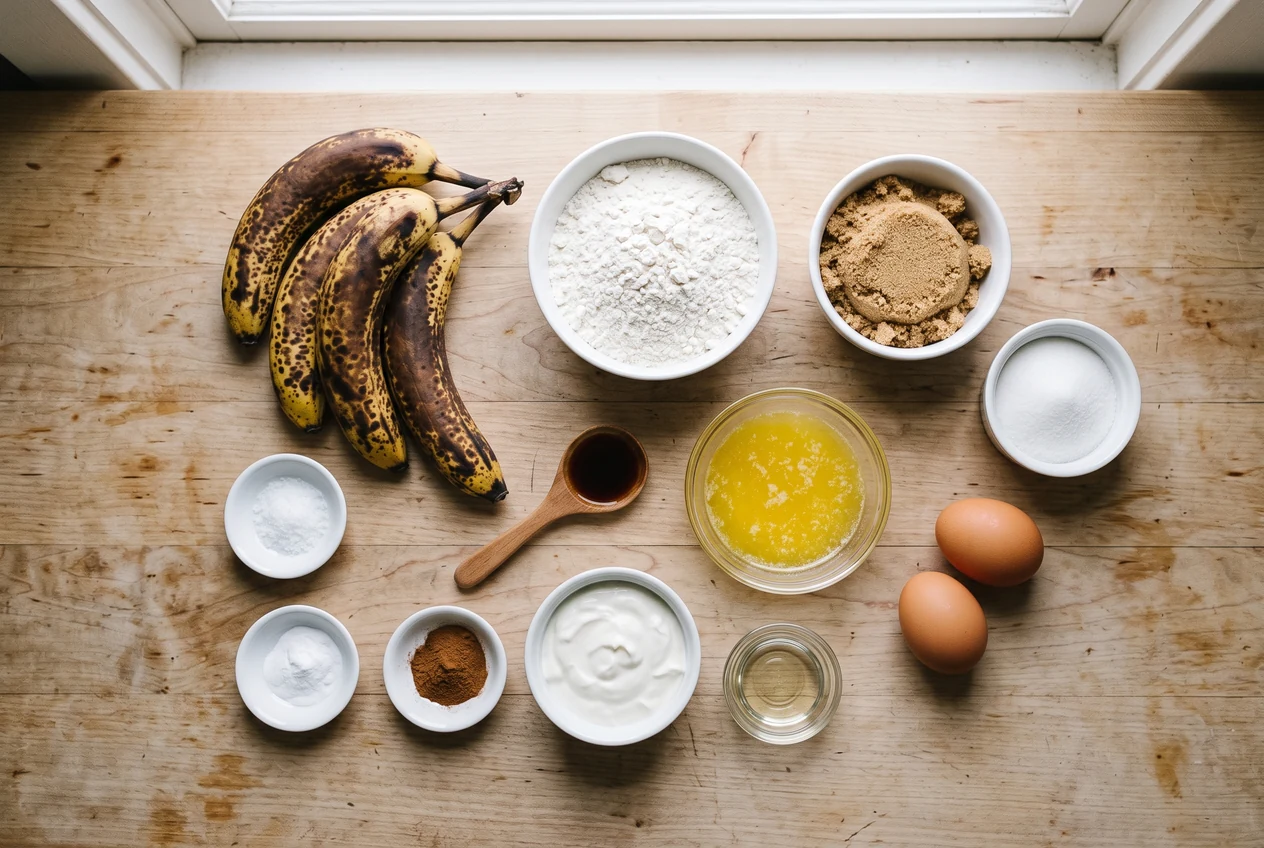
Mash the bananas in a large bowl until mostly smooth with a few small lumps left. You want 340 g, about 1 1/2 cups. Weigh them if you can. Banana size varies enormously and counting fruit is the most common reason two people following the same recipe get different loaves. If you are over by 20 g or so it is fine; well over 380 g and the loaf will struggle to set in the middle.
To the same bowl add the melted butter, oil, brown sugar, granulated sugar, eggs, sour cream, and vanilla. Whisk until smooth and glossy. This is a one-bowl recipe from here on. The batter will look loose at this stage, which is correct.
Sprinkle the flour, baking soda, salt, and cinnamon over the top and fold with a spatula just until the last streak of dry flour disappears, about 15 to 20 strokes. Stop while the batter still looks thick and a little lumpy. Every extra stir builds gluten, and gluten is what turns banana bread tough and gummy rather than tender.
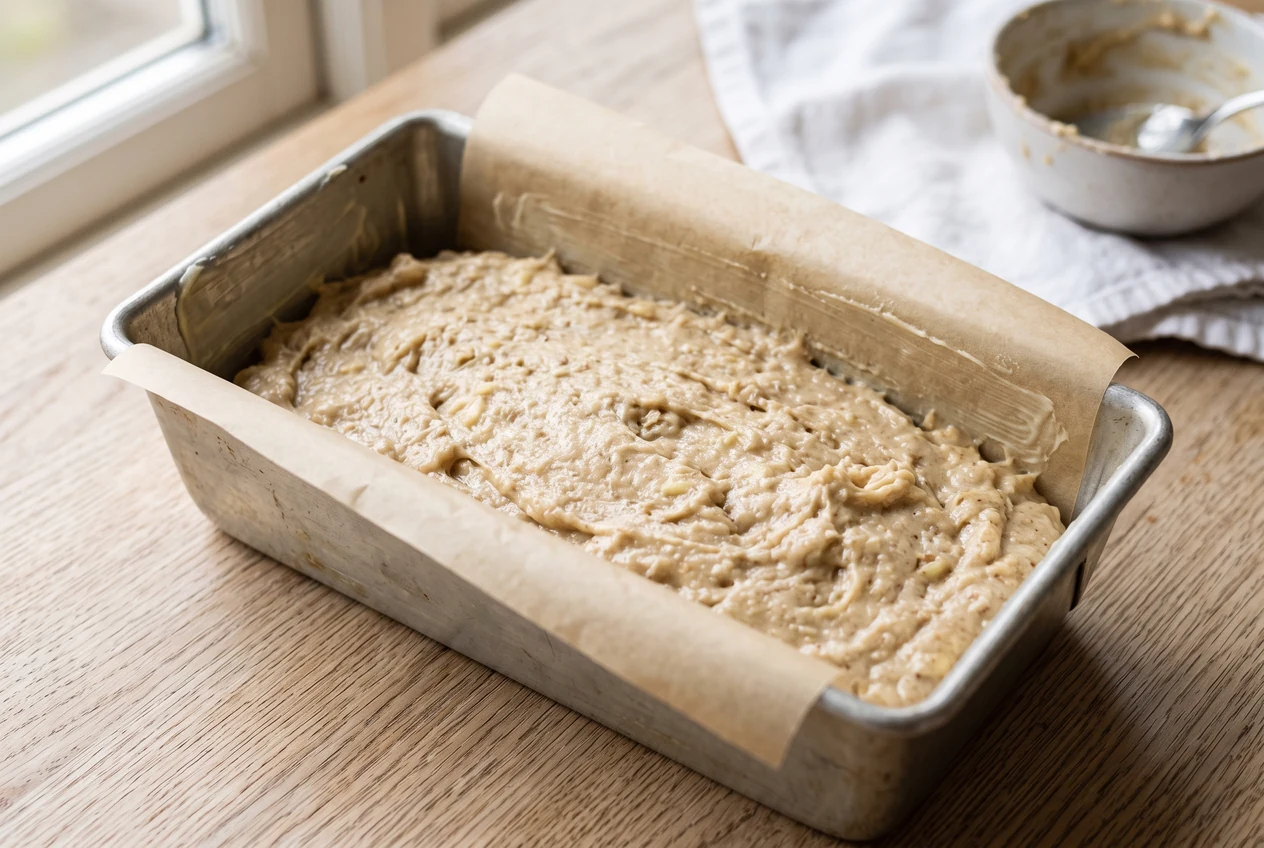
Scrape the batter into the pan, filling it about two-thirds full, and level the top. Bake 60 to 70 minutes. The loaf is done when the top is deep golden and split down the centre, the centre springs back when pressed lightly, a skewer in the middle comes out with a few moist crumbs but no wet batter, and an instant-read thermometer in the centre reads 200 to 205 F. If the top is browning fast at around 40 minutes, tent it loosely with foil and keep baking.
Cool in the pan on a rack for 15 minutes, then lift the loaf out by the parchment and cool on the rack. Wait at least an hour before slicing, and two if you can. The centre finishes setting as it cools, and cutting a hot loaf drags the crumb into a gummy-looking streak that is not actually underbaked. A serrated knife and a gentle sawing motion give the cleanest slices.
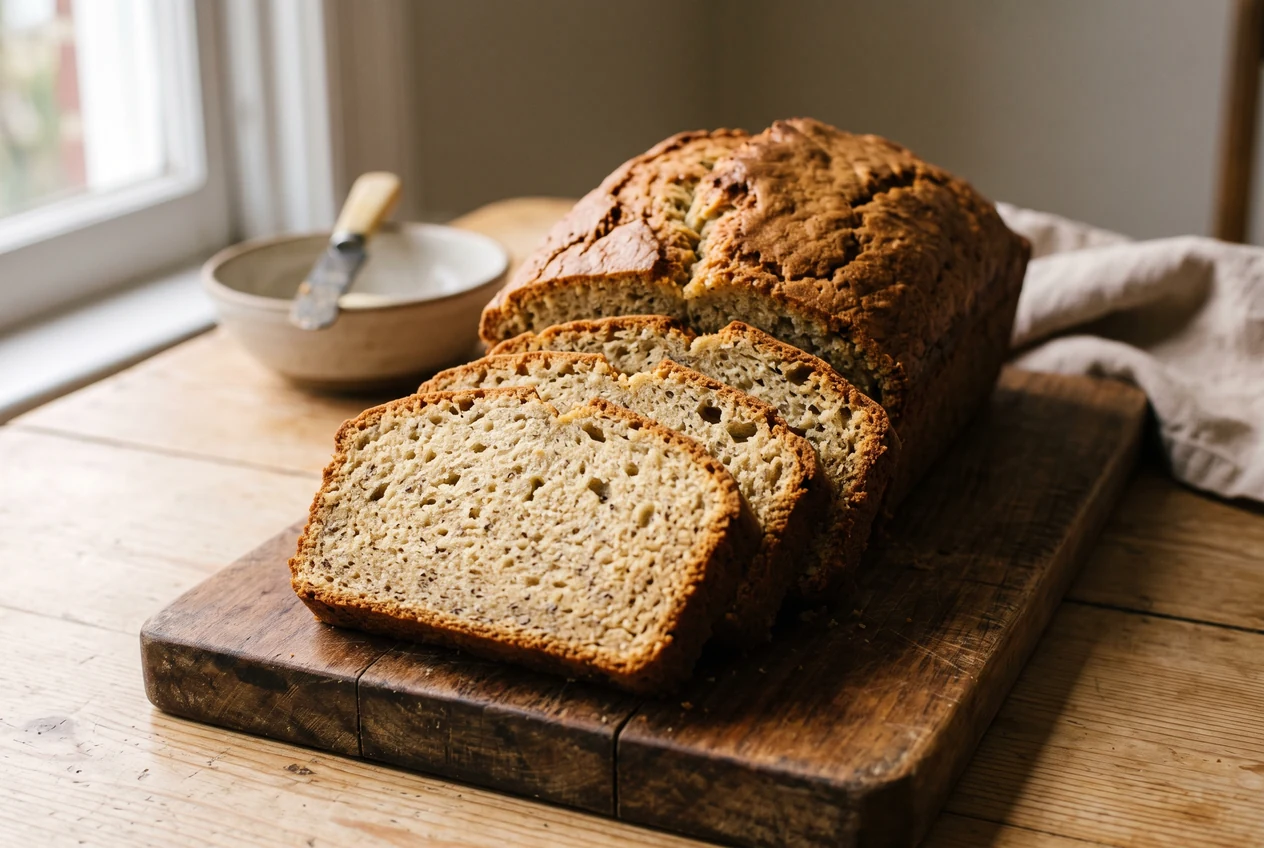
Once completely cool, wrap the loaf or the cut slices tightly and keep at room temperature for up to 4 days. Do not refrigerate it: the fridge stales bread noticeably faster than the counter does. If the crust softens, that is normal, and a few minutes in a low oven brings it back.
Freeze the cooled loaf whole, or in slices, wrapped tightly in plastic and then foil or a freezer bag, for up to 3 months. Slices are the more useful format because they thaw in about 20 minutes on the counter. Wrapping in two layers is what keeps freezer burn off a cut surface.
Thaw wrapped at room temperature. A slice warms in 10 to 15 seconds in the microwave or 5 minutes in a 300 F oven, and toasting a slice cut-side down in a little butter is the single best thing you can do with day-three banana bread.
Estimates per slice, based on 12 slices per loaf, calculated from standard ingredient data. Not a substitute for medical advice.
Heavily spotted at minimum, and nearly black peels are better. The starch converts to sugar as the fruit ripens, so a spotted banana is both sweeter and softer and mashes without lumps. Plain yellow bananas make a noticeably bland, drier loaf. The one limit is spoilage: skip any fruit with mould, a fermented or alcoholic smell, or leaking flesh, which is past ripe rather than perfectly ripe.
About 3 medium or 4 small, but weigh them if you can. The recipe wants 340 g of mashed banana, roughly 1 1/2 cups, and banana size varies so much that counting fruit is the most common reason the same recipe behaves differently in two kitchens. Well over 380 g and the extra water makes the centre difficult to set.
Yes, and they mash beautifully. Thaw them completely in a bowl, then tip the whole thing in, liquid included, and weigh to 340 g. That dark liquid is banana juice and it carries a lot of the flavour. If you have thawed far more than you need, drain off the excess before weighing rather than adding extra volume to the batter.
Usually it came out of the oven too early. Flour needs enough heat and time for its starches to gelatinise and set, and a loaf can look convincingly brown on the outside while the middle is still short of that. Bake to 200 to 205 F in the centre rather than to a time. The other two causes are overmixing, which builds gluten, and too much banana, which is why the weight matters. Slicing a hot loaf also creates a gummy-looking streak that is not underbaking at all.
Most often it was overbaked, sometimes by only five or ten minutes, especially in a dark pan that runs hot. Start checking at 60 minutes and trust the thermometer. Measuring flour by scooping the cup straight into the bag also packs in far more flour than the recipe intends; spoon it into the cup and level it, or weigh 250 g.
A 9x5-inch loaf pan is what this recipe is written for, and it bakes in 60 to 70 minutes. An 8.5x4.5 pan holds the same batter in a smaller footprint, so the loaf rises taller, domes more dramatically, and needs roughly 10 extra minutes, with more risk of the centre lagging behind the crust. Dark metal browns fastest and may need the foil tent early; glass and ceramic heat more slowly and often need 5 to 10 minutes longer. Do not fill any loaf pan more than about two-thirds full.
Use more than one check. The top should be deep golden and split along the centre, the middle should spring back when pressed lightly, and a skewer should come out with a few moist crumbs clinging to it but no wet batter. The most reliable check is an instant-read thermometer in the centre of the loaf reading 200 to 205 F. Time alone is the least reliable, because pan material, oven calibration, and banana moisture all move it.
Yes, for up to 3 months. Cool it completely, then wrap tightly in plastic and again in foil or a freezer bag. Slices are more practical than a whole loaf because they thaw in about 20 minutes and you can take one at a time. The double wrap is what protects the cut surface from freezer burn.
A loaf that rises and then collapses was usually underbaked, so the structure had not set when it came out of the oven. Too much leavening does it too, by lifting the crumb faster than it can hold, which is why this recipe uses a single teaspoon of baking soda and no baking powder. Opening the oven repeatedly in the first 40 minutes is the third cause.
About $3.60 for the bananas, butter, oil, sugars, eggs, sour cream, flour, and pantry seasonings, which comes to roughly $0.30 a slice across 12 slices. The butter is the biggest single line at $0.85 and the bananas are usually fruit you already have.
As an Amazon Associate, Budget Plates may earn from qualifying purchases.